






 Portuguese
  Spanish


Without Direct Road Connection, Region Faces Effects of Historical Abandonment and Challenging Geography
In the far north of Brazil, Amapá is a unique state. Even today, in the 21st century, it remains without a direct land connection to the rest of the national territory. Those who leave Macapá heading to Belém, for example, must rely on ferries, boats, or planes. The isolation is not just geographical — it is also a result of political decisions and a history of federal neglect towards the region.
Check below more details on why the state is considered “isolated”!
After All, Why Is There No Connecting Road to the State?
Several factors help explain this absence of a connection between Amapá and the rest of the country. Firstly, Amapá is covered by vast areas of rainforest, with unstable terrain and flood-prone regions, which would make the construction of roads extremely expensive and technically challenging.
-
Award-Winning Japanese Restaurant Reveals It Has Preserved Part of the Same Frying Oil for 66 Years

-
American Youth Transforms from Severe Obesity to U.S. Air Force Enlistment, Losing 90 Kilograms in Two Years
-
11-Year-Old Entrepreneur Sells 60 Homemade Sweets Daily, Mastering Cost Calculation, Social Media Promotion, and Client Negotiation Since Age 7

-
Peruvian Mountain’s 5,200 Aligned Holes May Unveil Ancient Indigenous Market for Corn and Cotton


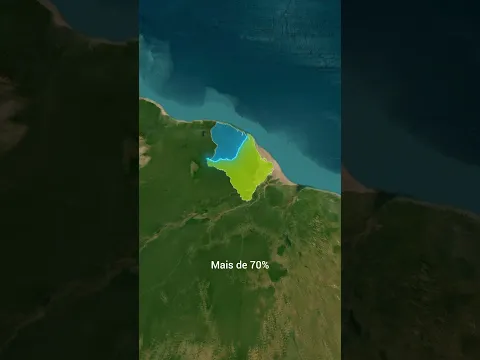

Moreover, due to its distance from the major political and economic centers of the country, the state has never been treated as a priority in national infrastructure projects. Governments have come and gone, promised and failed to deliver. The environmental preservation of the region, which hosts parks and indigenous reserves, is also frequently used as an argument to delay roadworks.
Amapá and Its Past Marked by Disputes
Even before it became a Brazilian state in 1988, Amapá was a land of uncertain borders. For a long time, it was disputed by the French and Portuguese, which delayed its integration with the rest of the colony, which today corresponds to the rest of the country. The tension was only resolved in the early 20th century when the territory was officially recognized as part of Brazil after a long diplomatic dispute with France.
Even after that, development was slow. Cities grew near rivers, such as Macapá and Oiapoque, but the infrastructure to connect the state to the rest of the country was never realized.
The Impact of Isolation on Daily Life
For the residents, this isolation translates into concrete difficulties. Most of the products that supply the supermarkets in Macapá arrive by ship, making food, fuel, and basic supplies more expensive. Car trips to other Brazilian states simply do not exist — leaving Amapá requires a plane or long crossings by rivers.
Despite this, the population remains resilient. The people of Amapá have learned to live with these limitations and have built a strong identity, deeply connected to riverside culture, traditional music, and the strength of local communities.


