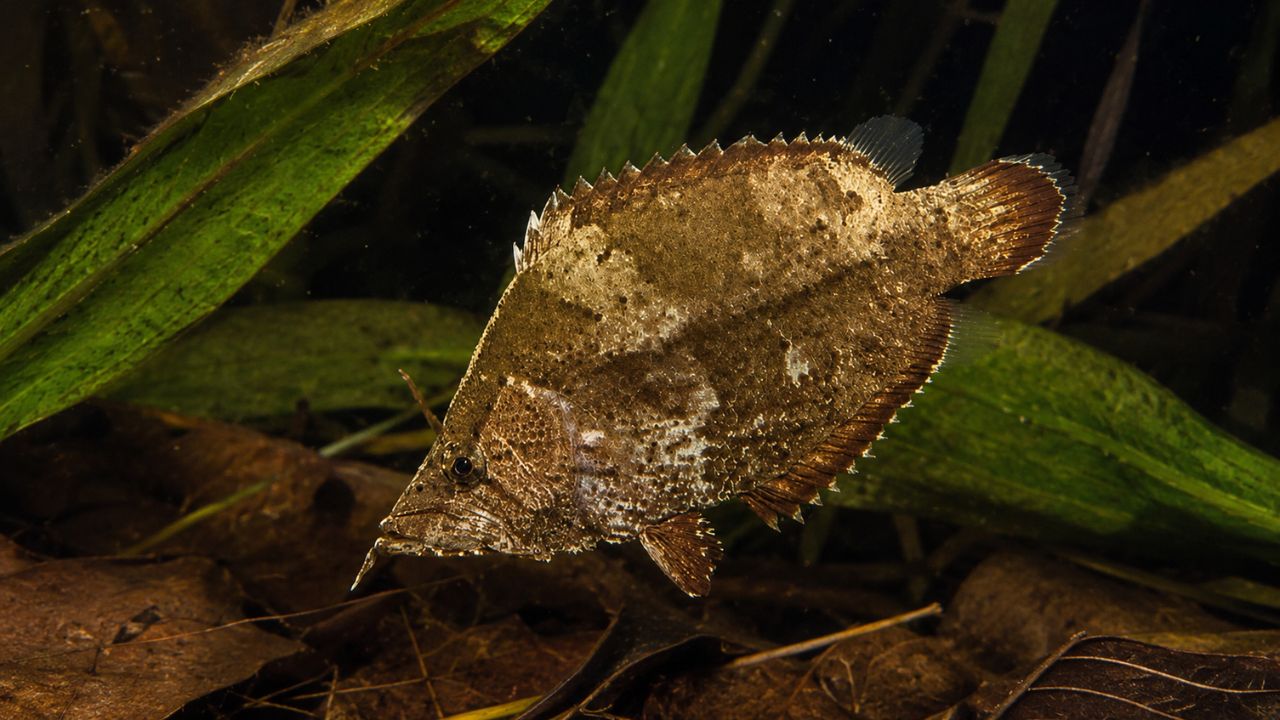

Discover how the Amazonian fish uses the flat shape of its body and small skin expansions to mimic decaying leaves and capture prey.
A significant daily energy saving defines the hunting routine of the Amazonian leaf fish (Monocirrhus polyacanthus) in the river basins of Northern Brazil. Instead of exhausting itself in fast pursuits through the rivers, this special Amazonian fish has specialized in the technique of passive ambush, allowing itself to be carried by the current flow as if it were an inanimate plant debris.
The strategy grants the animal a high success rate in capturing food due to the element of surprise, as well as serving as an efficient invisible shield that drastically reduces its chances of being located by larger predators.
Meet the Amazonian leaf fish
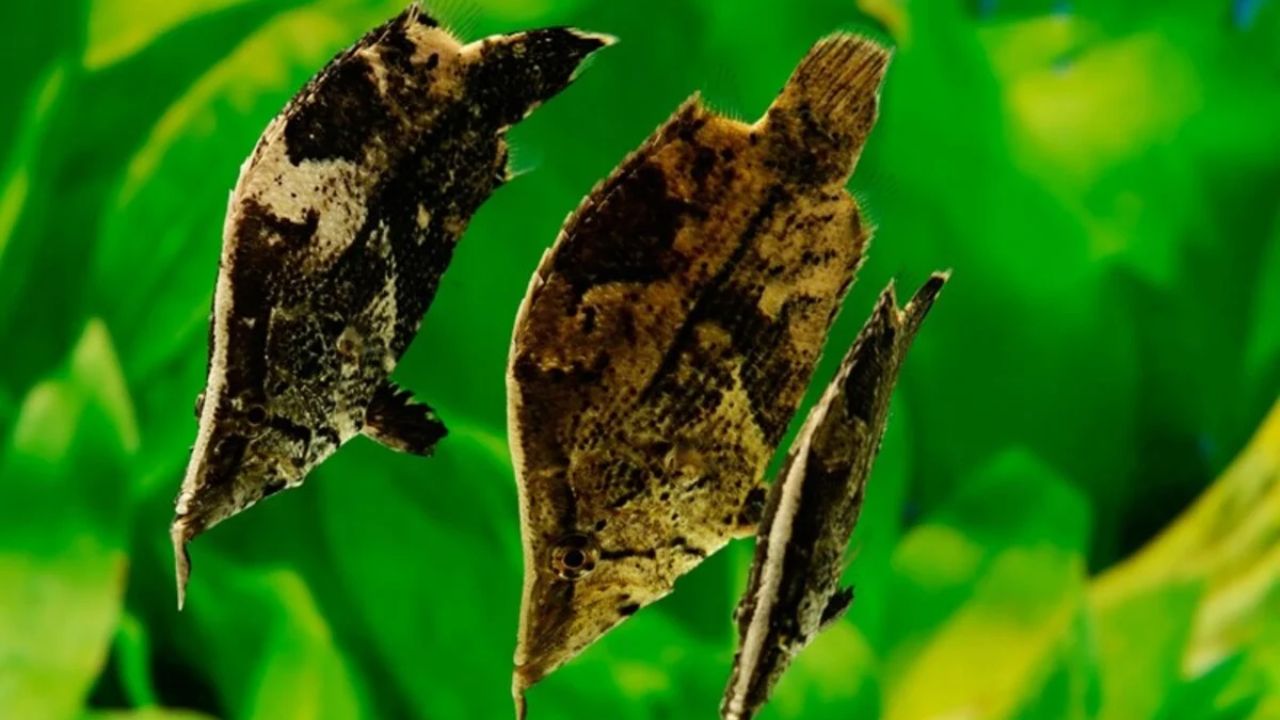
The success of this perfect disguise in water is guaranteed by very specific physical traits developed by the species. The body of the Amazonian leaf fish is extremely flat and displays a mutable brown coloration, which adapts precisely to the variations of the surrounding environment.
-
A Tiny Belgian Village Factory Produces Nearly 80% of the World’s Billiard Balls Using a Secret Resin for Decades-Long Durability

-
Glacier Express: The World’s Slowest Train Offers Spectacular Views of the Swiss Alps, Crossing 291 Bridges and 91 Tunnels Over 219 km

-
Asian fruit related to lychee gains popularity on a São Paulo farm, attracting attention for its sweet taste and unique appearance, turning a little-known crop in Brazil into a distinctive rural investment.
-
Brazilian Company Known for Brooms Grew for 95 Years to Become One of Latin America’s Largest Brush Manufacturers, with Over 300,000 Sales Points and Revenue of $150 Million




To elevate the level of mimicry, the fish’s skin has small structural expansions that replicate the small supporting stem of real leaves. Moving slowly and controlled, the hunter precisely replicates the natural sway of floating organic matter.
The preservation of this behavior in nature depends on a set of interconnected ecological factors:
- Supply of organic matter: need for constant leaf fall from the riverbank trees to compose the scene.
- Maintenance of streams: conservation of the small calm streams where the species usually shelters.
- Protection of vegetation cover: preservation of the riparian forests that provide the essential micro-habitats for the species to disappear.
The Final Strike and the Vacuum Effect in the Streams
When a shrimp, insect, or smaller fish approaches the disguise without noticing the imminent threat, the Amazonian leaf fish activates its capture system. With almost imperceptible adjustments to its fins, it adjusts its body position and waits for the ideal moment to strike.
The outcome of the attack is based on a highly elastic mouth adaptation. The movement projects the mouth structures forward at an impressive speed, pulling the victim without giving it a chance to escape.
The complete reliance on this vegetal camouflage for feeding and protection means that the animal’s fate is connected to the preservation of the forests bordering the rivers. Changes caused by vegetation loss drastically reduce the availability of real leaves in the water, compromising the setting the fish uses for its ambushes.


Thus, the biological balance of this predator acts as a thermometer of the environmental health of the region. Ensuring the integrity of the streams is the key factor to keeping this complex and fascinating survival engineering active, which operates discreetly beneath the water’s surface.
With information from Agro em Campo