Portuguese
  Spanish




Silent strategy advances in Russian campuses and transforms universities into large-scale military recruitment centers, with financial promises and increasing pressures on youth
The war between Russia and Ukraine, which has already lasted for four years, is now entering a new phase marked by a silent yet highly concerning strategy. Increasingly, Russian universities are being transformed into true military recruitment centers, with a special focus on young students, many of whom are still at the beginning of their academic training.
The information was disclosed by CNN, based on direct reports from students and analysis of open sources, revealing a scenario of intense pressure within university environments. According to testimonies, phrases like “the pressure is colossal” and “everything changed this year” reflect a reality that has been rapidly intensifying on campuses.
Moreover, posters, promotional videos, and even lectures with military personnel have become part of academic daily life. In other words, the educational environment has been progressively occupied by messages encouraging enlistment, often disguised as technological and professional opportunities.
-
U.S. Establishes Permanent Embassy in Jerusalem, Reigniting International Debate Over Israel’s Capital

-
The world has nearly 12,000 nuclear warheads, with the majority held by the United States and Russia; see the figures for China, France, and the United Kingdom.

-
Venezuela Faces UN Alert for Hunger, Disease, and Service Collapse After Earthquakes Cause Nearly 2,000 Deaths and $6.7 Billion in Damages

-
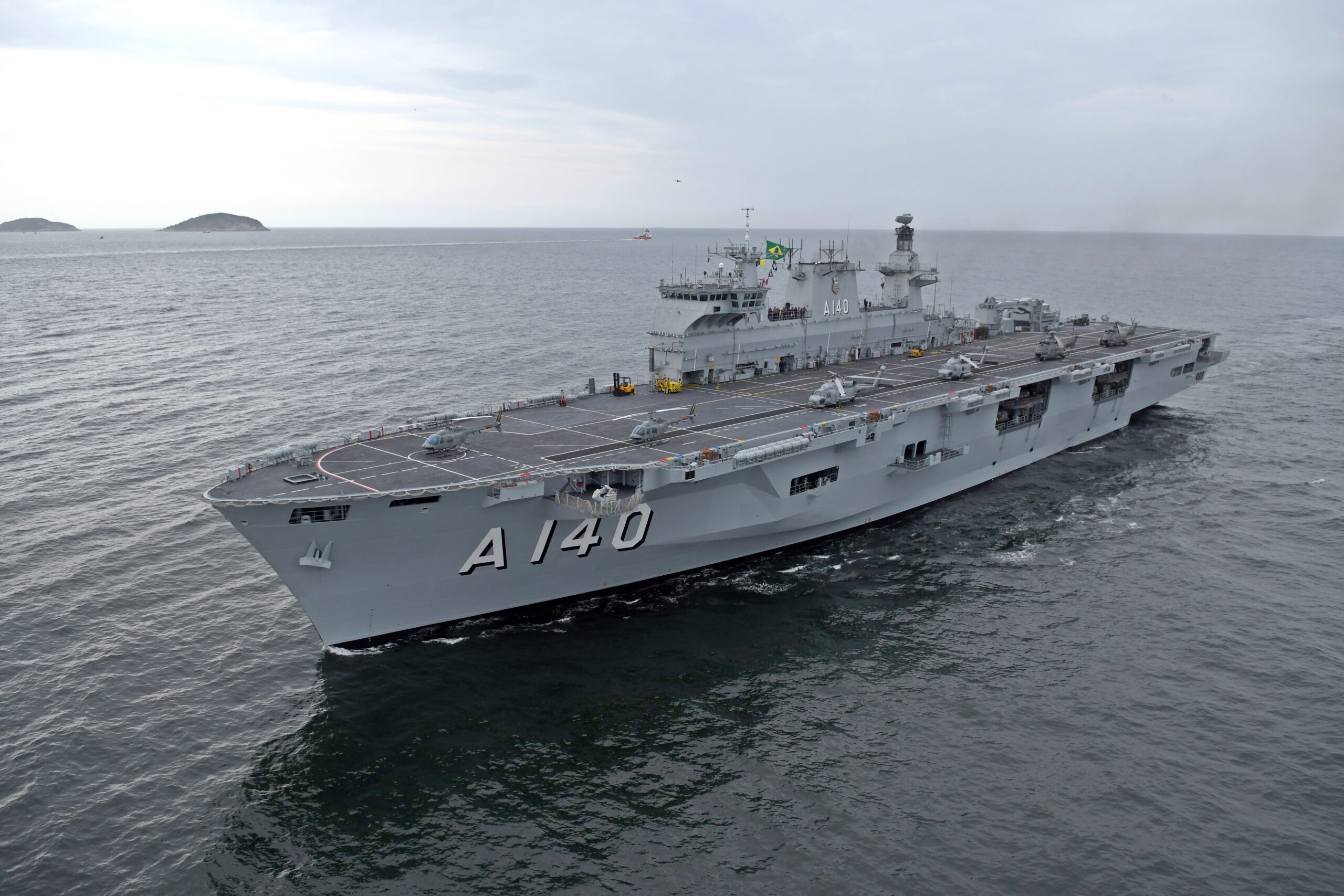
Brazil Deploys Navy Field Hospital with ICU, Orthopedics, Pediatrics to Earthquake-Stricken Area in Venezuela, Offering 30 Beds and 150 Daily Consultations


Promise of high money and technology hides greater risks
On the other hand, the strategy is not limited to propaganda. The Russian government, under the leadership of Vladimir Putin, is heavily betting on financial incentives to attract youth.
According to the data collected, students can receive federal and regional bonuses of at least 400,000 rubles (about $5,000). In some cases, the amounts are even higher. The Saint Petersburg State University, for example, promises a one-time payment of approximately $56,000, in addition to an annual salary close to $70,000.
At the same time, campaigns targeted at gamers and technology enthusiasts have been gaining prominence. Institutional videos make direct comparisons between video games and real drone operations, encouraging youth to “turn skill into mission.”
However, experts warn that these promises may not reflect reality. According to military lawyer Artem Klyga, many of these contracts would, in practice, be traditional military agreements, without a fixed term, which could bind students indefinitely in active service.
Psychological pressure and threats within universities
Even more concerning is the method used to convince students. In various reports, the pressure goes beyond financial incentives and enters the realm of direct coercion.
For example, students with academic difficulties — those with pending assignments or exams — are reportedly being pressured to enlist as an alternative to avoid expulsion. In some cases, entire groups have been threatened with immediate dismissal if they do not sign military contracts.
Additionally, there are reports of targeted approaches to vulnerable students, including young people with emotional difficulties or adjustment problems. These students are called for individual meetings, lacking transparency, where they receive proposals presented as “solutions” to their academic and financial problems.
Consequently, this practice has been described by some students as a clear form of emotional abuse, raising the level of concern within the academic community even further.
Recruitment crisis pressures the Kremlin
This movement, in turn, reveals a larger problem: the increasing difficulty of Russia in maintaining the flow of new recruits.
According to Western estimates, Ukraine has been able to inflict losses exceeding Russia’s replacement capacity for several months. Ukrainian President Volodymyr Zelensky stated that, as of 2026, Russia would have lost about 89,000 soldiers (killed and seriously injured), while managing to recruit only 80,000 in the same period.
In light of this scenario, the Kremlin is seeking alternatives to avoid a new mass mobilization like that of 2022, when about 300,000 men were called up, generating strong internal backlash and large-scale flight from the country.
Still, experts point out that the new strategy may pose significant political risks. After all, transforming universities — historically seen as safe spaces — into recruitment environments may generate resistance among young people and increase government weariness.
Tension grows and future concerns Russian students
Finally, the impact of this policy is already beginning to be felt in the daily lives of students. Many report constant fear, insecurity, and a sense of loss of control over their own future.
Meanwhile, Kremlin spokesperson Dmitry Peskov stated that the campaign is “an open offer” for a new military branch. However, reports from universities suggest a very different reality — marked by pressure, urgency, and lack of transparency.
Thus, what should be a space for learning and professional development is increasingly seen as a risky environment. And for many young Russians, each new year seems to bring an even more uncertain and frightening scenario.