Portuguese
  Spanish


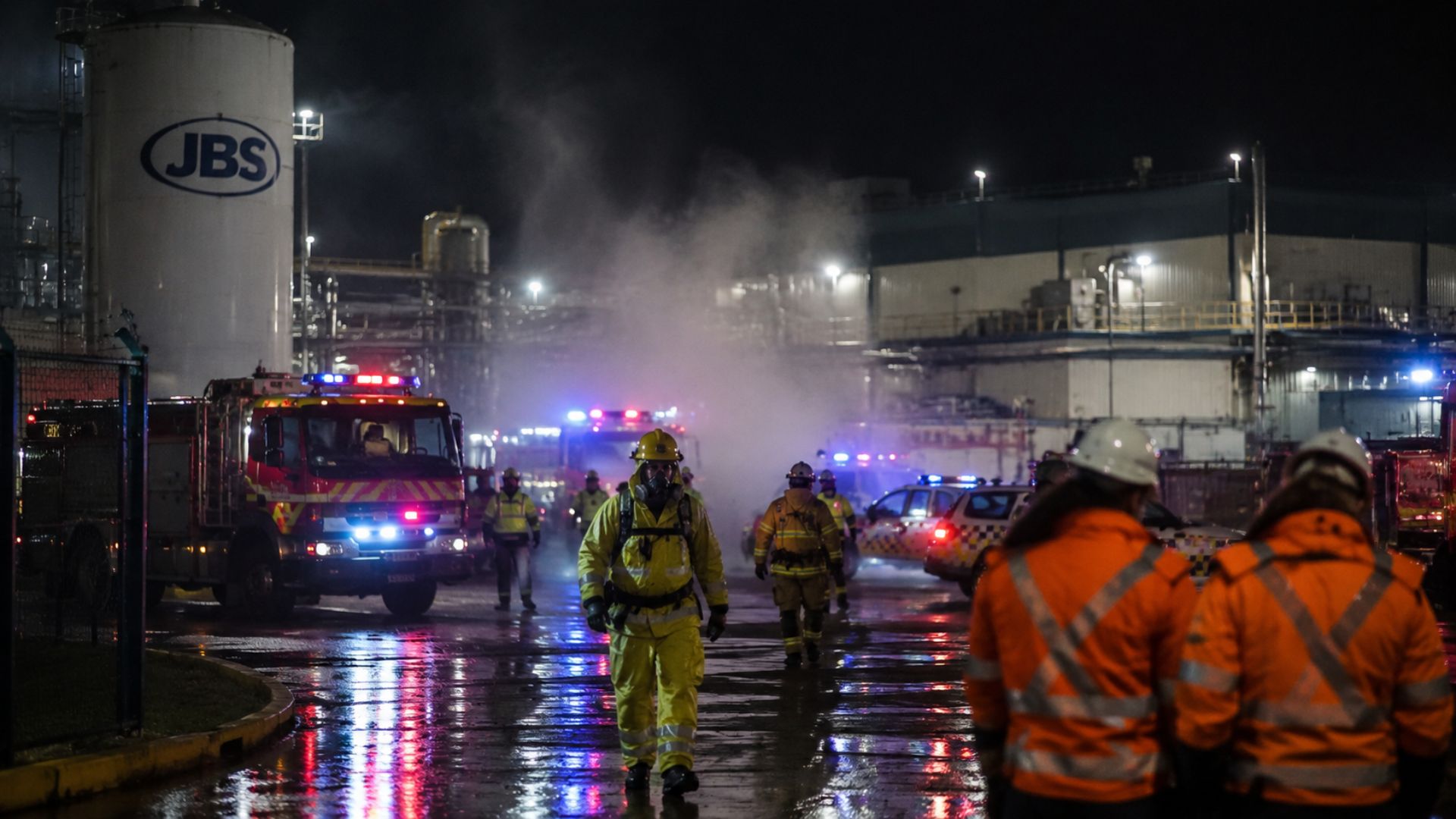

The liquid ammonia leak began around 12:30 AM this Tuesday (20) at the JBS Dinmore factory, west of Brisbane. Nearly 900 workers were evacuated, 17 assessed by paramedics, and five hospitalized in stable condition. The site was cleared by emergency teams at 7:10 AM.
A chemical leak at a JBS factory in Australia left five people hospitalized and led to the evacuation of nearly 900 workers during the early hours of this Tuesday (20). The incident occurred at the JBS Dinmore unit, located in the city of Ipswich, west of Brisbane, and involved a liquid ammonia leak in the facilities around 12:30 AM local time. The plant affected by the incident is considered one of the largest beef processing factories in the southern hemisphere, according to information released by the Australian network ABC News.
The exact cause of the leak is still under investigation, according to the company. Emergency services were immediately activated after the detection of the chemical escape, with paramedics assessing 17 people on-site and five referrals to the hospital in stable condition. Emergency services remained at the facilities until 7:10 AM, at which point they deemed it safe to return control of the site to the company, as per the official statement released by JBS Dinmore.
What happened in the early hours in Ipswich

The accident began in the early hours of this Tuesday, at a time when hundreds of workers were on the night shift at the factory. Around 12:30 AM local time, the liquid ammonia used in the unit’s industrial refrigeration systems leaked into the environment, posing an immediate health risk to employees.
-
21-Year-Old Brazilian Student Turns Homemade Popsicle Hobby into $100,000-a-Month Business

-
Australia Dumps Hundreds of Thousands of Tons of Gravel into Rivers to Restore Natural Barriers and Reverse 150 Years of Erosion

-
Bird-Inspired Robot Glides on Air Currents up to 10 m/s, Balances Itself, and Aims to Save Energy in Industrial Inspections and Meteorological Balloons
-
Eight Artists Secretly Lived in a Hidden 70m² Apartment Inside a Shopping Mall in Brazil for Four Years



The response was swift. JBS teams activated the emergency services of the city of Ipswich and began evacuating the facilities. About 900 workers left the factory within minutes, in an operation that mobilized firefighters, ambulances, and health teams in the region throughout the early hours.
Medical care on-site began in parallel with the evacuation. Paramedics assessed 17 workers who showed signs of exposure to the chemical product. Of these, five needed to be taken to regional hospitals, all in a condition considered stable by health authorities.
Why Liquid Ammonia is a Risk in Slaughterhouses

Liquid ammonia is widely used in slaughterhouses and meat processing plants as an industrial refrigerant fluid. It allows large cold chambers to operate at controlled temperatures, an essential condition for the food safety of the products.
The problem is that the substance, when it leaks, becomes highly dangerous. Ammonia in gas form has an intense irritating effect on the respiratory tract, potentially causing chemical burns, respiratory difficulty, and, in high concentrations, leading to severe intoxication cases.
Therefore, any factory that uses ammonia on a large scale needs to maintain strict safety protocols, with detection sensors, tested evacuation plans, and personal protective equipment available for workers. The accident in Ipswich puts these protocols to the test, and the investigation of the causes will determine whether there was human error, equipment failure, or another factor in the incident.
The Official Response from JBS

JBS Dinmore released an official statement shortly after the incident, highlighting the priority given to the safety of the affected employees. The company also confirmed that investigations into the leak are underway.
“The safety and well-being of our team members are our top priority, and we are providing ongoing support to those involved. The site was evacuated, and the affected team members received medical evaluation and care as a precaution,” stated JBS Dinmore in a statement released to the Australian press.
The company has not yet detailed what caused the ammonia leak at the facilities or the volume of chemical that escaped into the environment. Workplace Health and Safety Queensland, the labor authority responsible for investigating workplace accidents in the state of Queensland, has been called to investigate the case and assess any regulatory sanctions against the factory.
The Economic Impact of JBS Dinmore in Ipswich
The JBS unit in Dinmore is not just any factory. It is one of the largest employers in the Ipswich region and handles significant volumes of beef exported to different markets around the world.
The plant is considered one of the largest beef processing facilities in the entire southern hemisphere. Its shutdown, even if temporary, has a direct impact on the global meat supply chain and the local economy of Ipswich, where hundreds of families depend on the jobs offered by JBS.
This economic weight explains part of the concern surrounding the incident. In addition to the effects on the directly affected workers, the leak also raises questions about the continuity of operations, the timelines for resuming activity, and potential regulatory sanctions that may affect production in the coming months.
JBS at the center of recurring incidents
The Ipswich case is not the first involving the Brazilian multinational. JBS is the largest company in the world in the animal protein sector and operates dozens of factories in different countries, which naturally increases its exposure to industrial incidents over time.
The company’s recent history includes accidents, recalls, and regulatory actions in different jurisdictions where it operates. Each new incident reinforces the debate about the complexity of managing such a large production chain and the need for uniform industrial safety standards in all units of the multinational, regardless of the country where they are located.
For the workers affected by the ammonia leak in Ipswich, these regulatory debates are an immediate reality. The resumption of operations will only occur after detailed technical evaluations, and the case is expected to lead to legal, labor, and regulatory developments in the coming days in Australia.
How accidents of this type are usually investigated
When a chemical leak occurs in a factory of this size, the investigation follows strict protocols defined by local labor authorities. In the Australian case, Workplace Health and Safety Queensland is responsible for conducting the technical investigation of the incident.
The investigation usually involves analyzing maintenance records of the industrial refrigeration systems, physical inspection of the equipment where the leak occurred, interviews with workers who were on site, and a review of the safety protocols adopted by the company. This process can take weeks or months to complete, and its outcome determines whether the company was responsible for the incident, leading to potential sanctions and demands for operational changes.
In parallel, health authorities monitor the clinical progress of the five hospitalized workers. Exposure to ammonia can have persistent effects in some cases, and medical monitoring needs to ensure that there are no respiratory or other sequelae resulting from the accident.
What to expect in the coming days after the leak
The resumption of the factory operation in Ipswich depends on the completion of the initial investigation stages. Before that, JBS Dinmore needs to demonstrate to the authorities that the causes of the leak have been identified and corrected, and that workers can safely return to the facilities.
It is also likely that unions and employee representatives will speak out in the coming days, demanding transparency about the causes of the accident and safety guarantees for the resumption. The case may still attract attention from the Queensland state government, which traditionally takes a stand in large-scale industrial incidents involving foreign companies operating in Australian territory.
For the hospitalized workers, the focus is on medical care and recovery. Meanwhile, JBS will have to deal with the reputational impacts of the incident at a time when the company is under constant international scrutiny regarding its management, safety, and sustainability practices.
The ammonia leak at the JBS factory in Ipswich reopens the debate about the risks of large-scale industrial operations and the responsibility of multinationals for worker safety. The fact that the incident occurred at one of the largest meat processing plants in the southern hemisphere amplifies the scope of the discussion beyond Australian borders.
And you, what do you think about this situation? Do you believe that multinationals like JBS should adopt stricter safety standards at all their units worldwide? Do you think cases like this should lead to more severe punishments? Leave your comment, share your opinion, and tag someone who follows the industrial sector.