Portuguese
  Spanish


Oil drilling company drilled 6 kilometers of rock in Colorado in just 18 days — but this time it didn’t want oil, it wanted the infinite heat that exists within the Earth
Occidental Petroleum, one of the largest oil companies in the United States, decided to use its drilling rigs for something no one expected. Instead of searching for oil, it drilled two 6-kilometer-deep wells to extract heat from the rock — clean and practically infinite geothermal energy.
The project is called GLADE — an acronym for Geothermal Limitless Approach to Drilling Efficiencies — and was funded with a $9 million grant from the U.S. Department of Energy.
One of the wells was drilled in just 18 days. It is one of the fastest geothermal drillings ever performed in the U.S.
-
Petrobras Explores Entry into Corn Ethanol Market, Aiming to Become a Biofuel Giant

-
Brazil’s $8.5 Billion Auction Secures New Power Plants to Prevent Peak Hour Energy Shortages
-
Why Gasoline Prices Remain Stable: How Petrobras’ Subsidies and Pricing Policies Control Fuel Costs in Brazil
-
Brazil Aims to Become a Global Exporter of Green Hydrogen, the Clean Fuel Set to Generate Billions


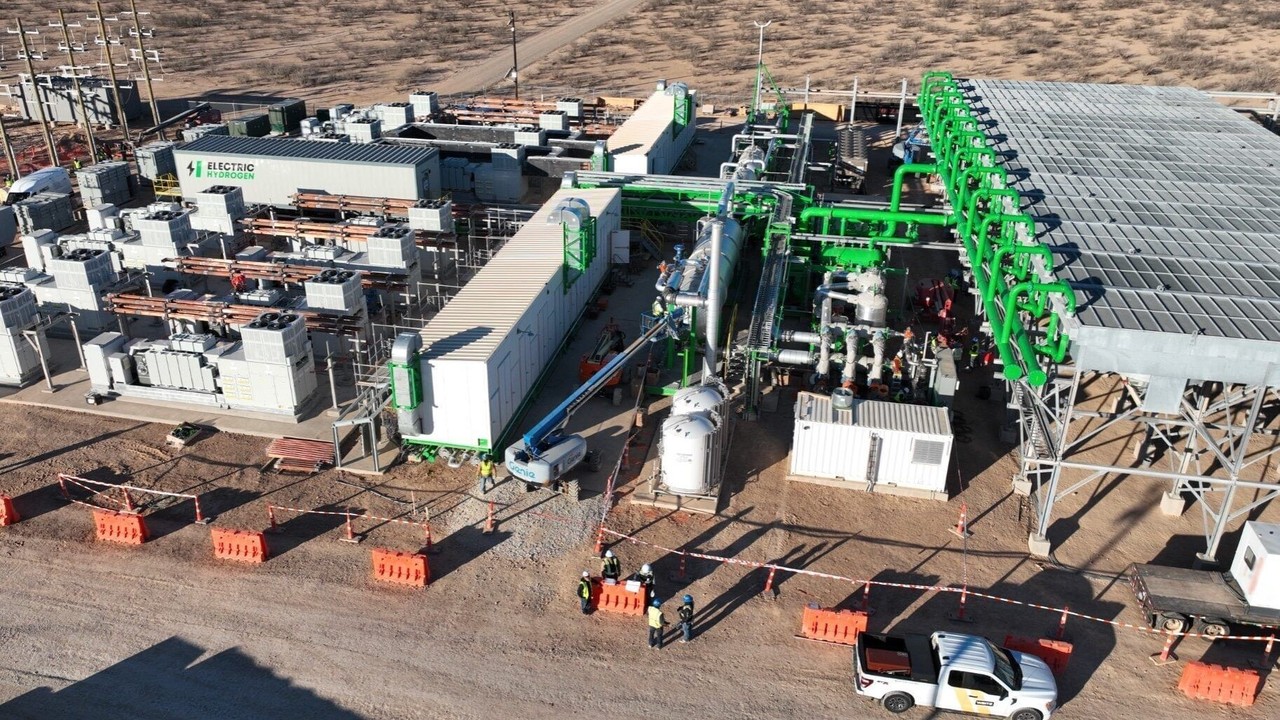
6 kilometers deep: what lies beneath
At 6 kilometers below the surface, the rock temperature reaches approximately 300 degrees Celsius.
To give you an idea, that’s almost double the temperature needed to boil water. It’s enough heat to generate electricity without burning any fuel.
Of the 6 kilometers drilled, 2.7 km were through granitic rock — one of the hardest on the planet.
The drilling took place in the Denver-Julesburg Basin, in Weld County, south of the city of Greeley, Colorado. The region is known for its oil and gas production — an irony of fate for a clean energy project.
Operations began in April 2025, and both wells were completed in less than six weeks.
The original plan called for 60 days per well. The Oxy team did it in less than half the time.

Why an oil company is drilling for clean heat
The answer is simple: expertise.
Oxy has been drilling deep wells for decades. It has rigs, trained teams, supply chains, and technical knowledge that few companies in the world possess.
All this infrastructure that the oil industry has built over a century can be reused — this time, to extract clean energy.
The project’s principal investigator, Darien G. O’Brien, from Occidental Petroleum, coordinates a team that includes significant partners:
- Los Alamos National Laboratory
- National Renewable Energy Laboratory
- Colorado School of Mines
- Texas A&M University
- Louisiana State University
The project uses technologies that the oil industry already masters, but adapted for heat: high-temperature downhole tools, cooling systems, and real-time cloud-based analysis.
The goal is to increase drilling speed by more than 25% compared to conventional geothermal methods.
The data that could change everything: geothermal energy in places no one looked
Traditionally, geothermal energy is only viable in volcanic regions — Iceland, New Zealand, western U.S.
The GLADE project aims to change that.
If Oxy proves it’s possible to extract heat from sedimentary basins — the same type of rock formation where oil is found — geothermal energy could become viable in locations never before considered.
This would “unlock new geographies” for geothermal energy, according to Department of Energy reports. Sedimentary basins exist on virtually every continent.
In Brazil, for example, basins like Paraná, Parnaíba, and Santos could theoretically be candidates — if the technology proves economically viable.
How oil drilling differs from geothermal — and why Oxy has an advantage
Conventional geothermal energy relies on natural hot water reservoirs, usually less than 3 to 4 kilometers deep.
GLADE goes further. It drills up to 6 km, where the rock is dry and hot. The idea is to inject water through one well, circulate it through the heated rock, and extract it through the other well — already transformed into 300°C steam.
It’s like using the Earth as a natural boiler of infinite energy.
Oxy’s speed is also impressive. While conventional deep geothermal wells take months to drill, Oxy’s team completed one in 18 days — applying directional drilling techniques that the oil industry has perfected over decades.

A 2.2-megawatt pilot plant — and what comes next
If the fluid circulation tests between the two wells are successful, the next step is to build a 2.2-megawatt pilot plant.
It’s not much — it would be enough to supply a small community or an industrial operation. For comparison, a modern wind turbine generates between 2 and 3 MW. But the difference is that geothermal energy works 24 hours a day, 365 days a year, without relying on wind.
But GLADE’s goal is not to generate electricity at scale. It is to prove the concept.
If it works, Oxy and other oil companies could replicate the model in hundreds of sedimentary basins around the world, using existing infrastructure.
The irony is evident: the same industry that has contributed most to climate change may hold the key to a source of clean and infinite energy.

However, it’s still too early to celebrate
The GLADE project is experimental. Oxy has not released detailed technical results. Data analysis is ongoing with academic partners and federal laboratories.
The rock stimulation needed to create pathways between wells involves techniques similar to hydraulic fracturing — the controversial fracking. This could generate opposition from local communities and environmentalists.
The actual cost of producing deep geothermal electricity is still unknown. The DOE’s $9 million grant only covered drilling. The pilot plant, surface infrastructure, and continuous operation will require additional investments.
However, the speed of 18 days for 6 km of drilling is a milestone. If the cost drops sufficiently, deep geothermal energy could become the next major disruption in the energy sector.
Geothermal energy currently meets less than 1% of global electricity demand. Humanity, as scientists say, has “barely scratched the surface” of the potential that exists beneath our feet.
Until then, the question remains: will the Earth’s infinite heat finally replace the oil that Oxy has drilled for a century?
If an oil company has proven it can extract clean heat from the Earth in 18 days, what prevents others from doing the same — technology or will?