





 Portuguese
  English
  Spanish
  5 min of reading
  0 comments


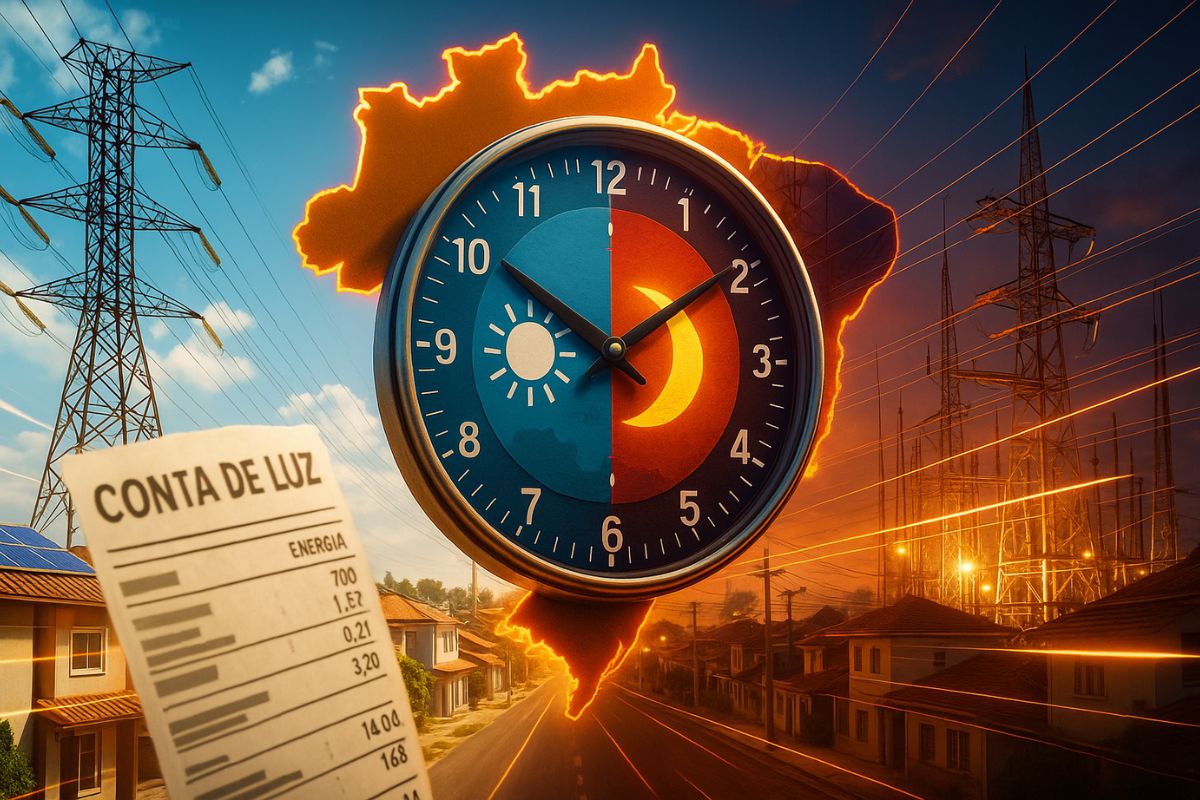
The Proposed Change to the Electricity Bill Anticipates the Adoption of an Hourly Tariff in Low Voltage, Directly Connecting the Amount Paid by Consumers to the Time When Energy is Used, Expected to Start from 2026 for the Largest Residential and Commercial Consumers in the Country
The National Electric Energy Agency is assessing a profound reformulation in the way electricity bills are calculated for low-voltage consumers, with the creation of a Hourly Tariff that makes energy cheaper during certain times of the day and more expensive during peak demand periods, especially in the late afternoon and early evening. The change, still in the study phase, is set to start from 2026 and will begin with customers consuming over 1,000 kWh per month, a group that includes large households and larger commercial establishments.
In practice, the proposal aims to align the electricity bill with the new reality of the Brazilian electric system, characterized by significant expansion of solar and wind generation. Instead of a flat price throughout the day, the value of the kWh would reflect the hours of surplus and scarcity of energy on the grid, which may mean cost reduction for those who shift their consumption to midday and increases for those who concentrate usage during the so-called peak hours, between early evening and the start of the early morning.
What Changes in the Electricity Bill with the Hourly Tariff
Today, most low-voltage consumers pay a tariff that does not vary according to the time of day. Although there is a White Tariff, which already differentiates prices at certain times, enrollment is voluntary and had low uptake among residential consumers.
-
Paraguay launches Investor Pass in São Paulo and allows direct permanent residency for foreigners without going through temporary residency with investment in real estate, stocks, or tourism.

-
Oil prices soar after Iran and the U.S. attack ships in the Strait of Hormuz, with Brent crude reaching $95.59 amid the risk of a new war.

-
Premium cleaners charge up to R$ 1,000 for 8 hours, earn above the CLT and public servants, and go viral on social media, but experts warn of risks without guarantees.
-
Almost 70% of Brazilians have debts and 41% have not paid back friends and family after borrowing, according to Datafolha; revolving credit turns into a snowball and financial pressure affects 45%.




The Hourly Tariff under study aims to go further, transforming this logic into a more comprehensive and automated model for large low-voltage consumers.
In the proposed design, the electricity bill would be cheaper during times of greater energy availability, mainly between late morning and early afternoon when solar generation is at its peak.
On the other hand, consumption between 6 PM and 9 PM, a period when the system tends to operate close to its limit and relies more on thermal plants, would become more expensive.
The goal is to signal to consumers when it is more advantageous to turn on high-consumption appliances, such as air conditioning, washing machines, pool pumps, or electric vehicle chargers.
Who Will be Affected First
The proposal does not affect all consumers at once.
The initial focus is on units consuming over 1,000 kWh per month, a range that includes higher-income families, larger homes with intense use of electrical equipment, as well as medium-sized businesses.
It is estimated that this group comprises about 2.5 million units, responsible for approximately one-quarter of all low-voltage consumption.
By prioritizing this segment, the agency aims for a significant impact on the electric system with a relatively smaller number of consumers, allowing for testing and calibrating the model before potential expansion.
In practice, this group has a greater capacity to adapt consumption habits and invest in routine or infrastructure adjustments, which increases the chance of a meaningful response to price signals.
Nonetheless, those who do not modify their energy usage during peak hours may feel the pressure on their electricity bills.
How Hourly Measurement Would Work
For the Hourly Tariff to become a reality, traditional meters will need to be replaced with smart meters capable of recording energy consumption hour by hour.
These devices allow for precise identification of how much each unit consumes during each time slot, which is essential for applying a different tariff throughout the day.
The electricity distributors would be responsible for conducting this meter replacement within their modernization plans.
The electricity bill would start to show, in more detail, the consumption during each tariff time slot, highlighting for consumers how much was spent during cheaper and more expensive periods.
This level of transparency is likely to be decisive for the user to understand the effect of their daily choices on the monthly bill and to adjust their behaviors.
Expected Benefits for the Electric System
By encouraging the shift of consumption to times of greater energy supply, the Hourly Tariff has the potential to reduce waste and optimize the use of existing infrastructure.
During the day, especially between 10 AM and 2 PM, solar generation is typically abundant, and the cost of electricity production is lower.
Without a demand incentive during this period, part of this clean energy may go underutilized.
At night, the need to activate thermal plants increases the system’s costs and adds pressure on the generation and transmission structure.
By aligning the electricity bill more with the logic of supply and demand, the proposal helps relieve the system during the most critical times, postponing investments in new plants and transmission lines.
In the long term, this tends to contribute to more stable tariffs and a more sustainable system from an economic and environmental perspective.
Risks and Challenges for the Consumer
Despite the potential gains, the change also brings challenges.
Consumers who cannot shift appliance usage to cheaper times may see their electricity bills rise, especially those who concentrate their routines in the early evening.
This is the case for families who are out of the house during the day and only turn on air conditioning, electric showers, ovens, and other devices when they return from work.
Another sensitive point is the need for clear communication.
Without adequate information about the most advantageous times and how to reorganize the use of equipment, some consumers may not benefit from the new model and may feel that the change was made solely to increase rates.
Therefore, the implementation phase will require awareness campaigns, bill simulations, and practical guidance for different consumption profiles.
Next Steps Until 2026
The Hourly Tariff proposal is still in the study phase and will need to undergo public consultation before any final decision.
In this process, specialists from the electric sector, distributors, consumer associations, and other interested parties will be consulted to seek adjustments that make the model technically viable and socially acceptable.
There is no definitive date for implementation, but the expectation is that the first phase could start from 2026, provided that testing and regulations progress as planned.
Until then, the design of the Hourly Tariff should be refined, with the definition of time slots, relative price levels, and a schedule for meter replacements, so that the change is not seen merely as an increase in complexity in the electricity bill, but as a tool for efficiency and rationality in energy use.
Ultimately, the real impact of the Hourly Tariff will depend on how well consumers, distributors, and regulators can align interests between saving on the electricity bill, system security, and better utilization of renewable sources.
And you, are you already thinking about reorganizing your appliance usage at home if your electricity bill starts to vary more significantly according to consumption time?










-

Uma pessoa reagiu a isso.