






 Portuguese
  Spanish


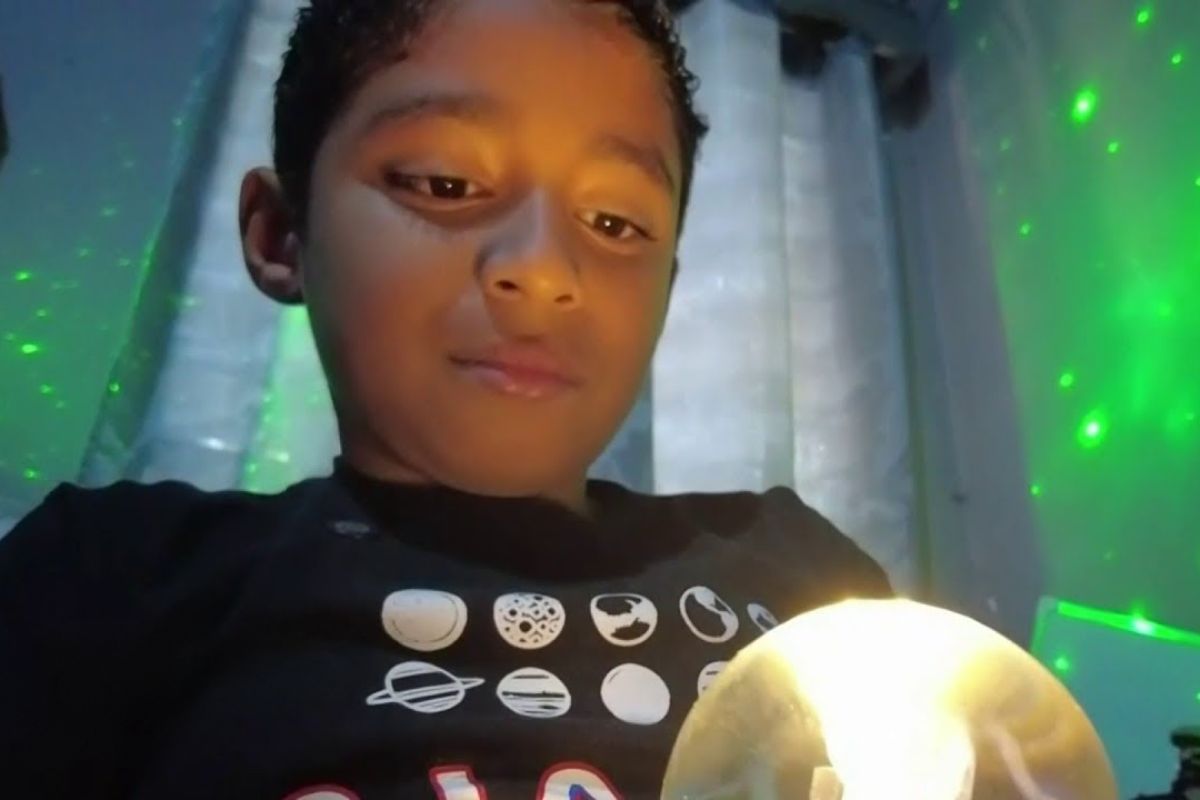


In Honduras, Andrés, 9 Years Old, Became a Prodigy After Starting at 4 in NASA’s Children’s Challenges, With Published Projects. He Has 10 to 12 Certificates and, in November, Joined the Global Community of Prodigy Children. Inspired, He Received a Martian Rock from Astronaut Alan Thomas and Aims for Artemis 2.
The story of a prodigy child in Honduras gained prominence by bringing together, in the same journey, participation in NASA’s children’s challenges, published projects, and international recognition. Andrés, now 9 years old, says he dreams of becoming the first Honduran astronaut and treats every obstacle as part of a possible path.
What stands out is not just the list of milestones but the described routine: daily hours of self-directed learning, dedication to writing, studying, and researching about the universe, and the decision to turn this interest into a children’s channel on YouTube, designed to teach other children.
Starting at 4 in NASA’s Children’s Challenges

The turning point happened early. At age 4, Andrés began participating in challenges aimed at children related to NASA.
-
At 17, she hand-painted her first watercolor design for school uniforms; her brand grew without investors, sold 135,000 pieces, and aims for $3 million in revenue by 2026.

-
Shell Discovers Intact Early 19th-Century Wooden Shipwreck in the Gulf of Mexico at Over 1,300 Meters Deep
-
Brazilian Entrepreneur Turns Door-to-Door Jewelry Sales into a Family Business Empire with Over 70 Stores

-
$75 Million Bridge in Brazil Opens to Connect Cities, Create Jobs, and Cut Travel Time from 30 to 2 Minutes; Spanning 1.24 km, It’s Among the Country’s Largest and Ends Decades of Ferry Queues.




From this entry, several projects were published, helping to consolidate his identification with space themes and strengthening the goal of pursuing a career as an astronaut.
In practice, the presented journey puts the prodigy child within a circuit of activities that require persistence: participating in challenges, developing ideas, recording results, and then following up on publications.
It is in this sequence that he claims to have found a personal method of handling difficult tasks, insisting until he can progress.
Certificates and the Sequence of Participations

The accumulation of participations appears as a concrete fact of the case.
Andrés claims to have about 10 to 12 certificates for participating in NASA’s challenges.
For a prodigy child, this quantity serves as an objective record of attendance, effort, and continuity, indicating that the activity was not limited to an isolated episode.
The account also suggests a pattern of consistency: he describes dedicating many hours to learning, tackling tasks that, for his age, seem out of the ordinary.
Within this scenario, the certificates become a kind of verifiable trail of participation, step by step.
International Recognition and the Global Community of Prodigy Children

In November, the formal recognition came: Andrés joined the Global Community of Prodigy Children, a milestone that reinforces the prodigy child label on an international scale.
The recognition is cited as a direct consequence of talent and skill, but also as a result of a routine that “does not stop,” maintaining ongoing studies and projects.
Another symbolic scene was associated with this moment: astronaut Alan Thomas handed Andrés a Martian rock, presented as a symbol of the dream of becoming an astronaut.
The prodigy child reacted with enthusiasm and received the promise that, during a future visit to the Moon or Mars, he could receive a larger rock, amplifying the significance of the gesture.
Study Routine, Research, and a Children’s Channel to Teach
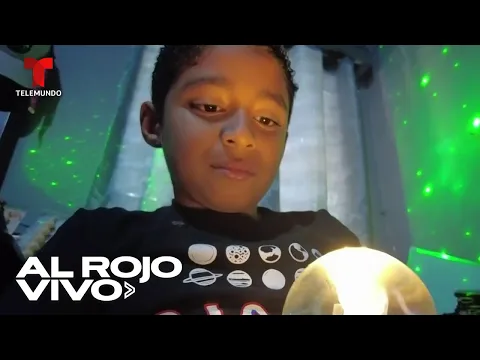

The described routine is built around repeated tasks: writing, studying, researching, and learning about the universe.
This flow appears as the core of day-to-day life and, at the same time, as the basis for the children’s channel on YouTube that Andrés created to teach other children, presented as a space for “little explorers.”
The production of the videos follows a clear process: first, he prepares a script; then, he researches, consults references, and also sketches.
The presence of this planning stage reinforces the idea of method, something that helps explain why he is treated as a prodigy child within the presented context.
The Next Goals: Visit NASA, Meet Christina Koch, and Talk to the Moon
The plans announced by Andrés combine concrete goals and personal inspiration.
He wants to visit NASA and meet astronaut Christina Koch, cited as a direct reference.
The connection to Artemis 2 appears when he mentions having sent a message before the upcoming Moon mission, asking for a symbolic gesture: a “hello,” even from a distance.
Additionally, he verbalizes a local project: to open a space school in Honduras for children interested in the universe, intending to teach “everything about space.”
In closing, the material also points to a forthcoming milestone: this year, he is expected to receive international recognition as a prodigy child in England, reinforcing that the journey continues.
In the short term, Andrés’s story focuses on a set of rare signals for his age: recognized prodigy child, published projects, certifications, a symbol handed by an astronaut, and a reiterated goal of reaching space.
If you want to follow cases like this and understand how these routines are formed, it’s worth following this type of account and observing the next steps.
Which part of this prodigy child’s journey impressed you the most: starting at 4 in NASA, accumulating certificates, receiving the Martian rock, or planning a space school in Honduras?





Parabéns.
O Brasiltb tem um prodígio e mora no RJ.