Portuguese
  Spanish


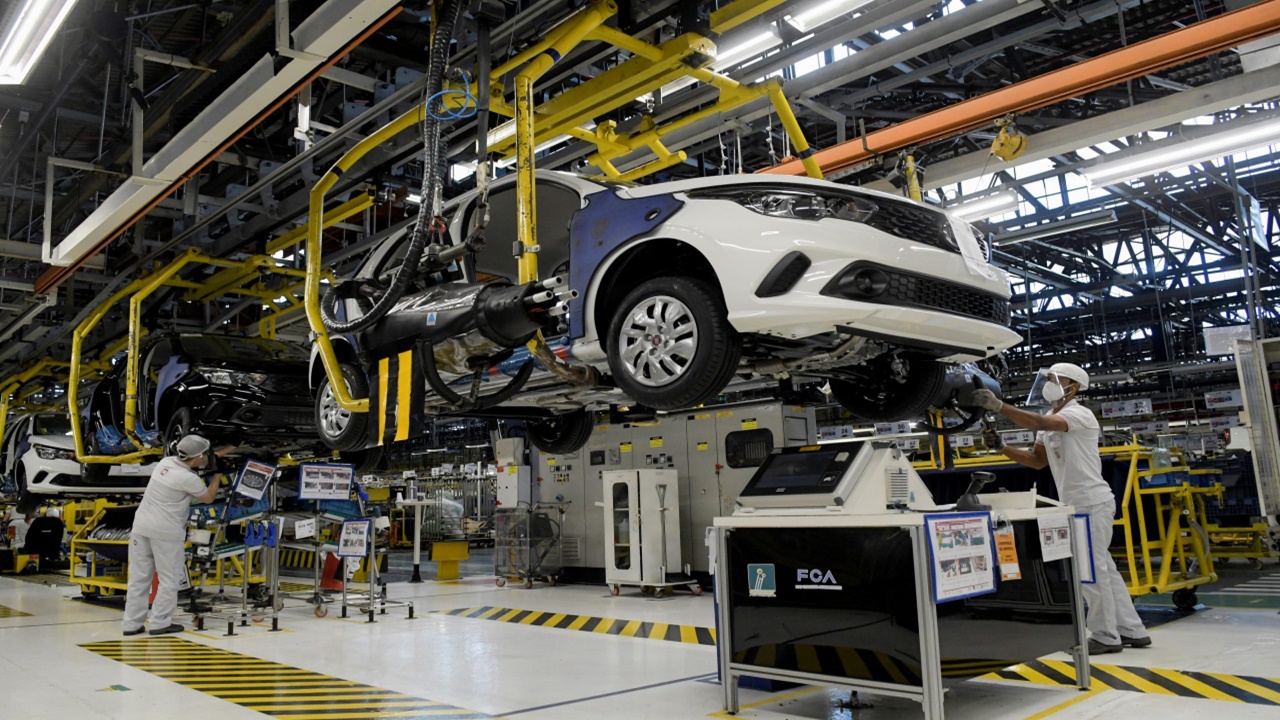

Increase in Demand for Transportation via Apps and Deliveries Drives Vehicle Sales and Keeps the Automotive Sector Strongly Heated Amid Crisis
Brazilian spending on personal vehicles, driven since the beginning (and rightly so) by the Covid-19 pandemic, is expected to continue growing, reaching R$ 544.8 billion by the end of this year, which represents an increase of 169.7% compared to 2019. This is indicated by the IPC Maps Survey, which specializes in the consumption potential of Brazilians for almost 30 years, based on official data.
Also Read
- Company Listed as One of the Fastest-Growing in the Americas Opens Selection Process for Home Office or Hybrid Job Vacancies in Rio de Janeiro
- Offshore Contracts in Brazil of the Multinational Oil and Gas Company GranIHC Demand Many Job Vacancies Today (30/09) for Elementary, High School, and Technical Education
- Hiring for Job Vacancies of Professionals Aged 40 and Over Increases by 217%!
- Baterias Moura, Leader in the Production of Automotive Batteries, Calls for Many Job Vacancies in Its Factories in SP, RJ, PE, and More
- Multinational Urgently Calls for More than 200 Home Office and Hybrid Job Vacancies in RJ, SP, RS, PR, and Other Brazilian States
According to the survey, from 2019 to 2020, consumption potential in the category had already increased by about 138%, from R$ 202 billion to R$ 480.7 billion. This calculation takes into account expenses related to the acquisition and maintenance of all types of motor vehicles, including motorcycles, cars, pickups, trucks, and buses, such as: gasoline, ethanol, repairs, parking, oils, accessories/parts, tires, inner tubes, lubrications, and washes.
Increase in Demand for Transportation via Apps and Deliveries Drives Vehicle Sales
According to Marcos Pazzini, responsible for IPC Maps, this significant advantage in the category is mainly due to the “increase in demand for transportation via apps and deliveries, both by consumers who have started using these services more and by workers who saw in this segment an opportunity to compensate for a potential decrease in income and/or job loss, both caused by the pandemic.”
-
China’s Engineered Bamboo: The “Material of the Future” Stronger Than Steel and a Sustainable Wood Alternative

-
Egypt’s “New Nile”: 170 km Artificial River Aims to Turn Desert into Farmland, but Water Supply Concerns Loom
-
Eni Acquires 25% Stake in Chilean Lithium Project, Plans to Invest Up to $225 Million in Eco-Friendly Extraction Method
-
Unable to secure a mortgage as a self-employed single mother, she designed her own floating home from a 20-meter boat and now lives “off-grid” with her two children and solar panels on an English canal.



Published annually by IPC Marketing Editora, a company that uses exclusive methodologies for calculating national consumption potential, IPC Maps stands out as the only study that presents in absolute numbers the breakdown of consumption potential by product categories for each of the 5,570 municipalities in the country, based on official data, through versions in geoprocessing software.
This work brings multiple indicators of the 22 items in the economy, by social classes, focused on each city, its population, urban and rural areas, production sectors and services, etc., enabling numerous comparisons between municipalities, their surroundings, states, regions, and metropolitan areas, including in relation to previous periods. In addition, it presents a breakdown of specific sectors based on different categories.