






 Portuguese
  Spanish


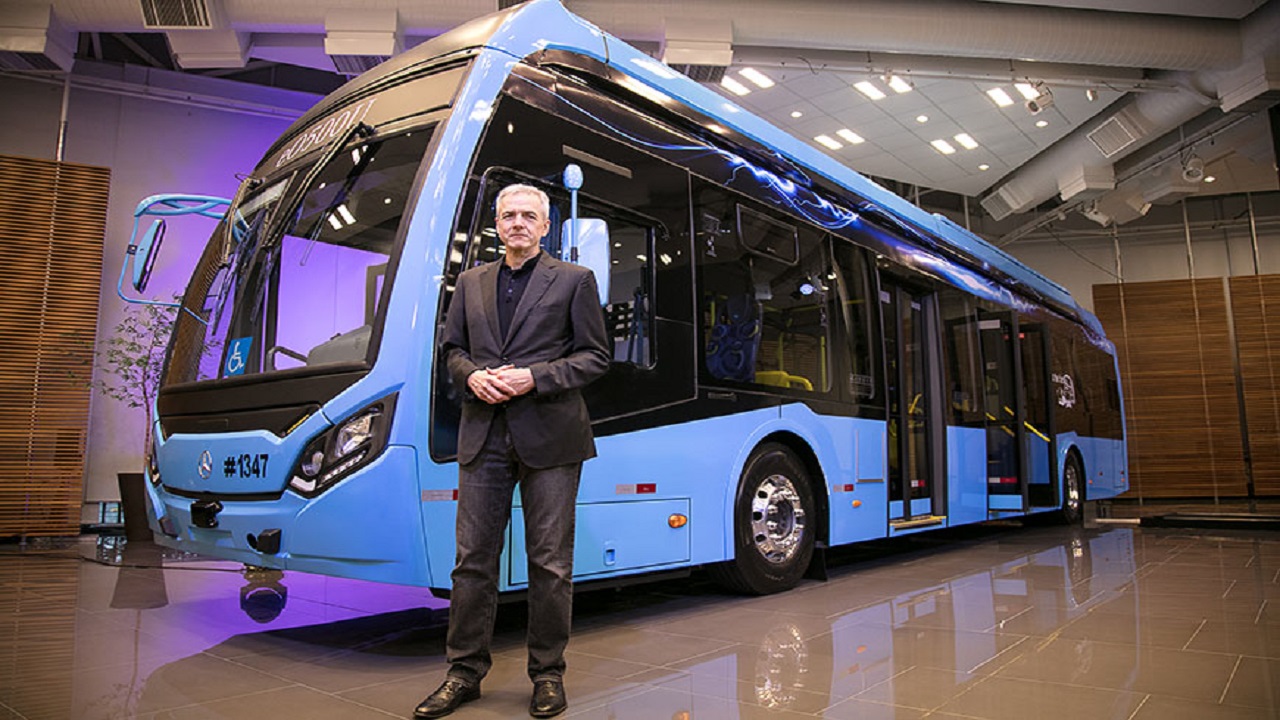

Mercedes-Benz Will Produce Brazil’s First Electric Bus After an Investment of R$ 100 Million
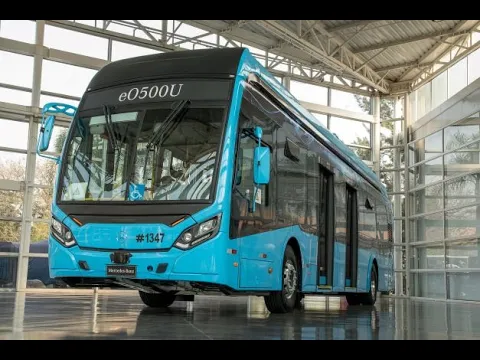
On this Wednesday (25), Mercedes-Benz presented its first step towards electrification. The automaker is developing and investing in chassis for electric buses so that they can be put into circulation in urban centers in Brazil, as well as in neighboring markets on the continent where the company intends to export the technology.
Read Other Related News
Mercedes-Benz Invests R$ 100 Million in Brazil
This step is the result of a R$ 100 million investment by Mercedes-Benz, which is part of the company’s R$ 2.4 billion cycle in the country from 2018 to 2022.
The electric bus project is being developed by teams at the São Bernardo do Campo plant, with support from engineers at Daimler, the owner of Mercedes-Benz, in Germany, where prototypes of the electric buses are already being tested.
-
Why can the crane operator only obey the correct signalman on the construction site: among dozens of workers, a hand raised by the wrong person can confuse the maneuver and turn a load of tons into an immediate risk.

-
What changes with the new public transportation rules that can reduce pressure on fares and pave the way for zero fare in Brazil?
-
Argentina confirms Belgian giant to lead strategic Paraná River waterway and promises to reduce logistical costs on one of South America’s most important routes
-
MBRF surprises the logistics sector by demonstrating how Artificial Intelligence can directly influence deliveries throughout Brazil by reorganizing distribution routes in seconds, optimizing fleet usage, reducing logistics costs, and speeding up product arrivals even in the face of unforeseen road incidents.
The plan is for the product to be sold starting next year. According to Karl Deppen, president of Mercedes-Benz’s Brazilian operation, during the announcement, the speed of adopting new technologies in the country depends on investments in infrastructure such as charging stations for electric batteries.
Words from the President of the New Electric Buses Operation

According to Deppen, for the advantages of technological investments applied to urban mobility to be aggregated to the economic and social development of cities, it is of utmost importance that Brazil and America also invest in their charging stations for the activities of electric buses.
According to Roberto Leoncini, Mercedes-Benz’s Vice President of Sales and Marketing, Mercedes chose to electrify the buses first because public transport vehicles have fewer restrictions than trucks, where there is a lack of a network of charging points across the country, making the use of the technology unfeasible over longer distances.
Roberto also adds that the battery of the electric bus to be launched by the automaker allows the vehicle to travel 250 kilometers on a single charge. The company opted for urban buses because they have a greater impact on society than electric trucks, which have a series of other factors to be resolved. The executive states that electric trucks are something that will come in the future, in due time.
Mercedes-Benz Sells Its Factory in SP
This month, Mercedes sold its factory in Iracemápolis (SP) to the Chinese Great Wall Motors. At the factory, the Class C and GLA models were produced until last year.
In addition, the deal also includes the land of 1.2 million m² and all production equipment and buildings of the German company. The factory’s production capacity is 20,000 cars per year up to the time of its closure, but GWM claims it will expand the factory’s capacity to 100,000 vehicles annually.
According to Jörge Burzer, a Member of the Board of Directors of Mercedes-Benz, with the company’s transition and the realignment of car production capacity in the global network, Mercedes is sustainably increasing its production efficiency. According to the executive, the sale to GWM brought a buyer who will create a new perspective for the future of the Brazilian automotive industry.

Graduated in Journalism and Marketing, he is the author of over 20,000 articles that have reached millions of readers in Brazil and abroad. He has written for brands and media outlets such as 99, Natura, O Boticário, CPG – Click Petróleo e Gás, Agência Raccon, among others. A specialist in the Automotive Industry, Technology, Careers (employability and courses), Economy, and other topics. For contact and editorial suggestions: valdemarmedeiros4@gmail.com. We do not accept resumes!








