






 Portuguese
  Spanish


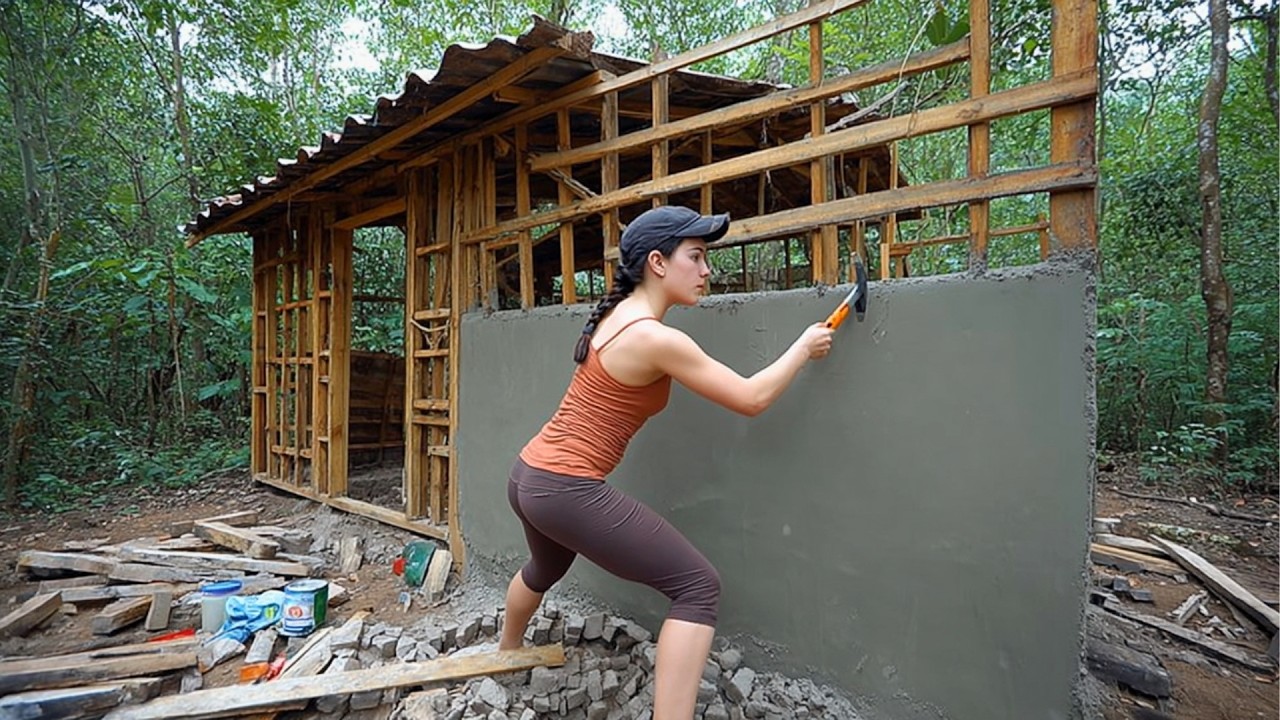


After Losing Home In Fire, Woman Builds House In 90 Days In The Jungle, Lives Isolated From Civilization And Creates Self-Sufficient Shelter From Scratch.
What begins as absolute destruction rarely ends as total reconstruction. But, in the midst of dense vegetation and the isolation of the jungle, Lý Phúc Vy’s story follows exactly this path. What you are about to learn is not just about building a house, but a complete reconstruction of a way of life, built from scratch after a fire consumed an old bamboo dwelling, leaving only ashes as a starting point.
The loss could have meant abandonment, retreat, or external dependence. Instead, it became the trigger for an even more ambitious, resilient, and lasting project, conducted entirely by the builder’s own hands, without urban support, without outsourced teams, and far from any conventional infrastructure.
From The Fire To The Decision To Rebuild Everything From Scratch
The old bamboo house, typical of rural regions in the Southeast Asia, did not withstand the fire. The lightweight material, although sustainable, revealed its fragility in the face of a rapid and devastating fire. What remained was the physical and symbolic void of a lost home.
-
China to Drill 90 Kilometers Under the Sea to Connect Two Cities Currently Linked Only by Ferry

-
18 m² Home Built in Two Days by Teto Volunteers Provides Shelter from Insects and Cold for Resident in Brazilian Community; 43 Delivered in 2026

-
$134.7 Million Project in São Paulo Installs Over 5 Kilometers of Pipes, Creates New Underwater Crossing to Boost Water Supply for Over 450,000 People

-
At 61, Former Homeless Wheelchair User Receives Key to Container Home in Brazil, Declares Independence



It was in this scenario that Lý Phúc Vy made a radical decision: not just to rebuild, but to completely transform the logic of housing. The new house would not be temporary or improvised. It would be solid, elevated, moisture-resistant, more fire-resistant, and designed to last decades, even in a hostile environment like the jungle.
Elevated Foundation And Adaptation To The Natural Terrain
The reconstruction began with understanding the terrain. The uneven, wet soil, prone to runoff, required a careful structural solution. The house began to be built on masonry pillars, keeping the floor elevated from direct contact with the ground and reducing risks of decay, infiltration, and insect attacks.

The combined use of bricks, cement, and elevated structure created a firm foundation capable of supporting both the weight of the construction and the climate variations of the region. Each pillar was manually leveled, respecting the natural topography, without major cuts or aggressive earth movements.
More Resistant Structure And Walls Designed To Last
Unlike the old bamboo house, the new construction adopted masonry walls, ensuring greater thermal, structural, and fire protection.
The process was done step by step, from raising the courses to the final plastering, always focusing on proper sealing and durability.

The cement finish and attention to corners and joints created a sort of protective “shell,” isolating the interior from the constant moisture of the jungle. Windows and doors were strategically placed to allow cross-ventilation, essential in a warm and vegetation-cloistered environment.
Roof, Climatic Protection And Thermal Comfort
The sloped roof was designed to handle heavy rains, facilitating water runoff and preventing accumulation. The coverage is not only functional: it protects the walls, expands the shade around the house, and helps keep the interior cooler.
Each element was designed to reduce future maintenance and increase the autonomy of the dwelling, avoiding fragile materials or temporary solutions.
The Surroundings As An Essential Part Of The Project
Upon exiting the house, it becomes clear that the project does not end at the walls. The surroundings were integrated into the dwelling as a functional extension of home. A garden organized in brick beds provides fresh food and creates a direct relationship with the land, reinforcing food self-sufficiency.

Drainage channels were dug to direct rainwater and the natural runoff of the terrain. Instead of fighting against the water, the project incorporates it, channeling it to irrigate the orchard and production areas, reducing waste and erosion.
This integration between construction and landscape shows that the focus is not just on living in the jungle, but on coexisting with it in an intelligent and sustainable way.
More Than A House: Safety, Dignity, And Rebuilding Life
What Lý Phúc Vy truly built cannot be measured solely in square meters or materials used. The new home represents safety after loss, dignity after destruction, and beauty arising directly from hardship.

Each wall raised, each pillar aligned, and each bed built carries the mark of a reconstruction that goes beyond the physical. It is about reclaiming autonomy, control over one’s own space, and the ability to transform tragedies into new beginnings.
An Example Of Resilience And Conscious Construction
In just 90 days, a house destroyed by fire gave way to a solid, functional, and nature-integrated refuge. Isolated from civilization, without urban support, and far from any conventional network, the project proves that technique, planning, and determination can transform deep losses into lasting life projects.
Lý Phúc Vy’s story is not just about building a house in the jungle. It is about rebuilding an entire world, one brick at a time, where there was only ash before.


