Portuguese
  Spanish




Rio Grande do Norte (RN) Is Strongly Returning to the Onshore Oil Sector and Already Reports a 300% Increase After Petrobras Decided to Stop Investing in Mature Fields a Few Years Ago.
Rio Grande do Norte (RN) has become the largest onshore oil producer in Brazil again after several years, a position it lost when Petrobras decided to stop investing in mature fields, which became unattractive for those focused on the Pre-Salt. The production from RN, which had reached 120 thousand barrels per day, became a “joke” when the state-owned company began focusing its investments on the Pre-Salt. The onshore oil market in RN saw productivity increase with the arrival of independent companies to explore and produce onshore fields.
Rio Grande do Norte (RN) Reports a 300% Increase in the Onshore Oil Sector
After the sale of mature fields and the arrival of independent producers in RN, the state has already reached a stable mark of 35 thousand barrels of oil per day, placing it first in onshore oil production, with a 300% increase since independent companies started operating.
However, the trend is for expansion, and the goal is to surpass previous positions. It is important to emphasize that the sector, before Petrobras’s decision, already accounted for 45% of the industrial GDP, and had been declining since 2010, directly impacting the economy of Rio Grande do Norte (RN) and also its state revenues.
-
The Chamber releases R$ 10 billion to hold the price of diesel until December and proves that Brazilian fuel remains tied to Congress.

-
It’s official: Petrobras takes 75% of block 3 in São Tomé and Príncipe and debuts as an offshore operator outside South America.
-
With a record production of nearly 3 million barrels per day, Petrobras resumes importing diesel in July, highlighting the bottleneck in Brazilian refining.
-
Qantas and Airbus Invest in Company Aiming to Convert Unsorted Household Trash into Jet Fuel


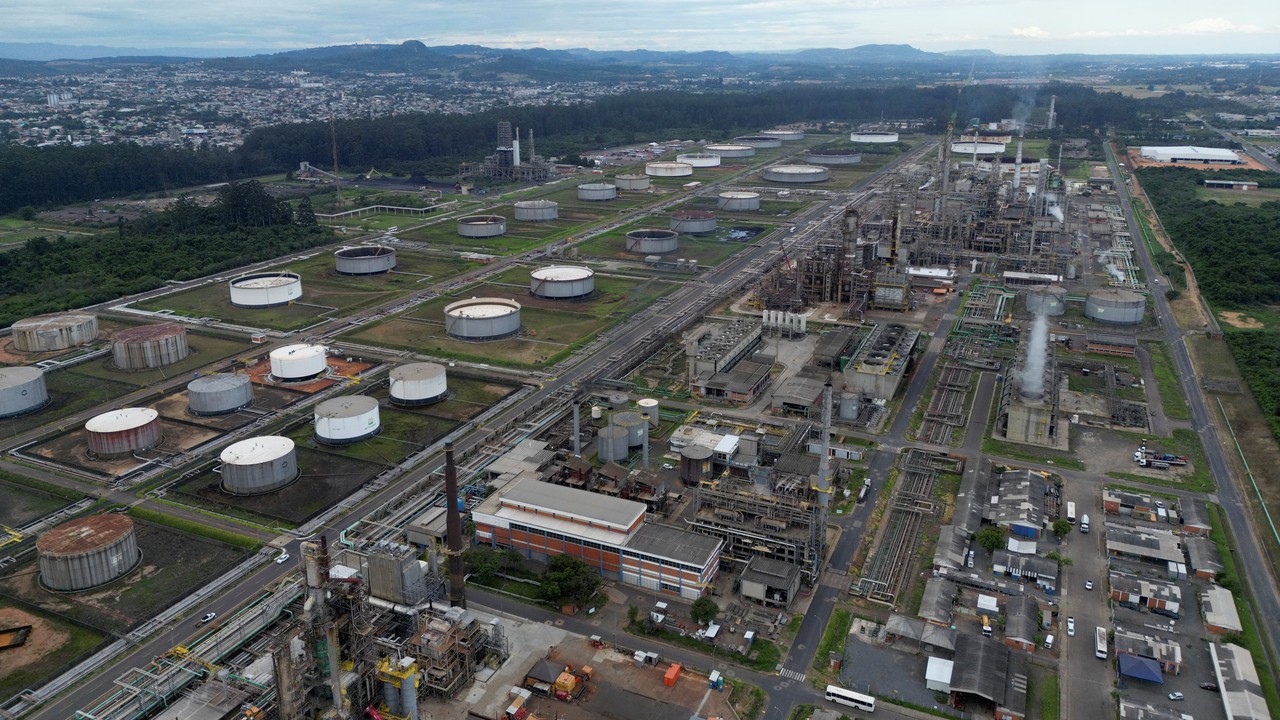

With Petrobras’s divestment, FIERN sought collaboration with local business owners and supplier networks, regulatory agencies, representative entities, and the Ministry of Mines and Energy to address the restructuring of the sector in the state, which accounted for 40% of RN’s Industrial GDP.
Business Leaders and Authorities Comment on Petrobras’s Exit from Onshore Oil Production
At the time, the Executive Vice President of the National Organization of the Petroleum Industry (ONIP), Márcio Félix, believed that RN would lead the way and was making significant strides in resuming onshore oil exploration and production operations, serving as a great example for other states.
Félix believed that Petrobras’s sale of assets in shallow waters marked the end of a period of the company’s presence in the national onshore sector and the start of a new phase for the sector with private industry participation.
It is also important to highlight that currently, Rio Grande do Norte (RN) ranks sixth in overall production, but the trend is for expansion with new investments and new technologies. According to the president of PetroReconcavo and Potiguar E&P, Marcelo Magalhães, the state’s onshore market is experiencing a moment of recovery and expansion.
Potiguar E&P Invests US$ 150 Million
In 2020, PetroReconcavo, through its subsidiary Potiguar E&P, acquired Petrobras’s stake in the Riacho da Forquilha Polo fields, marking the first transaction involving onshore fields in mature basins as part of Petrobras’s divestment.
At the time, the company also announced a US$ 150 million investment over five years. According to the company’s CEO, Potiguar E&P is pleased with its operations in the state, considering that it found high-quality labor, skilled individuals, and continues to receive support from the government, Sebrae, and FIERN.
The onshore oil sector is experiencing a new moment, and Rio Grande do Norte has a significant role in this.