






 Portuguese
  Spanish
  3 min of reading
  0 comments


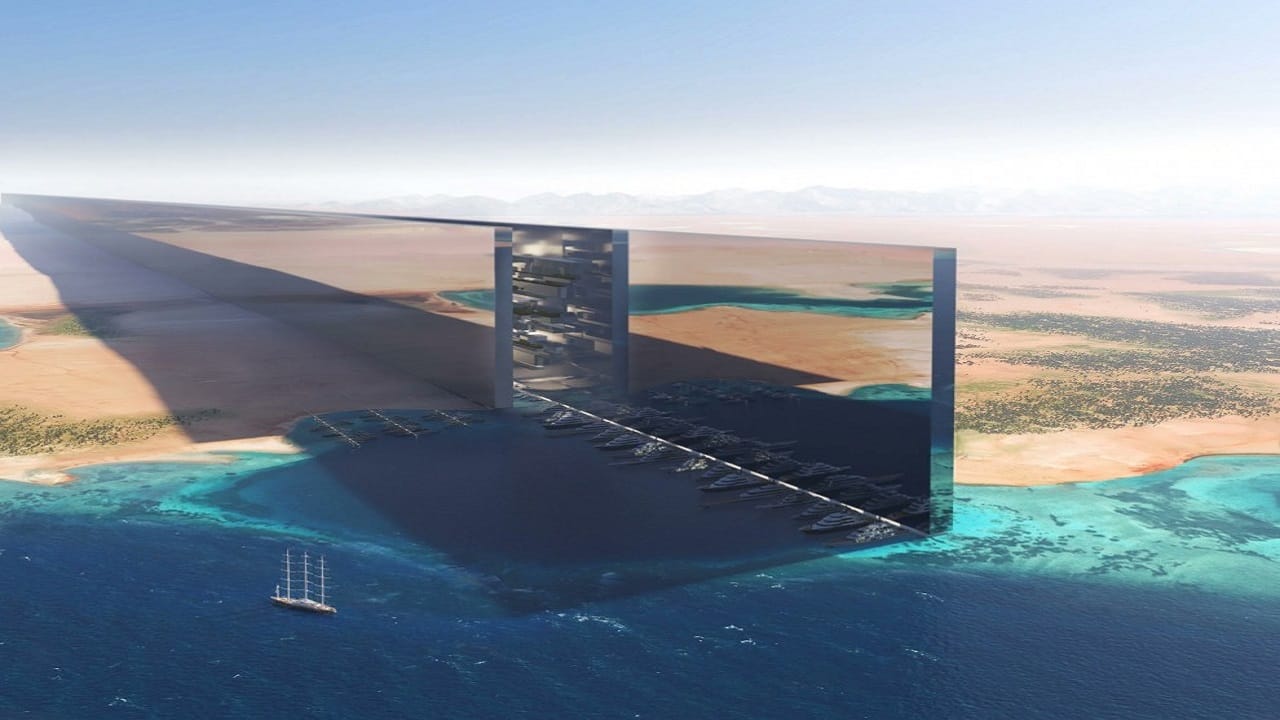
Saudi Arabia Is Developing a New Construction Project That Will Change the Concept of Engineering Around the World. It Is The Line, a City That Follows a Straight Line for 170 km.
A giant vertical city that spans the Saudi Arabian desert, with no cars, roads, or emissions seems like something from another planet. But this is how The Line will be, a sustainable futuristic city that Saudi Arabia has begun constructing in the Neom region, near the Red Sea, representing a significant triumph in civil engineering. The project will cost $1 trillion.
The Line Promises a 3D Life When It Is Complete


Its name is linked to the disruptive design of the supercity. It would be only 200 meters wide and 500 meters high, yet 170 kilometers long, forming an extensive line that would pass through coastal and desert mountainous landscapes.
To reduce urban space, two walls with mirrored exteriors will connect the façade to the surrounding nature. Ambitious, the project aims to go far beyond mere aesthetics and proposes a new way of living. According to the creators of the idea, the goal is to layer the city’s functions vertically, giving people the ability to move in three dimensions: up, down, or sideways.
-
Bolivian Female Construction Workers Form Association to Combat Discrimination and 38% Pay Gap in the Industry

-
Near Amsterdam, residents buy land and discover they must also build streets, manage drainage, handle waste, and grow food on half their plot.
-
Brazil’s WEG to Open New Factory in China by 2027, Expanding Production of Large Rotating Electric Machines and Low to Medium Voltage Motors in Rugao

-
Chinese Shipyard Secures $1 Billion in Orders for Low-Carbon Container Ships Amid Global Fleet Renewal Efforts


According to The Line’s presentation in Saudi Arabia, this is a concept known as Zero Gravity Urbanism. Unlike just tall buildings, this concept overlays public parks and pedestrian areas, residences, schools, and workplaces so that individuals can meet all their daily needs in just 5 minutes.
Sustainability stands out as a highlight of the project, although many details have not been disclosed. What is known is that The Line has been designed to accommodate 9 million people in an area of only 34 square kilometers.
New Project in Saudi Arabia Will Use 100% Renewable Energy
According to The Line’s website, it would be unprecedented compared to other cities of similar capacity. This would preserve 95% of the Neom land and represent only 2% of the infrastructure footprint compared to traditional cities.
Once constructed, the vertical metropolis would be carbon zero, operating on fully renewable energy, even in industries, and there would be no cars or roads. The model would prioritize reduced commuting distances, but for longer distances, a modern transportation system with high-speed trains would complete the journey from end to end in just 20 minutes.
To ensure an ideal climate, the environment has been designed to have a balance of sunlight, natural ventilation, and shade. Additionally, green spaces open throughout the city would contribute to thermal comfort. According to Prince Mohammed bin Salman, the designs for the vertically layered communities will challenge traditional flat horizontal cities and create a model for nature preservation and greater human livability. The Line will illuminate alternative ways of living.
The Project Will Be Ready by 2026
The Line is, in fact, just one part of the NEOM megaproject in Saudi Arabia, which, in addition to the linear city, includes other fronts such as Oxagon, Sindalah, and Trojena. The developments are already under construction, with phased deliveries, and more than 2,800 employees from 86 countries are living and working on-site.
Sindalah is expected to open its doors to visitors as early as 2024, Oxagon also plans to welcome its first residents next year, and Trojena could become a place to live, work, and vacation by 2026.
Despite many not believing that The Line, the future of civil construction, could materialize, construction of the city in Saudi Arabia has already begun. The first modules are expected to be activated in 2026, and by 2030, the intention is for about one million people to live there, reaching nine million by 2045.





-

1 person reacted to this.