Portuguese
  Spanish


Led by Ruben, who works online, the family left the state of Georgia, USA, and has lived since 2020 in an underground communications bunker of AT&T, built during the Cold War. The unlikely dwelling has 557 m², 60 cm thick reinforced concrete walls, and armored doors, and cost US$ 300,000.
Most people flee from a bunker, but an American family did the opposite: they left life on the surface to live inside one. Since 2020, Ruben, his wife, and their four children have been living in an underground bunker built during the Cold War, purchased for US$ 300,000. It is 557 square meters buried, with walls thick enough to withstand a nuclear explosion. The story was told by Newsweek.
The choice may seem crazy, but it makes sense. Since Ruben works online, with marketing and website creation, the family could live anywhere with a connection. Instead of a regular house, they opted for an unlikely dwelling that combines low cost per square meter, extreme security, and the adventure of living in what was once a piece of the country’s defense.
The AT&T communications bunker that became a home
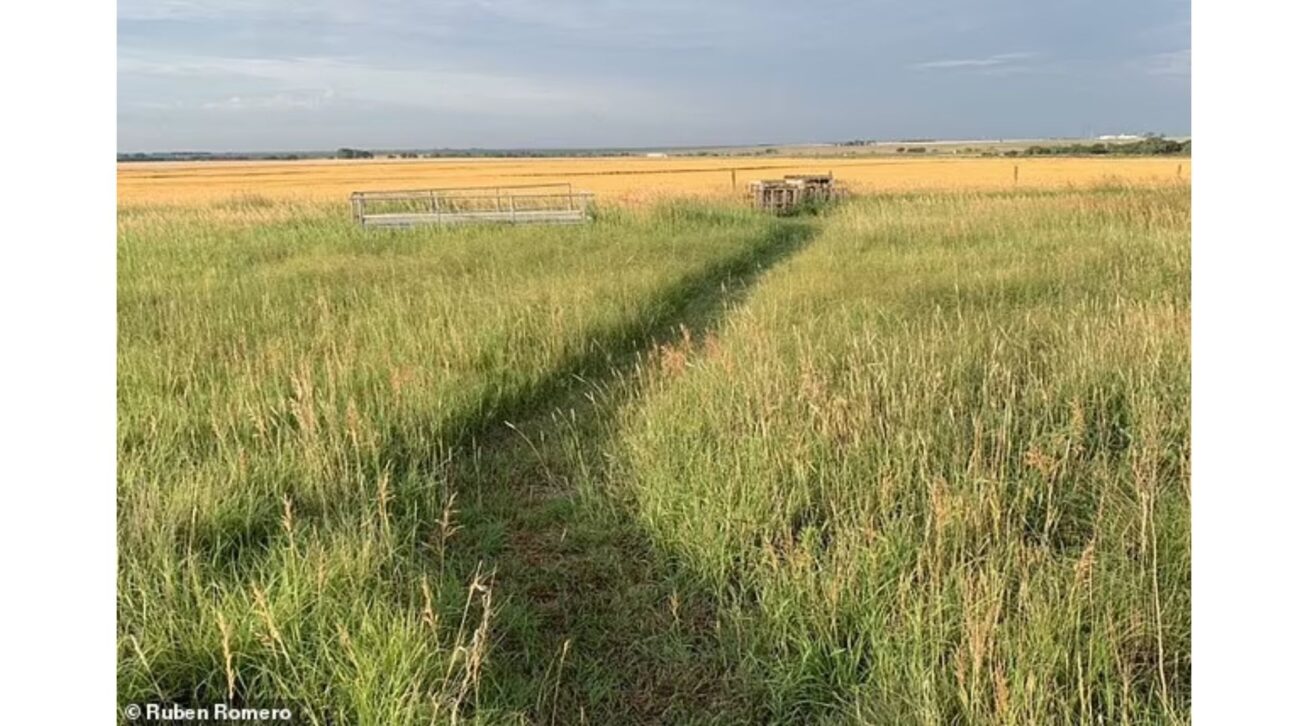
image: Ruben Romero
The origin of the structure is pure Cold War movie. The property is one of about 100 communications bunkers built in the United States in the 1960s, the result of a partnership between the American government and AT&T.
-
Self-taught Brazilian Mechanic Builds 10-Ton Aluminum Sailboat in Backyard, Now Navigates the Brazilian Coast at 50

-
Santa Catarina Launches $1.4 Billion, 145-Kilometer Highway Project with Six Lanes and Speeds Up to 120 km/h

-
Couple Transforms 1913 School into 370 m² Home with Four Bedrooms After $175,000 Purchase and Three Years of Renovation
-
Bamboo Houses Built in 7 Days for the Price of a Smartphone: 26 Survived Intact in Myanmar’s 7.7 Earthquake



Their mission was to keep the country connected even in the worst-case scenario, a nuclear attack that destroyed surface networks.
With the end of the tension between the powers, these bunkers lost their function. Many were abandoned, and it was one of these, unreformed and for sale, that Ruben found.
He convinced the owners to sell the underground bunker for US$ 300,000, a low value for the size of the construction, precisely because it is an unconventional structure.
Buying an AT&T bunker means taking along the history embedded in the walls. What once housed emergency communication equipment has become the address of an ordinary family.
This shift in use, from military fortress to home, is what gives the unlikely dwelling its greatest charm and also its greatest challenges.
557 m² and 60 cm concrete walls
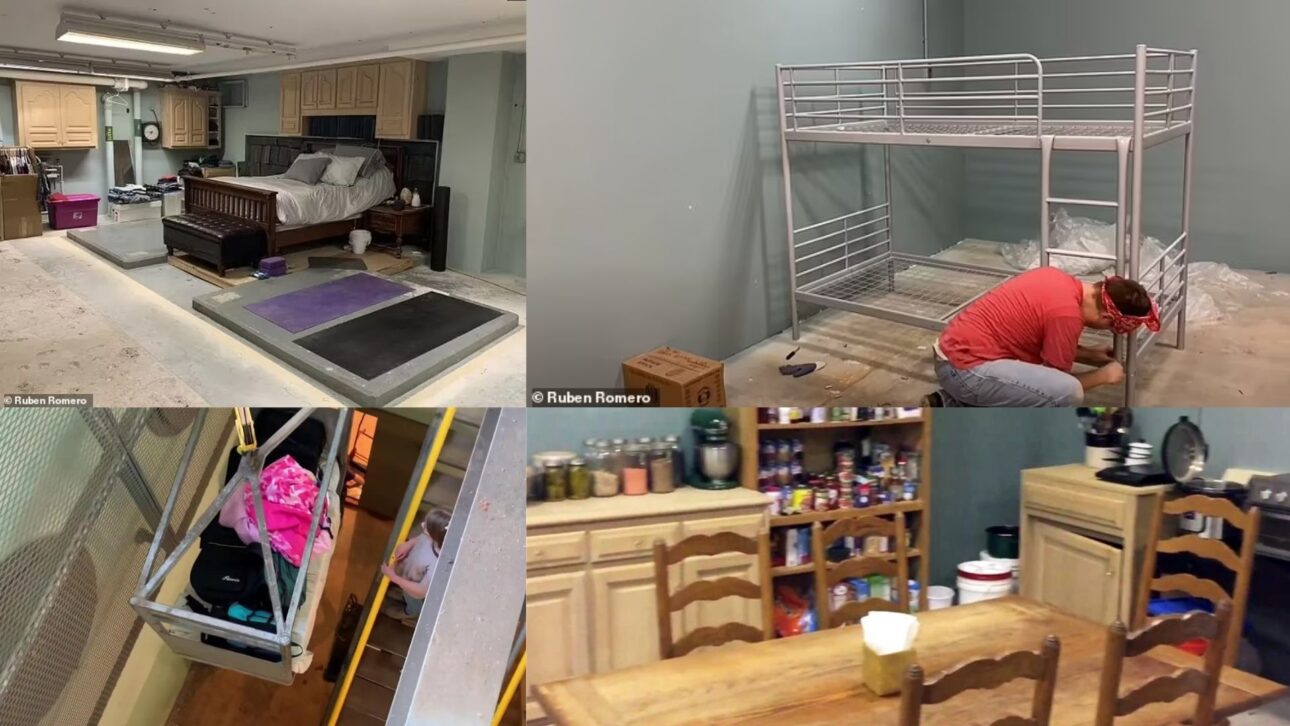
The construction numbers are impressive. The underground bunker is 557 square meters, equivalent to about 6,000 square feet, plenty of space for a family of six. But what stands out the most is the structure, made to withstand the unthinkable.
The walls are a fortress. They are about 60 centimeters, two feet, of reinforced concrete, with steel rebar as thick as an adult’s arm. To enter and exit, the family uses heavy armored doors: one about 1,360 kilograms at the front and another 900 kilograms at the back, plus an escape hatch leading to an emergency staircase to the surface.
All this robustness had a war purpose. The concrete and steel were designed to protect vital equipment from a nuclear explosion, and now they protect a living room, bedrooms, and kitchen. Few homes in the world offer the level of physical protection of an underground bunker like this, and that’s part of the charm of living in it.
Why a family traded Georgia for this
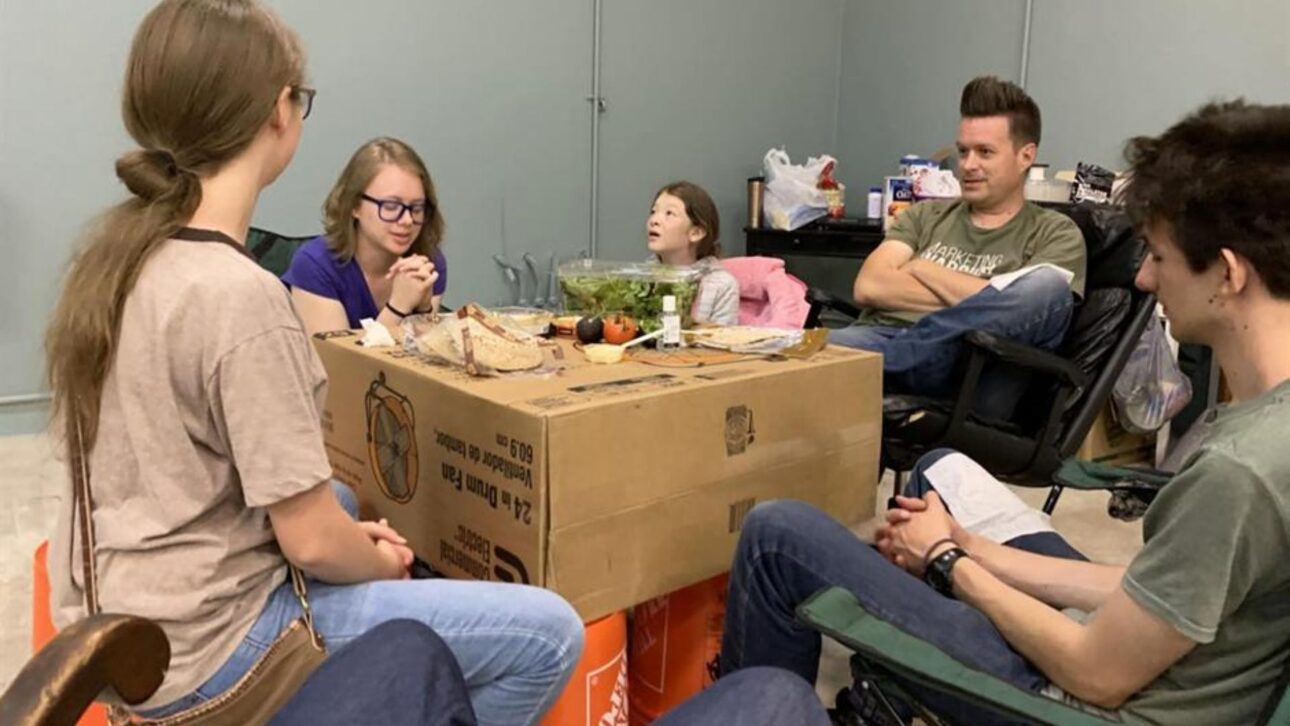
family’s Instagram account, showing them eating pita bread and hummus on a cardboard table they “improvised for the occasion”.
The decision was born from the freedom of remote work. Before the bunker, the family lived in the state of Georgia, in the United States.
Since their livelihood comes from Ruben’s online work, they didn’t need to stay near an office, and this opened the door to a radical choice of unlikely dwelling.
Instead of seeking more space in a traditional house, they went underground.
The change happened in 2020, when the family settled in the underground bunker in the American Midwest and began transforming the war structure into a real home. It was an exchange of conventional comfort for adventure and total privacy.
Part of the journey became content. The family started documenting life underground on social media channels, showing the routine, renovations, and curiosities of raising four children inside a bunker.
This documentation helped make the unlikely dwelling known and dispel the fear that living underground is gloomy.
The biggest challenge: the air you breathe
Living underground presents a problem that a regular house does not have. The biggest challenge of the underground bunker is not the space or the light, but the air.
In sealed and deep environments, gases like radon, methane, and carbon dioxide can accumulate, and the oxygen level can drop, which requires constant attention.
Therefore, the family’s renovation is focused precisely on this. Ensuring ventilation and quality air is the top priority, and the work to adapt the bunker to the needs of a home is ongoing, with no set end date.
Each improvement in the air system makes the unlikely dwelling safer and more comfortable for the children.
This detail shows that living in a bunker is not just romantic, it’s technical. All the engineering that protects the family from the outside world needs to be balanced with solutions that keep the internal environment healthy.
It’s the kind of care that separates a good renovation from a dangerous adventure, and the family takes it seriously.
Unlikely dwelling: from war structure to home
The family’s case fits into a larger trend. More and more people are transforming silos, bunkers, and deactivated military structures into homes, attracted by the combination of price, security, and the unique factor of living in something out of the ordinary.
The unlikely dwelling has ceased to be an exception and has become a niche in the real estate market.
The logic behind it is interesting. Structures like AT&T’s underground bunker were built to last centuries and withstand the apocalypse, so repurposing them as homes is a way to give new life to a heritage that would otherwise rot away.
Reusing concrete and steel from the Cold War is, at its core, recycling on a monumental scale.
There is also the emotional and practical appeal. In a world full of uncertainties, having a home that withstands storms, invasions, and even extreme scenarios reassures many people.
Ruben and family’s unlikely dwelling combines this sense of security with the curiosity of living a story that few would have the courage to experience.
What Brazil has to do with it
Here, the taste for unusual structures turned into houses also exists. Water tanks, silos, containers, wagons, and warehouses have already become homes in Brazil, following the same logic of transforming the uncommon into a home. An underground bunker is the most radical version of this idea, but the principle is the same.
The message that remains is about looking differently at what seems unused. The American family saw in a Cold War relic not a problem, but a 557-square-meter home for a price that a new house of that size would hardly have. Creativity, in the end, is seeing potential where others only see old concrete.
In the end, this family’s improbable home mixes history, engineering, and courage.
Exchanging the surface for an AT&T bunker is not for everyone, but it shows that the concept of home is much more flexible than it seems. Sometimes, the dream home is hidden two feet of concrete below the ground.
And you, would you live in a bunker?
The story of this family of six proves that a Cold War underground bunker can indeed become a home: 557 square meters, 60-centimeter concrete walls, and armored doors, all for $300,000.
An improbable home that trades street views for the absolute security of the underground.
And you, would you agree to live in a buried bunker, with armored doors and no window to the street, in exchange for space, security, and total privacy? Share in the comments what would most attract you and what would never make you move underground.