Portuguese
  Spanish


Innovative projects show that living with water can be more efficient than fighting it, revealing intelligent solutions for regions affected by recurrent floods and global climate change
In several regions of the world, floods are not unexpected events. On the contrary, they are part of a natural cycle that repeats year after year, shaping the territory and, consequently, the way people live. In this context, a new perspective emerges on architecture in flooded areas: instead of resisting water, the challenge becomes living with it in an intelligent and strategic way.
The information was released by “ArchDaily Brasil”, based on an in-depth article on adaptive architecture in flood zones, which analyzes how communities and professionals have been transforming environmental limitations into innovative solutions.
Right at the beginning of this reflection, it is important to understand that, in places like the floodplains of Bangladesh, the Brahmaputra basin, and the Mekong Delta, water is not an exception — it is a seasonal certainty. In these regions, the soil constantly alternates between solid and liquid states, making any attempt at construction based on the idea of absolute permanence unfeasible.
-
City Hall spends almost R$ 2 million on a wooden bridge only 2.5 meters wide to prevent the isolation of 5,000 people, but information about lifespan, load, and maintenance does not appear in public disclosures.

-
More than 2,100 trucks transported 16,200 cubic meters of concrete without interruption to create the foundation of the tallest skyscraper in the western United States and break a world record.

-
The man who started in construction with his own house founded a company in 1957, went through a banking crisis in 1987, and ended up connected to 16,500 houses in Houston.

-
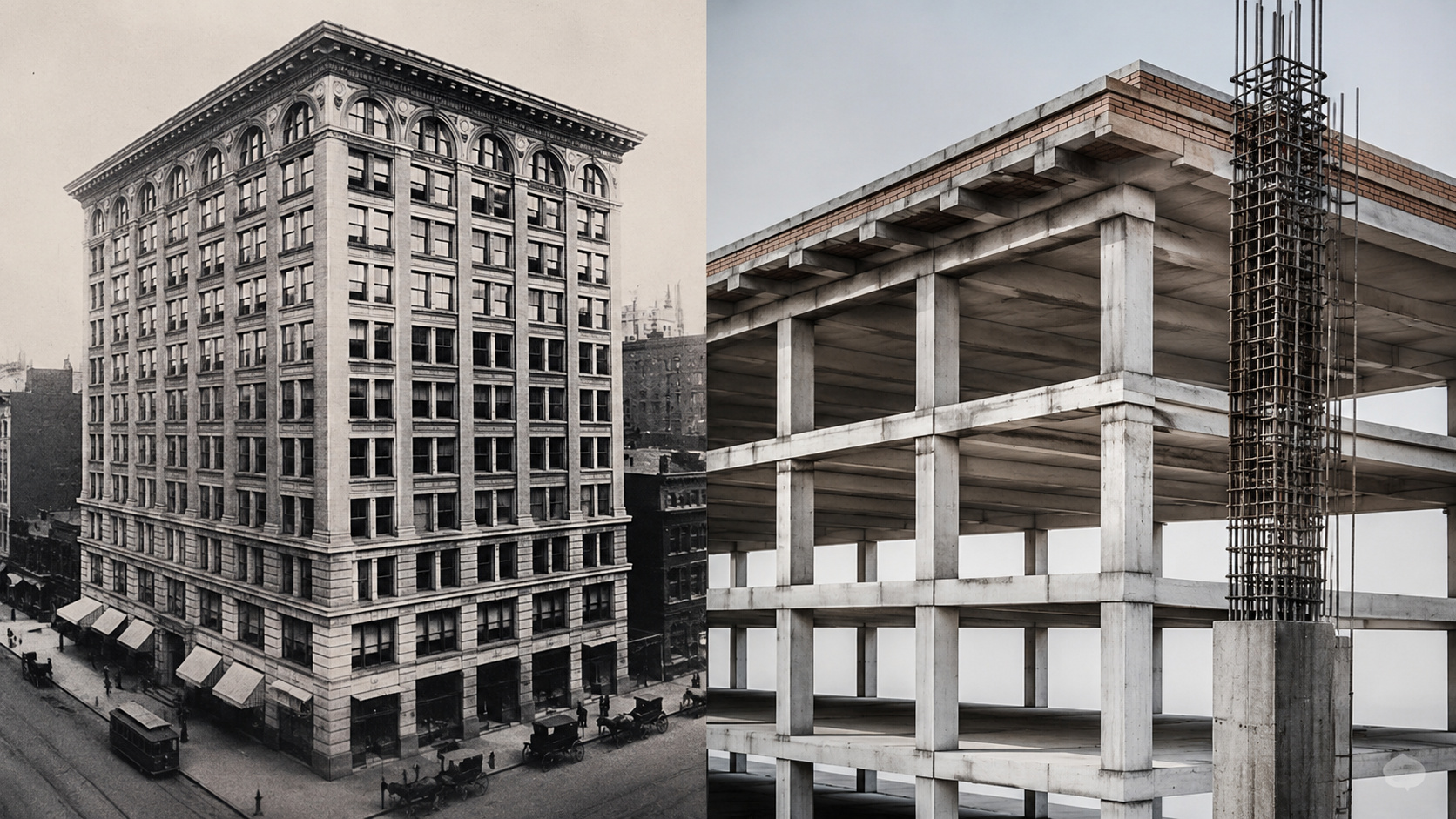
Builders challenged experts, erected a 16-story building using only reinforced concrete when the known limit was six floors, and proved that skyscrapers would never be the same again.


Why lightweight and modular architecture has become essential in flooded areas

Given this scenario, architecture begins to adopt a completely different logic. Instead of prioritizing rigid and permanent structures, projects start to value lightness, modularity, and adaptability. In other words, constructions are designed not to last intact, but to transform, be disassembled, and easily rebuilt.
A striking example of this approach is the Khudi Bari housing system, developed in Bangladesh. It is a lightweight structure made of bamboo, with connections that allow for quick disassembly and reconstruction with local labor. In this way, every design decision already anticipates a possible flood scenario.
Furthermore, this strategy is not limited to individual houses. In many cases, entire communities are organized around the presence of water. An emblematic example is the village of Ganvié, in Benin, where houses are built on stilts and all circulation occurs by boat.
Consequently, stability no longer depends on fixing structures to the ground, but rather on aligning architecture with an environment in constant transformation. This represents a radical shift in the way urban and residential space is conceived.
Floating architecture and solutions that follow the water level
Another important advance in this field is the development of solutions that not only resist water but move with it. The Bamboo Floating House, designed by H&P Architects, is a clear example of this innovation.
In this project, the lightweight bamboo structure is combined with recycled barrels that ensure buoyancy. Thus, as the water level rises, the house rises with it, maintaining its functionality. In this way, occupation does not need to be interrupted during floods.
Furthermore, there are more technological solutions, such as the amphibious houses developed by CTA Creative Architects. In this case, the system uses floating foundations and vertical guide posts that allow the construction to rise in a controlled manner as the water level increases.
However, this evolution brings an important dilemma. While these more advanced solutions offer greater precision, they can also reduce accessibility and local maintenance capacity. In other words, the more complex the technology, the greater the dependence on external resources.
Redefining the concept of resilience in modern architecture
Traditionally, resilience in architecture was associated with the ability to withstand extreme events without suffering damage. However, in areas subject to frequent floods, this concept is beginning to be questioned.
Today, experts argue that true resilience lies in the capacity for adaptation. In other words, more important than avoiding damage is ensuring that recovery is rapid and that life can continue even during extreme events.
Studies by institutions such as the World Bank and the Asian Development Bank reinforce this idea, indicating that, in flood-prone regions, the performance of a construction is directly linked to recovery time and continuity of use.
Additionally, this new vision also considers factors such as material reuse, ease of reconstruction, and structural flexibility. In this way, architecture ceases to be a static object and becomes a dynamic process that evolves with the environment.
Finally, this change in perspective reveals something fundamental: what was once seen as fragility — lightness, modularity, and impermanence — actually represents a highly sophisticated and efficient solution for dealing with the challenges posed by climate change.
Would you live in a house designed to float and coexist with floods, or do you still prefer traditional constructions even in risk areas?