






 Portuguese
  Spanish


Argentinian measure takes child support collection out of the courts and connects official records to the controls of the 2026 World Cup, creating a direct consequence for those listed as delinquent child support debtors.
Argentina has decided to turn the gates of the 2026 World Cup into a new pressure point against those who do not pay child support. The measure involves the Government of the City of Buenos Aires, the National Security Ministry of Argentina, and the Tribuna Segura program, used for access control at sporting events.
The strongest point is the reach of the action. According to Infobae’s coverage, there are over 13,000 people registered in the Public Registry of Delinquent Child Support Payers in the City of Buenos Aires. Now, these names can carry weight outside the courts, outside the notary offices, and even outside the country.
The rule draws attention because it affects a symbolic space for millions of fans. A person can buy a ticket, organize a trip, have a ticket, and still be prevented from entering a World Cup stadium if they appear as a delinquent child support debtor in the control systems.
-
Man Who Lost Vision Due to Lack of Roads Invests Fortune in Building 59 km Route, Ending 1,300 Years of Isolation in Brazilian Village and Boosting Tourism and Jobs

-
São Paulo Invests Millions in Massive Reservoirs to End Decades of Water Shortages, Providing Relief to Residents

-
Luxury Mansion in Rio with Views of Christ the Redeemer Listed for $25 Million
-
How Underwater Bridge Foundations Support Thousands of Tons Without Sinking: The Engineering Techniques Behind River and Sea Constructions



How child support debt reached the 2026 World Cup
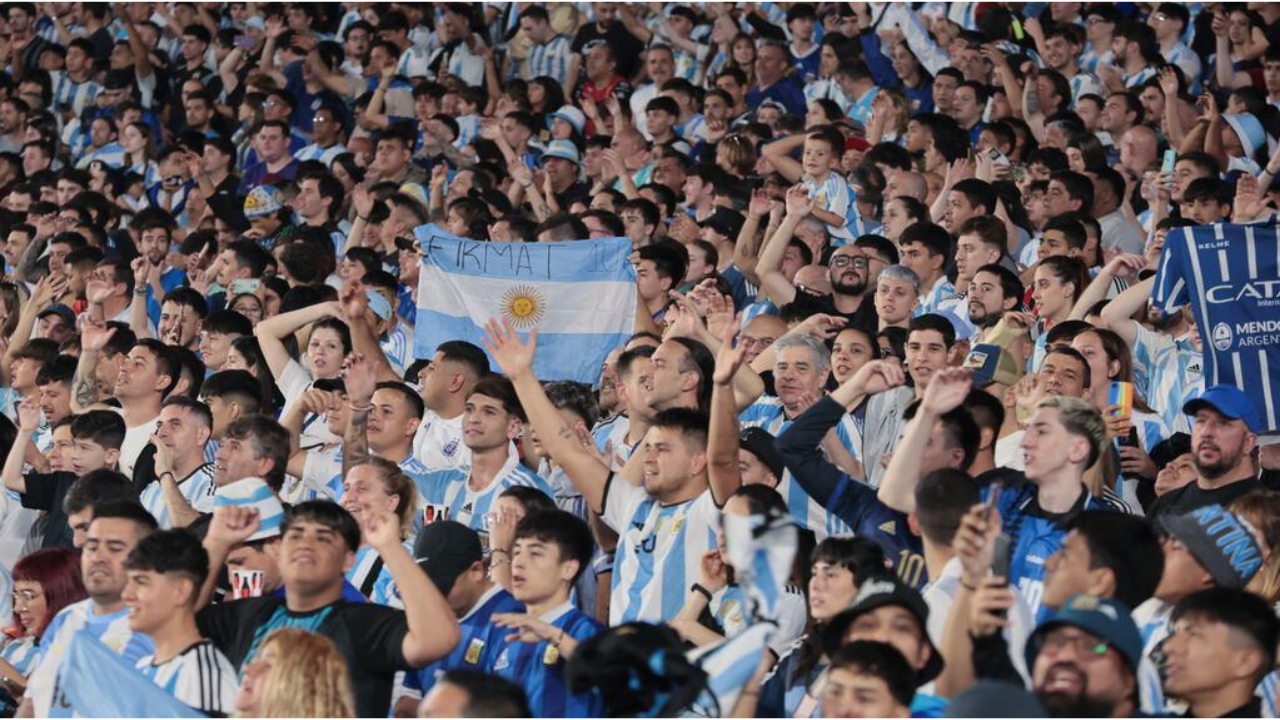
The measure stems from an articulation between local records and national security mechanisms at sporting events. The Government of the City of Buenos Aires reported that the Public Registry of Delinquent Child Support Payers was incorporated into the Tribuna Segura program.
In practice, this means that the database of people who owe child support can be cross-referenced in controls related to the 2026 World Cup, which will be held in the United States, Mexico, and Canada. The information was also made available to U.S. authorities, as part of the official exchange related to the competition.
The National Security Ministry of Argentina addressed the issue through Resolution 444/2026, published on May 15, 2026, in the Official Gazette. The regulation allows sharing the Tribuna Segura database with North American authorities for planning, prevention, and control actions related to the tournament.
The focus, according to the official Argentine communication, is on people with current restrictions on entering sporting events. This group also includes cases linked to delinquent child support debtors registered by the City of Buenos Aires.
The control uses the right of admission
The mechanism used is the right of admission. Instead of treating the problem solely as a legal or family dispute, the measure connects child support debt to practical consequences in leisure spaces and high-traffic areas.
At access controls, a person’s identity can be compared with official records. If there is an active restriction, entry to the stadium can be blocked. This changes the logic of enforcement because it places non-compliance with child support in an environment where the impact is immediate and visible.
The phrase used by Jorge Macri, head of Government of the City of Buenos Aires, sums up the political tone of the decision: those who do not comply with their children also do not enter the stadium. The message seeks to associate leisure, family responsibility, and administrative consequence.
It is not about imprisonment, nor a new accusation at the stadium gate. The central point is the access restriction for those who already appear in official records as delinquent child support debtors.
The measure did not start with the World Cup
The 2026 World Cup increased the visibility of the action, but the control did not originate now. The City of Buenos Aires had already been applying restrictions against child support debtors in stadiums and massive events since March 2025.
In November 2025, the Buenos Aires government reported that more than 50 debtors had already been detected since the start of the operations. According to the local administration itself, these people could only re-enter once they regularized their situation before the Justice.
The legal basis is linked to the reform of Law No. 269 by Law No. 6,771, sanctioned in December 2024. This change allowed limiting recreational activities for those who fail to fulfill child support obligations, including football matches and cultural events with more than 5,000 people.
The novelty, therefore, is not just barring someone from a game. What draws attention is the scale. The logic that had already been applied in Buenos Aires is now connected to a global event, with matches outside Argentina and strong international interest.
More than 13,000 names show the size of the problem
According to Infobae, the Public Registry of Delinquent Aliment Providers of the City of Buenos Aires gathers more than 13,000 people. The number helps explain why the case gained repercussion. It is not an isolated episode but a broad base of people identified for failing to meet child support obligations.
The reach also grew due to agreements with 13 Argentine provinces. This makes the system more comprehensive than a local registry restricted to the capital.
The decision places the issue of child support in an unusual place: the entrance of a stadium during the world’s largest football competition. It is precisely this contrast that makes the case strong. A debt linked to the sustenance of children and adolescents now has a direct impact on access to a sports event with enormous popular appeal.
The action also serves as a message. For the Argentine government, not paying child support should not only result in bureaucratic charges. It should create concrete limits on leisure activities, especially when there are official records confirming the delinquency.
The case goes beyond football
The restriction at the 2026 World Cup stadiums shows how governments can use major events to reinforce obligations already provided by law. Football enters the story as a stage, but the center of the debate is on parental responsibility, the protection of children and adolescents, and the ability of the State to transform administrative records into real consequences.


Be the first to react!