






 Portuguese
  Spanish


According to People and SFGATE, the robotic birds of Grand Teton National Park were used in 2025 and 2026 near Jackson Hole Airport, in Wyoming. The project combines stationary and automated replicas, recorded reproductive sounds, and restoration of 100 acres to reduce collisions and relocate mating displays from the runways.
The robotic birds used in Grand Teton National Park, in the United States, are part of an unusual experiment of technology applied to conservation and airport safety. The replicas were placed near Jackson Hole Airport, in Wyoming, to try to attract real birds to a restored area away from the flight infrastructure.
The case was detailed by SFGATE on April 10, 2026, and by People on April 15, 2026. The goal is to reduce the risk of collisions with aircraft while testing if mechanical models, recorded sounds, and habitat restoration can influence the behavior of a threatened species in the American West.
Experiment combines robotics and safety near the runways
The project takes place in a sensitive area: Jackson Hole Airport is located within Grand Teton National Park and operates close to zones used by birds during the reproductive period. This creates a dual challenge for public managers: protecting local wildlife and maintaining the safety of air operations.
-
Russia and India Lift 320-Ton Pressure Vessel into Kudankulam Nuclear Plant Reactor, Advancing Project That Has Already Prevented 112 Million Tons of CO2 Emissions

-
Brazilian Student Wins Global Science Fair in the U.S. with Sound Wave Method to Alter Alzheimer’s-Linked Genes
-
Bosch Unveils Revolutionary 2.3 kg Hub Motor for E-Bikes with 45 Nm Torque and 400 Watts Power, Eliminating Resistance Above 25 km/h in Historic Shift for German Manufacturer
-
Brazilian Engineer Develops Marine Bacteria from Ubatuba into a Mini Power Plant Generating 227 mW per Square Meter, Cleans Air by Capturing CO₂ and Releasing Oxygen


According to sources, at least 32 sage-grouse were killed by aircraft between 1990 and 2013 near the airport. The solution found by the park was not just to install barriers, but to test behavioral simulation technology in a restored area.
Replicas try to relocate activity away from the airport
The strategy uses sage-grouse replicas to try to attract real birds to a restored field south of the runway. The idea is to create enough visual and auditory signals to encourage occupation of a safer spot.
The robotic birds come into play as an induction tool. Instead of just observing the problem, the team tries to influence where the birds perform their mating displays, relocating the activity away from the area of greatest risk with airplanes.
100-acre area was restored south of the runway
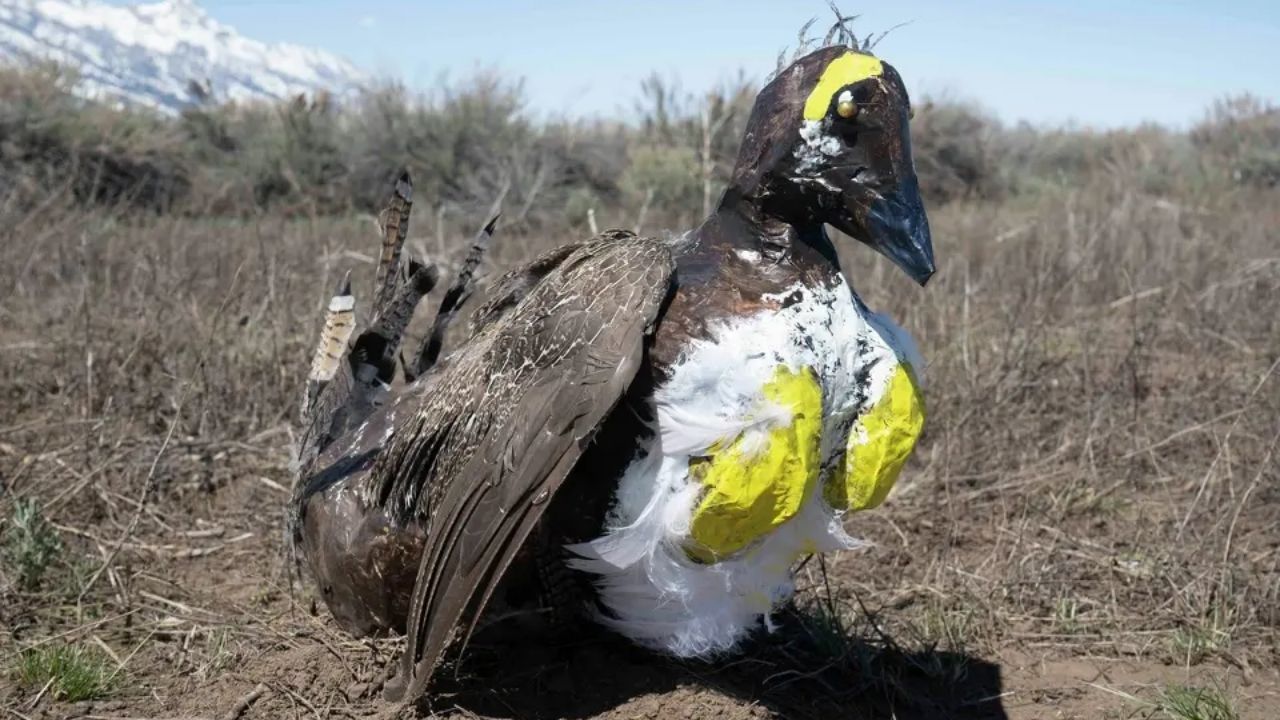
The Grand Teton National Park reported that, along with community partners, it restored an area of about 100 acres south of the Jackson Hole Airport runway. The space had been worked on to once again offer suitable conditions for use by the species.
According to SFGATE, the restoration included native plants and the maintenance of open areas called leks, used in mating displays. Robotics, in this case, does not appear in isolation: it works together with habitat recovery and land planning.
Prototypes started with papier-mâché in 2025
In 2025, the first replicas were made in an artisanal way. According to People, the models were produced in papier-mâché with collaboration from the Teton Raptor Center, art students from Jackson Hole Middle School, and local artist Lori Solem.
Four handmade replicas were placed in the restored field. Even without advanced automation at that first moment, they already had a clear function: to simulate the presence of birds in the area and test if this visual reference would help attract real individuals.
2026 version gained a robotics team
In 2026, the project advanced to a more technological stage. The Grand Teton National Park partnered with RoboBroncs, the robotics team from Jackson Hole High School, to create automated replicas.
This new generation includes stationary models and models capable of movement. According to sources, some robotic birds were designed to dance like males during the mating ritual, with movements designed to simulate an active area.
Recorded sounds start before dawn
SFGATE reported that recorded reproductive sounds are also used in the area, with calls played starting at 5 a.m. The idea is to create an ambiance similar to that of an active display site.
In addition to the sounds, some replicas were made to inflate the chest, mimicking part of the species’ visual behavior. The project combines robotics, audio, physical design, and knowledge of animal behavior to test a conservation intervention.
Materials mix technology and creative improvisation
The models gained a more realistic appearance with feathers provided by the Wyoming Game and Fish Department. At the same time, part of the materials mentioned by SFGATE shows the experimental nature of the project, using simple items like foam and fabric.
This contrast reinforces an interesting point for Science and Technology: the experiment does not rely solely on expensive equipment. The solution combines local knowledge, school robotics, accessible materials, and a practical question: how to make a species reoccupy a safer area?
Park monitors if real birds appear
The test does not end with the installation of the replicas. According to SFGATE, a trail camera was used to record the area during the peak display period, which continues until mid-May.
This monitoring is essential to assess whether the robotic birds really influence the behavior of real birds. Without field data, the project would be just a curious installation; with monitoring, it becomes an experiment applied to environmental management.
Population decline increased the urgency of the project
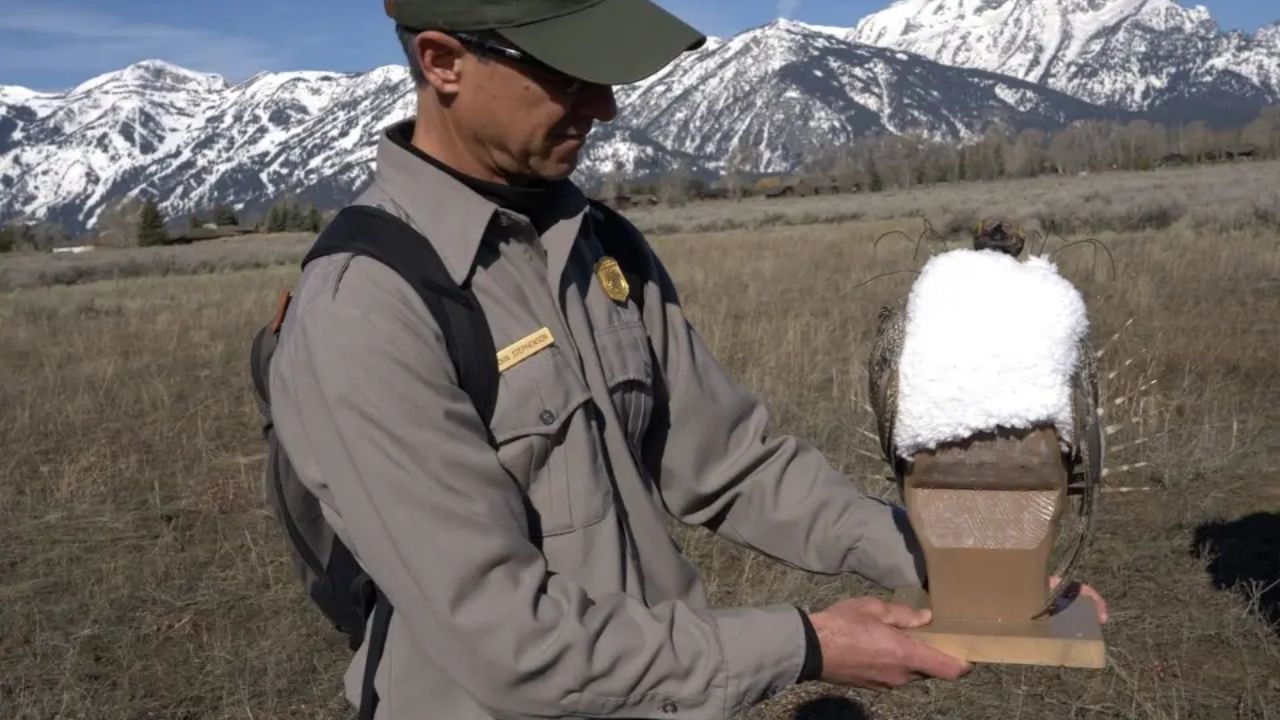
SFGATE cited data that the species’ populations have declined 80% in the American West since 1965. It also reported, based on WyoFile, that the count of males at a breeding point within Grand Teton dropped from 73 in 1950 to three the previous year.
These numbers help explain why an unusual solution was tested. The focus, however, is not only on the species but on the attempt to use engineering, environmental restoration, and risk management to address a complex problem.
Airport and park need to share the same space
The case draws attention because it involves a rare situation: a functioning airport within a national park in the United States. The proximity between the runway, natural areas, and zones used by the species requires solutions that do not rely on a single line of action.
According to People, the effort is part of the airport’s wildlife risk management plan. This places the robotic birds within a larger strategy that involves public safety, conservation, and land-use planning.
Technology tries to solve a restoration gap
The restoration of a natural area does not guarantee that wildlife will return immediately. Spokesperson Emily Davis explained to SFGATE that one of the challenges is precisely getting wildlife to reoccupy good habitats that have been created or restored.
Therefore, the replicas act as an initial trigger. The logic is simple: if an area appears active, with movement and sounds, it can become more attractive. The robotic birds function as a kind of technological invitation to accelerate the occupation of the restored area.
Solution is still in the testing phase
The sources do not claim that the strategy has already solved the problem. The project is being monitored to verify if real birds respond to the visual and auditory stimuli.
This caution is important not to overpromise. What exists so far is a conservation experiment based on robotics, restoration, and monitoring. The effectiveness depends on continuous observation and field results over time.
When robotics becomes a conservation tool
The use of robotic birds in Grand Teton shows how technology can move from laboratories and classrooms to address real environmental problems. The solution brings together students, a national park, an airport, artists, biologists, and local teams around a practical challenge.
The question remains whether such initiatives can become a model for other places where human infrastructure and conservation come into conflict.
Do you think robotic replicas, recorded sounds, and restored areas are a good way to reduce impacts on endangered species, or does this still seem too experimental? Leave your opinion in the comments.





Be the first to react!