Portuguese
  Spanish


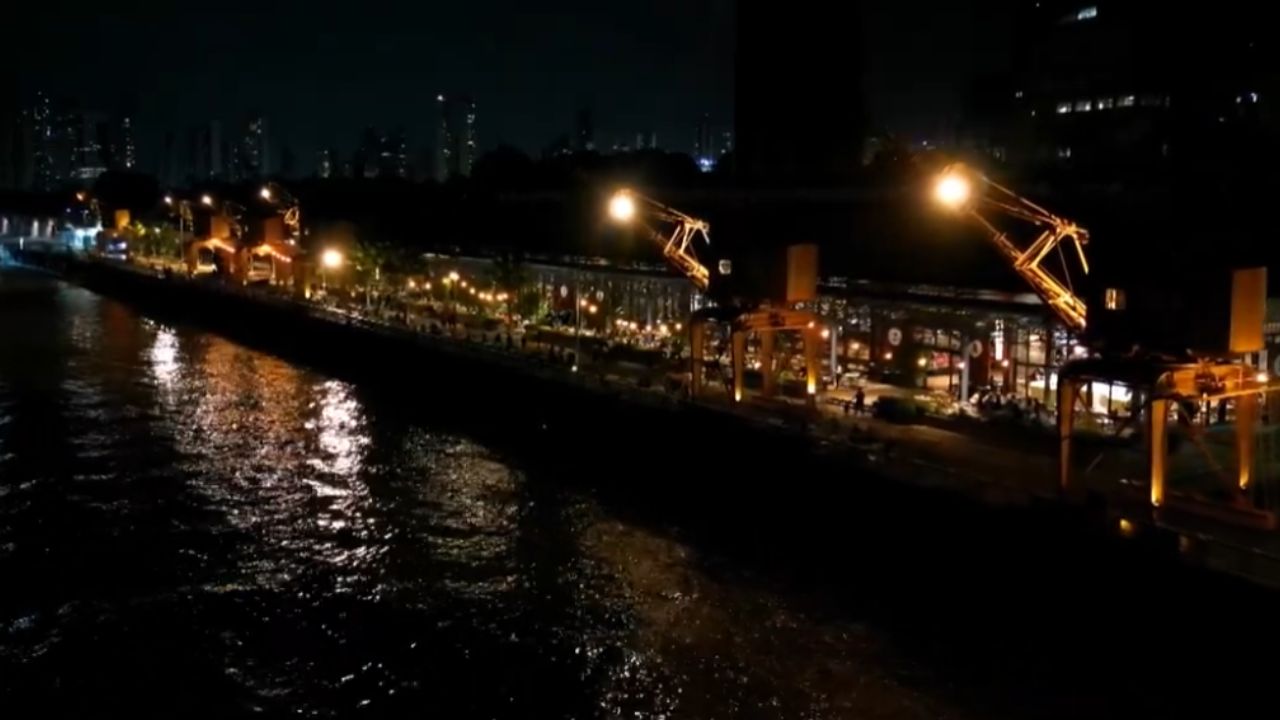


English Iron Structure and American Cranes Gain New Life in Belém; Revitalized Complex Attracted Over One Million Annual Visitors.
The old port warehouse in Belém, built in 1909 during the height of the rubber boom, has been renamed Estação das Docas and has become the new social, gastronomic, and cultural “hotspot” of the capital of Pará, consolidating an exemplary urban revitalization project. The structure, composed of three imposing warehouses with prefabricated iron architecture imported from England and American cranes at the dock, was meticulously restored to house a leisure complex that integrates renowned restaurants, handicraft shops, and important cultural spaces, such as the Teatro Maria Sylvia Nunes. The decision to preserve the original architecture, maintaining the industrial character of the site, including the echoes of transport tracks on the granite cobblestone floor, was crucial to the project’s success.
More than a consumption center, Estação das Docas caters to the vision of a “lookout belvedere,” a privileged observation point in Baía do Guajará, offering the city a reconnection with the river. The success was immediate and transformative, generating a notable tourism and economic impact: according to the travel blog “360 Meridianos,” the complex attracts over one million visitors per year, and the Pará News Agency reported that the project was classified by an in-flight magazine among the ten best revitalized port areas in the world. Below, we detail how this historical heritage gained a new and vibrant identity.
Forged in the Belle Époque: The History of the Port Warehouse
To understand the relevance of Estação das Docas, one must go back to the Amazônia Belle Époque, a feverish period in the early 20th century when the rubber boom catapulted Belém onto the global stage as one of Brazil’s richest and most modern cities. It was in this context of modernization and opulence that, in 1909, the Port of Belém was built to export latex and replace the old docks. Its architecture is an eloquent testimony to the global connections of the time.
-
Man wins millions in the lottery, starts receiving money help every day, abandons his own house and says he regrets the prize.

-
Japanese doctors complete 34 years of volunteer mission in Vietnam and have already performed more than 3,000 free surgeries to correct cleft lip and palate in children from families unable to afford treatment.

-
The man who started by cleaning bricks and unloading wagons entered the warehouses of Dallas and helped transform commercial real estate into a billion-dollar business.
-
An entrepreneur from Alagoas started by selling organza bags as extra income, ventured into digital after motherhood, and transformed personalized packaging into a national business that sells 35,000 units per month, generates about R$ 60,000, and employs 14 people.




As detailed on the official Estação das Docas website, the three warehouses that today form the complex were built with prefabricated iron structures imported from England, a cutting-edge example of design industrial of the period. The machinery followed the same international standard: the iconic external cranes that still dominate the landscape were manufactured in the United States. The building itself tells a story of international trade and economic standards that shaped the region, transforming the site into the main logistical hub of the Amazon.
However, the history of the land runs deeper. The revitalization project also integrated the ruins of the Forte de São Pedro Nolasco, an original defensive structure from 1665. According to the Estação das Docas website, the fort was destroyed in 1825 during the Cabanagem revolt. The decision to preserve these ruins demonstrates a respect for the history that predates the industrial era of the port, recognizing the multiple layers of time that constitute the identity of that space.
From Cargo Dock to Gastronomy Boulevard


With the decline of the rubber boom, the old port warehouse fell into disuse, becoming a silent witness to a glorious past. In the 1990s, a bold vision sought to reverse the situation, inspired by a global movement to reconnect cities with their waterfronts. Instead of demolishing, urban planners and cultural leaders saw the old iron warehouses as the potential for a new heart for the city, dubbed “Windows to the River”.
The revitalization, culminating in the inauguration in 2000, followed a “light touch” philosophy, making the history itself the main attraction. The official Estação das Docas website confirms that the English iron structures and American cranes were meticulously restored and preserved as sculptural monuments. The authenticity conferred by the original structures created a unique identity that no new construction could replicate. The long promenade of 500 meters, with its original granite cobblestone pavement, maintained the echo of history, inviting citizens to reclaim the waterfront.
The three historic warehouses were renamed “Boulevards”, each with a specific vocation, creating a curated space for visitors. Warehouse 2, the Gastronomy Boulevard, houses most of the restaurants and is the culinary heart of the complex. It is here that visitors can explore the rich local and international cuisine, with establishments offering everything from authentic regional flavors to Italian or Japanese cuisine.
The Flavor Revolution of the Amazon
The gastronomic strategy of the complex is a showcase of the biodiversity and culinary creativity of the Amazon, combining familiar concepts with exotic regional ingredients. An emblematic example of this fusion, according to the official Estação das Docas website, is the Amazon Beer craft brewery.
The brewery has positioned itself as a flavor laboratory, incorporating local fruits and ingredients. The result is unique creations like the Açaí Stout, enriched with fruit pulp, and the Forest Bacuri, matured with the bacuri fruit. This approach transforms beer tasting into a sensory exploration of the Amazonian flora.
The local cuisine is another pillar. Estação das Docas has become a reference for authentic local food, featuring institutions such as Sorveteria Cairu. According to the official website, Cairu is a cultural heritage of Belém, famous for its exotic fruit ice creams like açaí, cupuaçu, taperebá, and uxi. Tasting these flavors is an immersive cultural experience and one of the main reasons for local and tourist visits.
The Invisible Tracks of Railway Memory
The impression that the complex maintains the “tracks of the trams on the floor,” mentioned in the theme, metaphorically captures the industrial essence and transport history that define the soul of the place. Although the promenade floor is made of original granite cobblestones, the spirit of the tracks is rooted in the region’s history. The very name “Station” is a powerful reference to the iron and steam era.
According to the official Estação das Docas website, the city was served by urban tram lines, and the port was interconnected with the transport system that linked the capital to the interior, such as the Belém-Bragança Railway. The industrial character of the architecture of the warehouses, the imposing cranes, and the location at the dock unequivocally evoke this era of connection and trade.
Estação das Docas thus functions as a cultural station: it is where visitors arrive to connect with the history and culture of Belém, from where they depart on boat tours of the bay, and it is the hub that links the city’s industrial past to its vibrant present. The success of the initiative has led to the model being cited as an inspiration for revitalization projects in other Brazilian cities, such as in Vitória (ES).
The Lasting Attraction of the Docks: An International Legacy
The journey of the port warehouse to its rebirth as Estação das Docas is a powerful narrative about a city’s ability to reinvent itself. The complex is not only a leisure center but a testament that the past can be the foundation upon which a vibrant future is built. The impact is validated by the numbers: the Pará News Agency highlights that Estação das Docas is one of the main leisure spots for the population and a driver of tourism.
The project demonstrated that preserving heritage can be the main engine of economic development. The authenticity generated by the original structures attracts a constant flow of tourists and residents, which in turn creates the economic viability for high-quality businesses to thrive, as stated by the official Estação das Docas website and the blog “360 Meridianos.” The successful fusion of English iron, American engineering, and the exuberance of Amazonian culture has created a place with an unmistakable sense of identity.
What is your opinion on the revitalization of historic port areas? Do you agree that this change positively impacts the city’s market and culture? Leave your opinion in the comments; we want to hear from those who live this in practice.