Portuguese
  Spanish


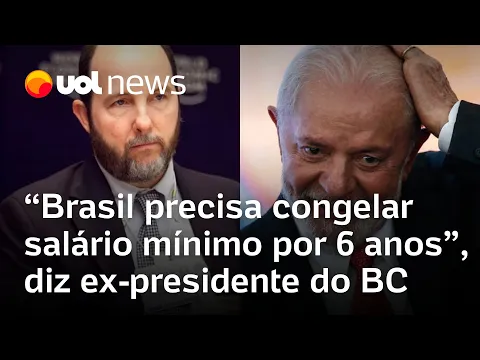
Minimum Wage Without Real Increase for 6 Years? Armínio Fraga, Former Head of the Central Bank, Points Out This Measure as Essential to Contain Public Spending
The economist Armínio Fraga argued that Brazil should freeze the minimum wage “in real terms” for a period of six years. The statement was made during the Brazil Conference, held this weekend at Harvard University and MIT (Massachusetts Institute of Technology), in Cambridge, United States.
Statement from the Former Central Bank President
During his participation in the event, the former Central Bank president (1999-2003) emphasized the importance of a fiscal adjustment in the country and commented on the high public spending, especially with social security. According to Fraga, a real freeze on the minimum wage would be necessary for at least six years to contain the imbalance in accounts.
What Real Freeze Means
-
Brazil’s Imigrantes Highway Celebrates 50 Years with Plans for Major Expansion, Including a 6 km Tunnel and Third Lane to Ease Traffic to São Paulo’s Coast

-
Brazilian Job Market Surprises: Unemployment Falls to 5.6%, Hits Record Low for May, Brazilian Incomes Rise, and Underemployment Reaches Lowest Level Ever Recorded by IBGE

-
Chinese E-commerce Giant Predicts Robots Will Replace 700,000 Delivery Workers as Autonomous Vehicles Expand to 200 Cities, Offering Training for Workers to Maintain Their Machines

-
Trump warns Europe with 100% tariff threat on digital tax, potentially impacting wine and trade agreements


Freezing the minimum wage in real terms means maintaining its value only with the correction for inflation, without additional gains in purchasing power. Today, under current legislation, the minimum wage can have a real increase of up to 2.5%. The policy of adjustments above inflation was one of President Lula’s central campaign promises.
Social Security is the Main Focus of Expenses
Fraga pointed out social security as one of the largest fiscal barriers in the country. “The social security bill is enormous and is worsening rapidly, as shown by various studies. The rules need urgent revision,” warned the economist.
Deep State Reform
The former Central Bank president also advocated for broader structural changes. “Wages and social security expenses consume about 80% of the public budget, something beyond acceptable standards,” he stated, advocating for a more radical restructuring of the Brazilian state.
Criticism of the US Stance
Commenting on the international scenario, Fraga expressed concern about the behavior of former US President Donald Trump. “I am alarmed to see the US president treating Canada and Mexico with disrespect. It is an alarming stance,” he said during his speech at the conference.
Brazil Must Maintain International Caution
For the economist, Brazil needs to act prudently in light of the international scenario. “It is essential that the country preserves its independence and adopts more cautious positions in the global arena,” concluded Fraga.