Portuguese
  Spanish



Billion-dollar block in the Defense budget increases pressure on military programs, broadens the debate on the Lula government’s priorities, and highlights Brazil’s challenges in maintaining strategic projects amid fiscal adjustment and the pursuit of greater international prominence.
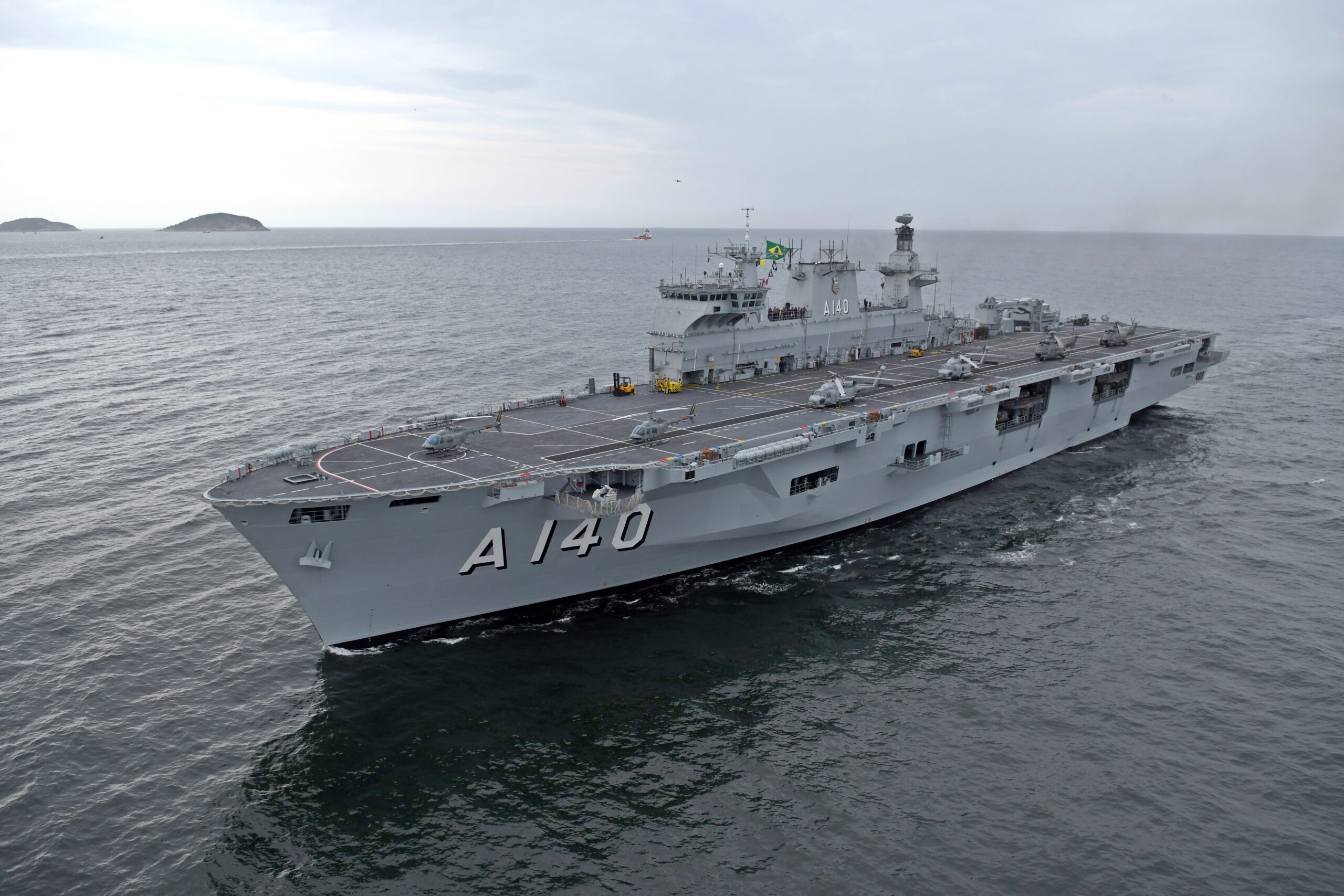
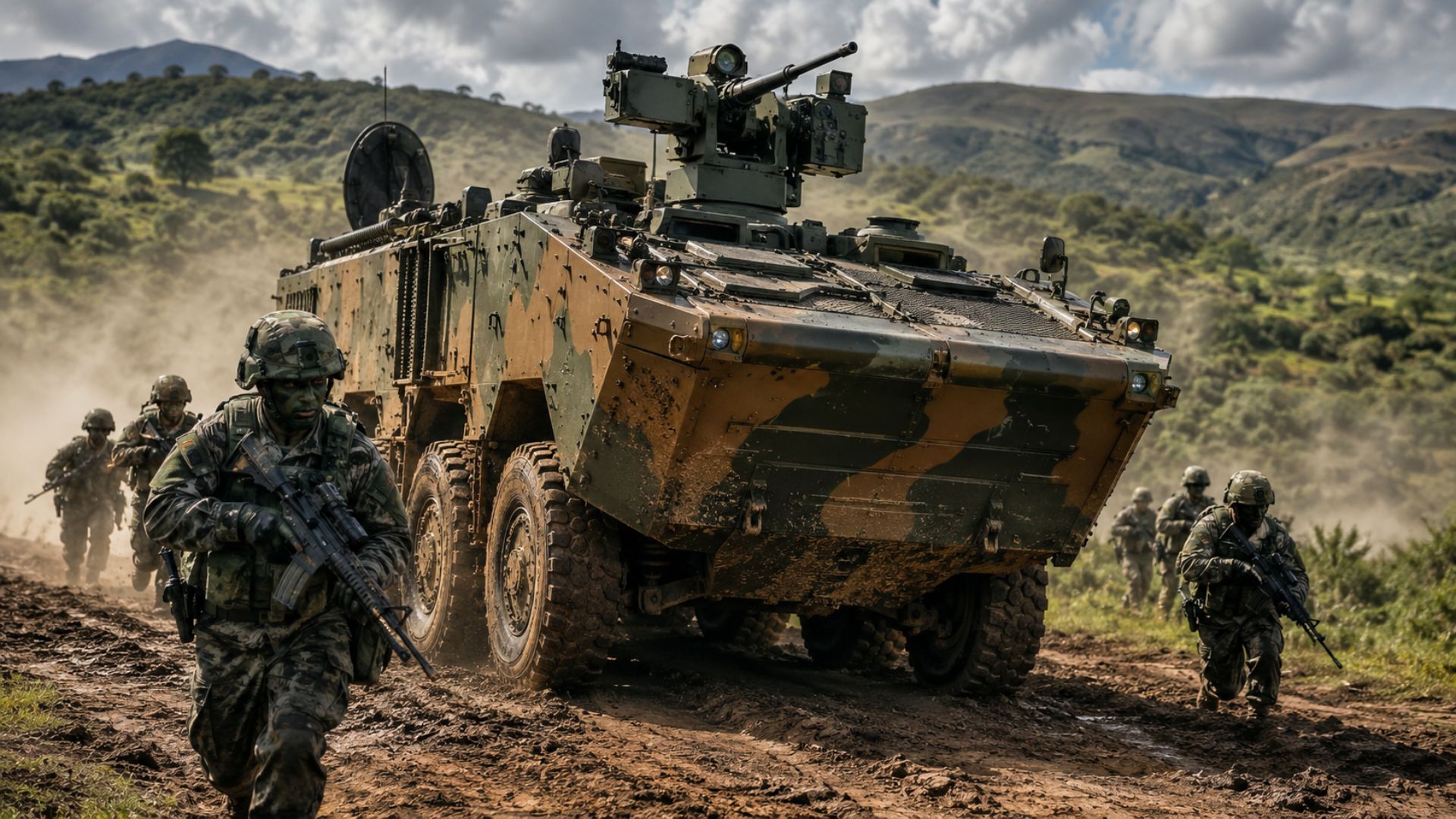
The block of R$ 4.363 billion in the Ministry of Defense’s budget in 2026 has placed the Army, Navy, and Air Force under a new fiscal constraint at a time of pressure on strategic programs, equipment maintenance, and modernization projects.
The containment was detailed by the federal government at the end of May and mainly affected discretionary expenses and PAC resources, areas used for investments, purchases, works, and administrative costs.
According to an article published by the portal DefesaNet and signed by Nelson During, the editor-in-chief of the outlet, the measure goes beyond an adjustment in public accounts and may affect the continuity of the Armed Forces’ strategic projects.
-
U.S. Establishes Permanent Embassy in Jerusalem, Reigniting International Debate Over Israel’s Capital

-
The world has nearly 12,000 nuclear warheads, with the majority held by the United States and Russia; see the figures for China, France, and the United Kingdom.

-
Venezuela Faces UN Alert for Hunger, Disease, and Service Collapse After Earthquakes Cause Nearly 2,000 Deaths and $6.7 Billion in Damages

-
Brazil Deploys Navy Field Hospital with ICU, Orthopedics, Pediatrics to Earthquake-Stricken Area in Venezuela, Offering 30 Beds and 150 Daily Consultations


In the original text, During states that the block deepens the perception of a gradual loss of Brazilian military capability, an assessment presented by the author in the context of budgetary constraints faced by Defense.
The federal government, in turn, reported that the total block of expenses reached R$ 23.6786 billion in 2026, after a new bimonthly assessment of revenues and expenses.
Justifying the measure, the Ministry of Planning and Budget stated that the containment is part of complying with fiscal rules and the primary result target.
Defense leads blocks in the 2026 Budget


According to Agência Brasil, the Ministry of Defense led the list of the most affected departments, with R$ 4.363 billion blocked.
Following are the ministries of Cities, with R$ 3.32 billion, and Education, with R$ 1.605 billion.
The restriction affects expenses that the Executive can manage throughout the year, such as investments, equipment acquisition, and costs.
This reduces the margin for the execution of contracts and commitments already planned, although the final impact depends on possible budget revisions throughout 2026.
In the DefesaNet article, During assesses that the Army, Navy, and Air Force were already operating under pressure before the new blockade.
The author cites delays in programs, logistical difficulties, and operational limitations as elements of a scenario that, according to him, precedes the fiscal decision.
In one of the most direct passages, During summarizes his assessment with the phrase: “The impact is devastating.”
Based on this reading, the article argues that modernization, maintenance, acquisition of means, and technological development programs may face the risk of paralysis or reduced pace of operation.
Gripen and trip to Sweden expand debate on military budget
The criticism presented by DefesaNet gained prominence at the moment when the Minister of Defense, José Múcio Monteiro, was in Sweden to discuss bilateral defense cooperation and the Gripen program, developed in partnership with Saab.
The portal pointed out that the international agenda occurred while the ministry suffered the largest blockade among the ministries, a relationship used by the author to discuss the gap between diplomatic commitments and budgetary restrictions.
In another article, also published by DefesaNet and signed by Nelson Düring, the portal highlighted that Brazil expressed interest in acquiring more 20 Gripen E/F fighters, but without a signed contract, formal purchase authorization, or approved budget forecast.
The report also recorded a statement by Múcio during the agenda with Swedish authorities.
The minister said that, in relation to Sweden, Brazil “always dreams the best dreams.”

In the DefesaNet text, the statement was presented as an example of the difference between the ambition expressed by the government and the fiscal limitations faced by Defense.
The Gripen program is considered one of the main modernization projects of the Brazilian Air Force.
The eventual expansion of the fleet, however, depends on political decision, contractual negotiation, and budget space.
Without these steps, the interest expressed in Sweden remains in the realm of intention.
Political wear of José Múcio appears in DefesaNet analysis
The original article by Nelson During also links the budget crisis to the political wear of José Múcio within the Lula government.
According to DefesaNet, there is an assessment among military insiders that the minister has lost influence in the decision-making core of the Executive.
The text cites the maneuvering around the attempt to nominate the Attorney General of the Union, Jorge Messias, to the Supreme Federal Court, as an episode that would have exposed the limits of Múcio’s political strength in Congress and within the government.
This interpretation, however, appears as an assessment of the portal and backstage sources cited indirectly, without being presented as the official position of the Ministry of Defense.
During argues that the main problem of Defense would not be in Stockholm, but in Brasília.
In the author’s assessment, the central dispute involves the Presidential Palace, the Budget Execution Board, the Ministry of Finance, and the ability of the Ministry of Defense to preserve resources considered essential.
The criticism focuses on the perception, attributed by DefesaNet to sector interlocutors, that Múcio would have adopted a more reactive stance in the face of fiscal constraints.
According to the portal, the Ministry of Defense talks about strategic projects but presents few concrete results in new military capabilities contracted since 2023.
Inherited programs sustain military modernization
The assessment published by DefesaNet points out that the main ongoing advances derive from contracts signed before the current government or from the administrative continuity of existing programs.
Among the cited examples is the Gripen, a project inherited from previous administrations that remains one of the main modernization initiatives of the FAB.
The article also questions the absence of new large-scale structural programs launched and contracted by the current administration.
In the portal’s analysis, there have been no significant contracts for new heavy armored vehicles, strategic air defense systems, or large-scale international partnerships so far.
This assessment reinforces a recurring concern in the defense sector: without predictability, military projects tend to face delays, cost increases, and loss of industrial scale.
National and foreign companies depend on a budget horizon to plan production, technology transfer, component nationalization, and the training of specialized labor.
In explaining the blockade, the government stated that it will continue to monitor budgetary and financial execution according to the legislation.
This means that limits can be reviewed in new assessments, but there is no guarantee of automatic recomposition of the blocked resources.
Defense industry demands predictability
The Defense Industrial Base appears in the article as one of the most sensitive areas to the blockade.
The sector depends on public orders, multi-year contracts, and technological continuity to maintain production lines, qualified jobs, and innovation capacity.
When programs are interrupted or executed at an uncertain pace, companies may reduce investments, suppliers lose scale, and technological nationalization projects become more difficult.
This scenario affects both Brazilian companies and foreign groups involved in cooperation agreements.
In the case of the Gripen, the partnership with Saab involves not only the delivery of aircraft but also technology transfer and Brazilian industrial participation.
For this reason, signs of budget instability can resonate beyond the Air Force and reach the production chain linked to the program.
DefesaNet argues that there is a contradiction between Brazil’s international ambition and the fragility of military financing.
According to the analysis published by the portal, the country participates in forums such as BRICS and G20 advocating for greater global prominence but faces internal limitations to support defense projects compatible with this discourse.
Fiscal adjustment exposes dispute of priorities in the government
The federal government’s decision does not only affect Defense.
The blockade is part of a broader containment that reaches different areas of the Esplanade of Ministries.
Even so, the fact that Defense leads the blockade increases political pressure on José Múcio and the military commanders.
In DefesaNet’s view, the combination of budget cuts, low political articulation capacity, and the absence of new structuring programs may leave a negative balance for the sector at the end of Lula’s third government.
The portal also states that Múcio risks being remembered more for his conciliatory speech than for concrete deliveries, an assessment presented as the author’s editorial criticism.
On the other hand, the official justification from the Ministry of Planning is fiscal.
According to the government, the measures aim to keep expenditure execution compatible with revenue forecasts and ensure compliance with fiscal responsibility rules.
The tension, therefore, involves two agendas: on one side, the need to adjust public accounts; on the other, the demand from the Armed Forces and industry for long-term predictability.
Without recomposition or reorganization of priorities, strategic programs may continue to depend on occasional releases and political negotiations.
In the original article, Nelson During concludes the analysis with a critique of Múcio’s political weight and the presence of Celso Amorim, special advisor to the Presidency, as an influential figure in foreign policy and defense discussions.
The mention reinforces the thesis defended by the author that the formal Minister of Defense faces limitations within the government itself.
The blocking of R$ 4.363 billion, in this context, became more than just a number in the Budget.
In the assessment published by DefesaNet, the containment came to symbolize the dispute over the place Defense occupies in the priorities of the Brazilian government in 2026.