Portuguese
  Spanish


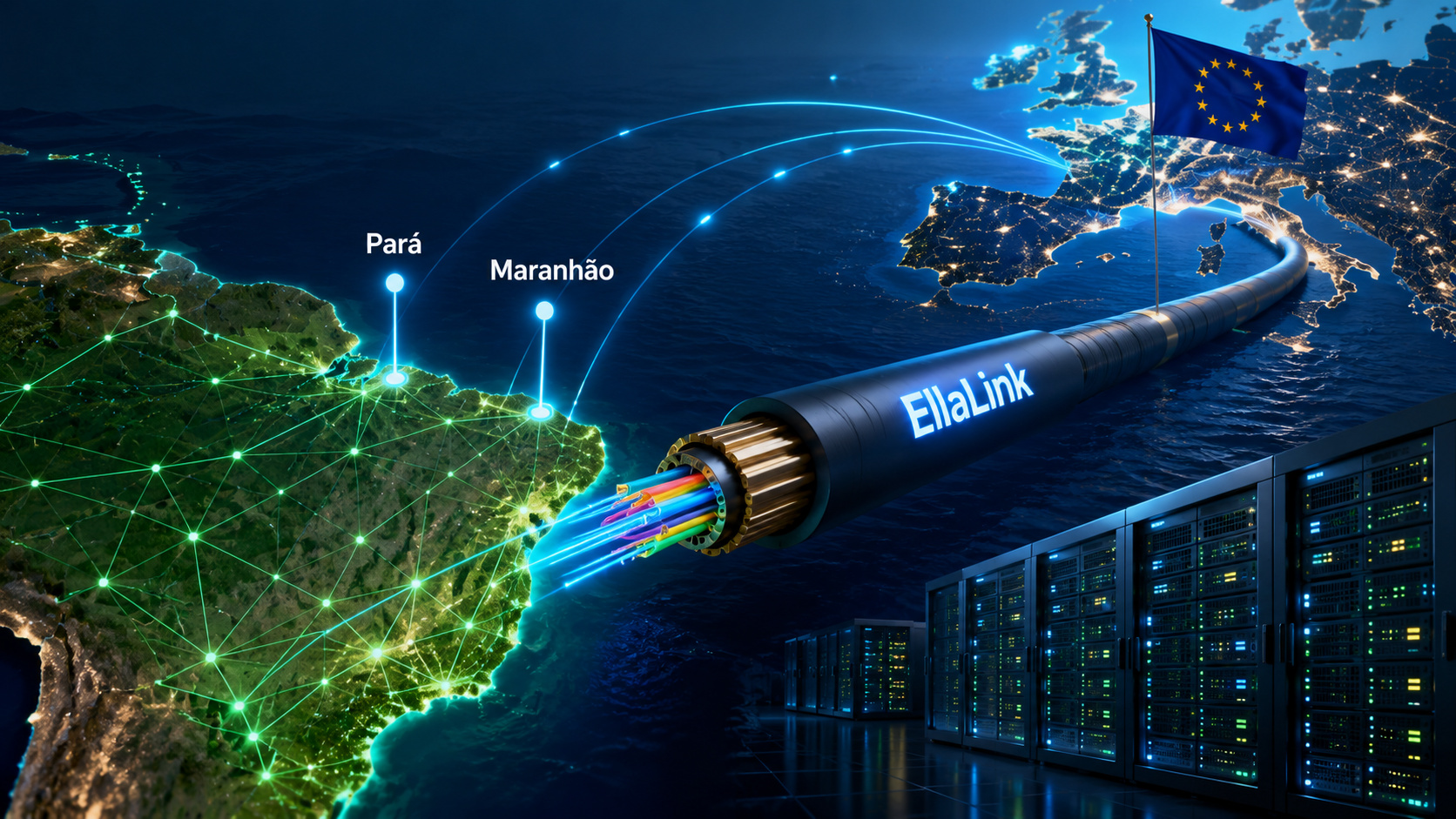

European Union to invest R$ 1.5 billion in the expansion of EllaLink to Pará and Maranhão, strengthening Brazilian digital sovereignty.
For decades, a large portion of data traffic between Latin America and Europe traveled routes that pass through the United States before reaching the final destination. Now, the European Union wants to accelerate a movement that could change this digital map and establish Brazil as one of the main strategic connectivity corridors of the Atlantic.
According to the European Union, in an announcement made on June 23, 2026, during the II EU-Brazil Investment Forum in Brasília, the European bloc allocated 260.8 million euros, equivalent to about R$ 1.5 billion, to expand the EllaLink submarine fiber optic system towards Pará and Maranhão, creating new strategic connections with French Guiana and the Caribbean. The project is part of the European strategy Global Gateway, aimed at expanding critical infrastructure in partner countries.
EllaLink already connects Brazil and Europe without needing to pass through North America
EllaLink began commercial operation in 2021 linking Fortaleza, in Ceará, to the city of Sines, in Portugal, through a submarine cable approximately 5,900 kilometers long, offering a direct route between Europe and Latin America.
-
U.S. Women’s History Museum Stalled in Congress Amid Gender Identity and Diversity Debate

-
European Parliament Approves Digital Euro, Aiming to Challenge Visa and Mastercard’s Dominance and Transform Payments Across Europe by 2029
-
Israel finds Hezbollah militarized tunnel over 200 meters long under village, with 4 missile launch shafts, 12 chambers, anti-tank missiles, drones, and weapons depots at a depth of 25 meters.

-
Ukraine launches largest drone attack on Moscow since 2022, Russia claims to have intercepted nearly 200 aircraft near the capital, Kapotnya refinery targeted again, and offensive reignites alert about war reaching the Russian energy heart just a few kilometers from the Kremlin.



According to EllaLink itself, the system was designed to avoid the traditional two-step connection model, in which a large part of Latin American international traffic passed through infrastructure located in North America.


According to the company, the network has a capacity of up to 100 terabits per second, with the possibility of future expansion, in addition to providing a significant reduction in latency in transatlantic communications.
The company claims that the route can reduce response time by up to 50% between certain European and Latin American data centers.
For modern applications such as cloud computing, artificial intelligence, financial services, scientific processing, and data centers, this reduction in transmission time can represent important operational efficiency gains.
European investment aims to transform Pará and Maranhão into new digital hubs
According to the Delegation of the European Union in Brazil, the 260.8 million euros announced by the Global Gateway initiative will be allocated to the so-called EllaLink digital corridor, strengthening resilient digital connectivity in the states of Pará and Maranhão.
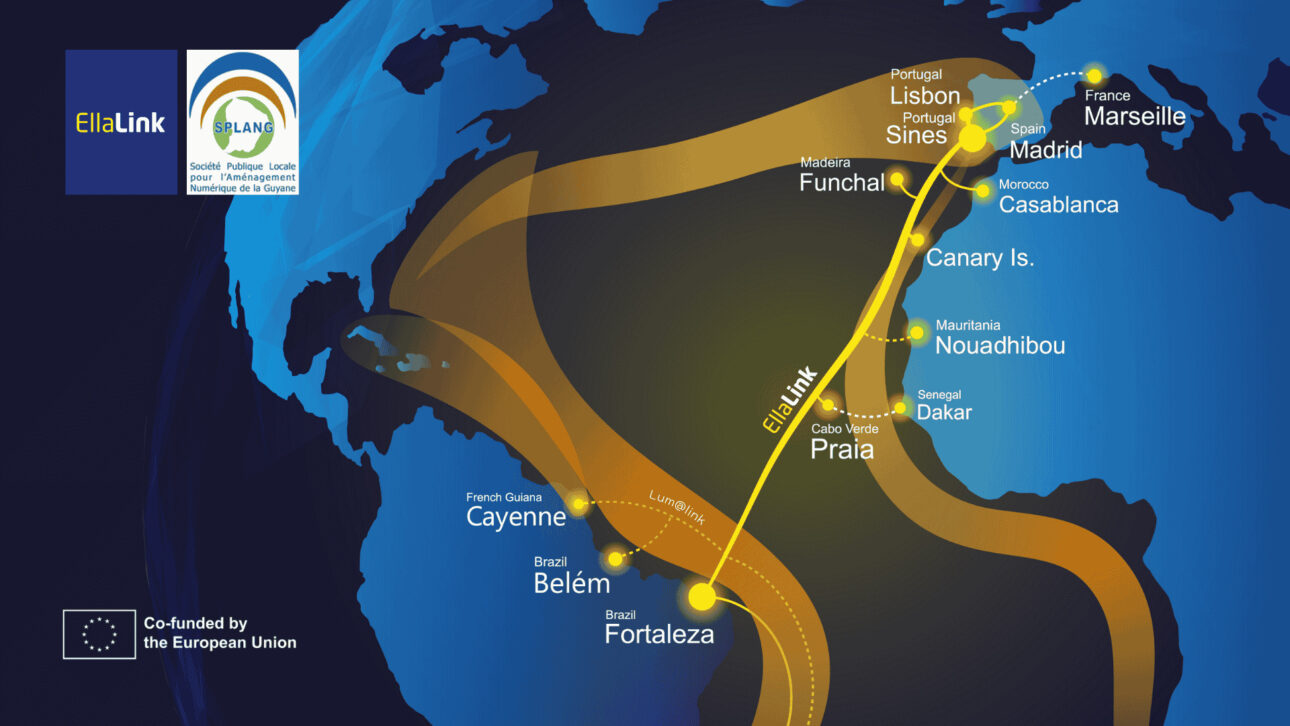
The project also foresees subsequent connections to French Guiana and the Caribbean, in addition to the implementation of systems considered essential for contemporary digital infrastructure, including Smart Nodes, advanced cybersecurity services, data resilience, and climate and environmental monitoring along the submarine route.
The announcement was made during the II European Union–Brazil Investment Forum in Brasília by the European Commissioner for International Partnerships, Jozef Síkela, who highlighted digital connectivity as one of the strategic priorities of the relationship between Europe and Brazil.
The initiative reduces dependence on digital routes associated with the United States
The main geopolitical argument behind the investment is the so-called digital sovereignty.
Currently, a significant portion of international communications between Latin America and Europe still uses infrastructures associated with the North American digital ecosystem.
EllaLink was designed precisely to create a direct physical alternative between the two continents.

According to the European Union, the new expansion will allow data traffic to occur more diversely, increasing the redundancy of the international network and reducing vulnerabilities related to interruptions, congestion, or excessive dependence on certain routes.
Digital infrastructure specialists often point out that submarine cables have become strategic assets comparable to oil pipelines, gas pipelines, and energy corridors, due to the central role they play in the data-based economy.
Maranhão could become a new data center hub in the North of the country
Previously discussed projects indicate that the arrival of EllaLink in Maranhão could stimulate investments in local digital infrastructure.
According to information published by TeleTime in 2025, the Maranhão project includes an estimated investment of US$ 180 million, including the implementation of a new data center and a submarine link of approximately 350 to 500 kilometers.
In Pará, studies mention a branch of about 425 kilometers, allowing direct connection to the international cable system associated with EllaLink.
The expectation is that the infrastructure could boost the installation of new data processing centers, cloud services, artificial intelligence operations, technology companies, and activities related to the digital economy in the Northern region of Brazil.
The dispute over submarine cables has become one of the major themes of 21st-century geopolitics
More than 95% of international data traffic currently travels through submarine cables spread across the oceans, making these structures practically invisible yet fundamental elements for the functioning of the global economy.
The European decision to expand EllaLink demonstrates that the connectivity dispute has ceased to be merely a technological issue and has become part of the strategic agenda of governments, companies, and economic blocs.
If oil defined much of the geopolitics of the 20th century, data corridors are beginning to occupy an increasingly larger space in the economic and diplomatic decisions of the 21st century.