Portuguese
  Spanish


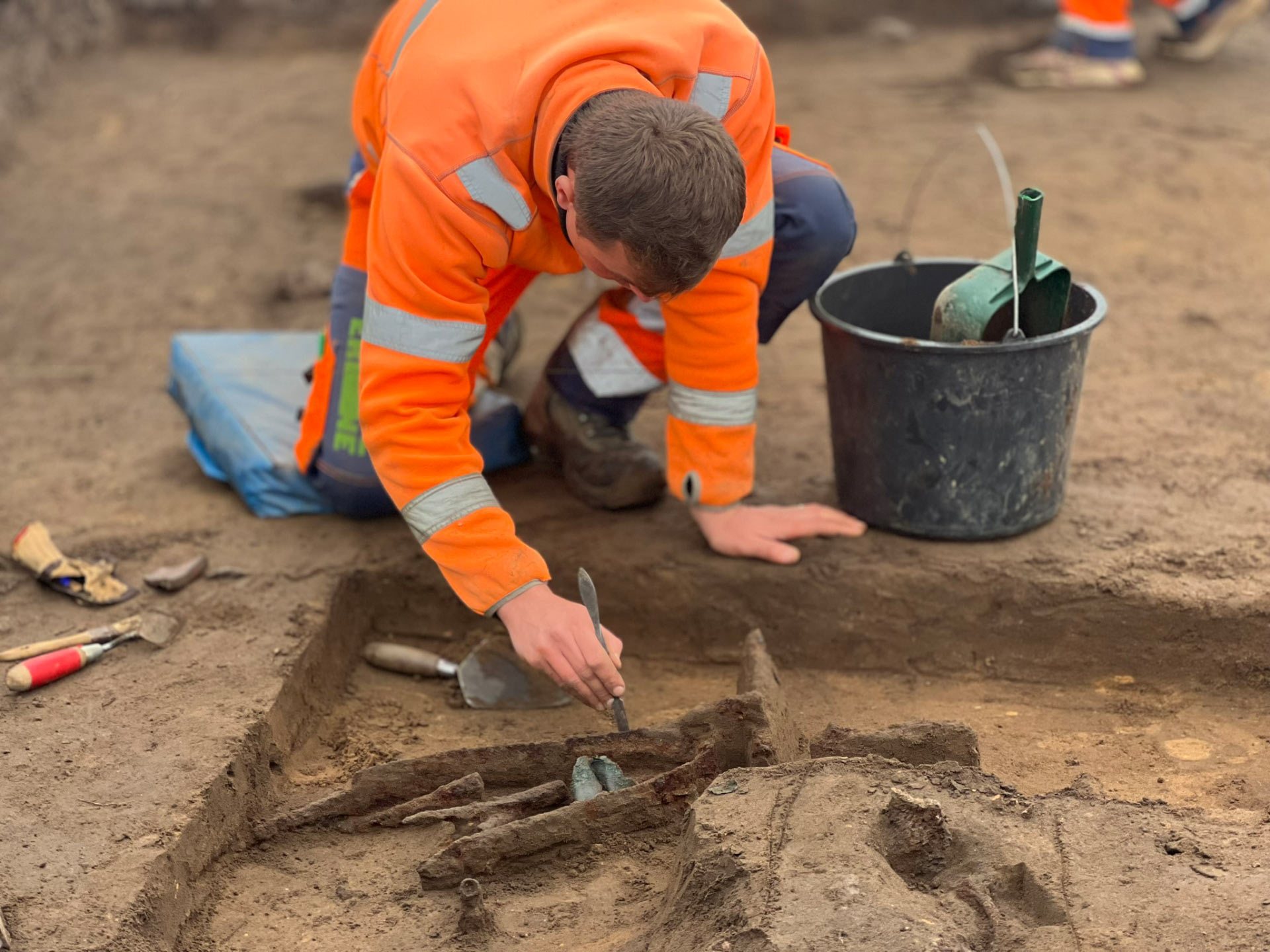


Archaeological Discovery In Denmark Reveals Fragments Of Roman Helmet And Several Weapons, Bringing New Information About Conflicts Of The Time.
Archaeologists from the Vejle Museum in Denmark announced a rare discovery: fragments of a Roman iron helmet that is over 1,600 years old.
The objects were found alongside a large cache of ancient weapons at the archaeological site of Løsning Søndermark in Hedensted.
Exceptional Find
The fragments were identified as a neck plate and a decorated cheek plate from a Roman helmet from the 4th century A.D.
-
Ancient Maya City Discovered in Remote Mexican Area with 12-Meter Pyramid, Palaces, Canals, and 14 Preserved Monuments

-
Indigenous 8-Year-Old Girl Wins National Science Award for Solar-Powered Water Heater Invention Using Recycled Materials

-
14-Year-Old Girl Develops Solar-Powered Water Purification System for India, Eliminating Need for Electricity or Chemicals

-
Forgotten Canadian Machine Harnessed Waterfall Power to Supply Mines with Compressed Air for 70 Years Without Motors or Electricity




They were buried in a post hole that was part of an ancient dwelling.
Initially, researchers did not realize that the two plates were parts of a helmet.
The pieces were roughly the size of a palm and were covered in rust. However, X-ray images revealed details that allowed for the recognition of the Roman origin of the equipment.
According to Elias Witte Thomasen, an archaeologist at the Vejle Museum, this discovery is unique in the country. This is the only known Roman helmet ever found in Denmark and also the oldest iron helmet discovered there.
Intriguing Historical Context
The presence of these pieces raises questions about how they came to the region. Archaeologists believe that the helmet may have belonged to a Germanic warrior who served in the Roman auxiliary troops.
Another possibility is that the equipment was looted during battles on the frontier of the Roman Empire and brought to Denmark as a trophy.
The discovery reinforces the idea that, at the time, weapons and equipment were divided after battles, in a post-conflict ritual.
Thus, the missing parts of the helmet may be deposited in other yet undiscovered locations.
The cache found includes over 100 spearheads, swords, a chainmail coat, and other weapons.
The objects show clear signs of having been intentionally destroyed before being buried, confirming ritual practices of the time.
Similar finds are very rare in southern Scandinavia. Similar pieces have been found in Schleswig, southern Sweden, and Gotland, but never before in Denmark.
This discovery provides important information about the military elites of the Iron Age and their connections to the powerful Roman Empire.
Archaeologists are now continuing to investigate the site in search of more pieces that can shed light on this intriguing historical context.