






 Portuguese
  Spanish


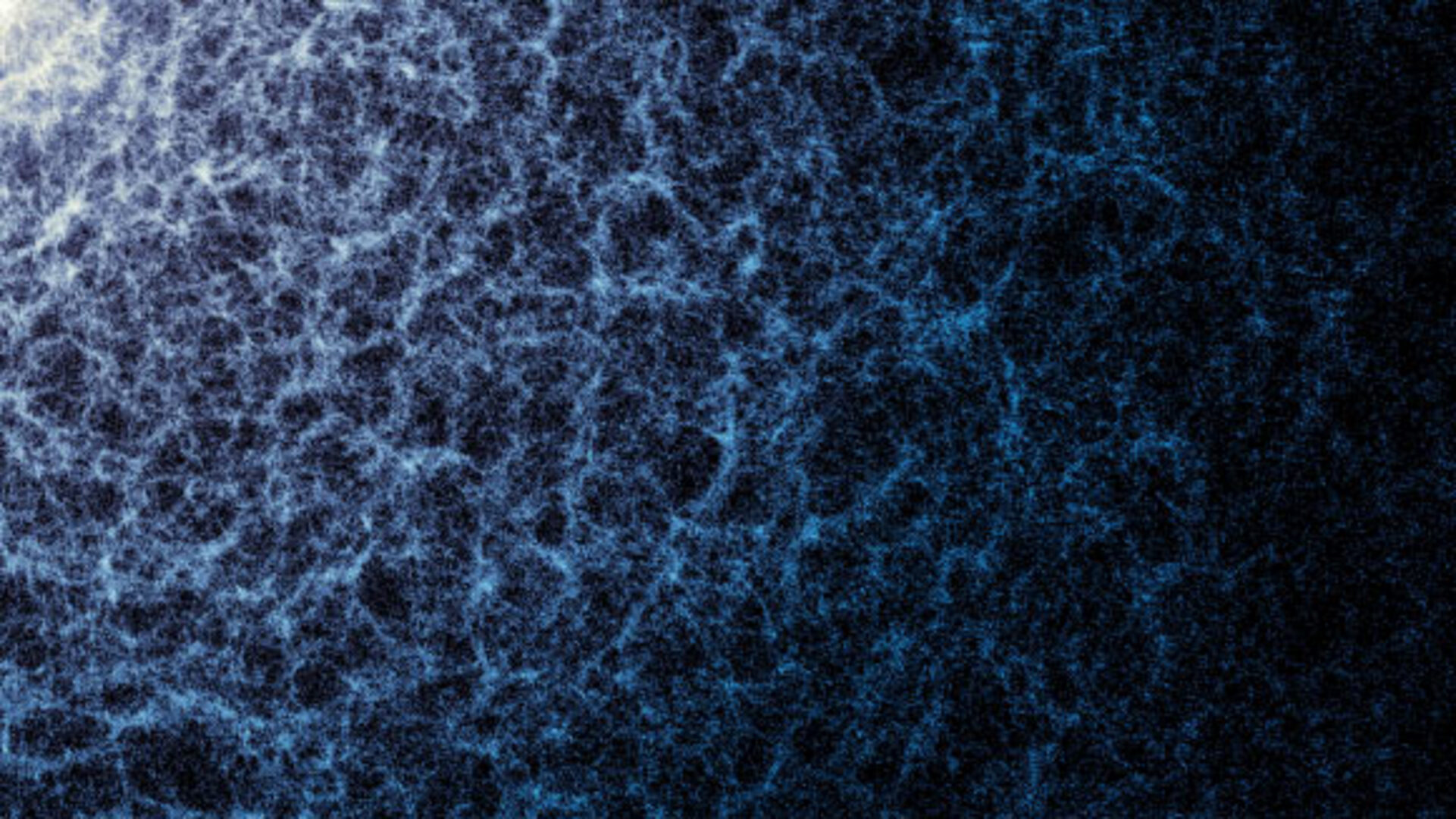

The technology of DESI recorded millions of galaxies with record precision, suggesting that dark energy may have changed behavior over time.
An international collaboration of scientists has just released the largest and most detailed three-dimensional map of the cosmos ever created, using the Dark Energy Spectroscopic Instrument (DESI).
The structure maps the position of millions of galaxies and quasars, allowing researchers to measure the expansion of the Universe over 11 billion years with unprecedented accuracy. This technological advancement provides crucial clues about the nature of dark energy and how it has shaped the architecture of spacetime since the youth of the Universe.
The technology behind the DESI 3D map
The project uses an advanced instrument installed on the Mayall Telescope in Arizona, equipped with 5,000 fiber optic positioning robots. These devices allow the system to simultaneously capture light from thousands of celestial objects, measuring the redshift to determine the exact distance of each galaxy.
-
Billionaire says the most valuable skill will help overcome job elimination caused by AI, following Bill Gates’ fears

-
A Dutchman created a ‘box’ that makes trees grow in the desert almost without water and without irrigation: the invention has already brought seedlings to dozens of countries and achieves up to 90% survival where common planting did not exceed 10%.

-
Abandoned warehouse hid a giant collection of rare computers, with over 2,000 artifacts from the 1930s to the 1980s.
-
Scientists warn that melting ice is triggering an alarming chemical transformation in preserved areas, and the first signs are already concerning researchers worldwide.




By recording the location of over 6 million objects, the DESI 3D map has surpassed all previous efforts in astronomical mapping in terms of scale and depth.
The achieved precision allows astronomers to use Baryon Acoustic Oscillations (BAO) as a “standard ruler” to measure the cosmic expansion rate. These oscillations are remnants of sound waves that traveled through the early Universe, leaving regular patterns in the distribution of galaxies.
The DESI 3D map reveals how these patterns have stretched over billions of years, providing a historical record of the struggle between gravity and expansion.
Revelations about dark energy and expansion
The initial data collected by the DESI 3D map suggest that dark energy, the mysterious force accelerating the expansion of the Universe, may not be an unchanging constant. While the standard model of cosmology predicts a constant energy density, the new records indicate possible variations in the strength of this energy over cosmic eras.
This discovery has the potential to challenge current physical theories and require a profound revision of the ultimate fate of the cosmos.
In addition to studying dark energy, researchers used the 3D map of DESI to analyze the mass of neutrinos, the most enigmatic subatomic particles in science. The way galaxies cluster on large scales is influenced by the speed and mass of these particles, and the new map provides the most stringent limits ever established for these measurements. The wealth of detail allows for the observation of the evolution of cosmic structures since the Universe was only 20% of its current age.
Next steps and the future of cosmology
The released survey represents only the first year of a mission planned to last five years and catalog 40 million galaxies.
As the 3D map of DESI grows, the statistical capacity to detect anomalies in the behavior of dark matter and dark energy increases exponentially. Scientists from over 70 institutions around the world are now delving into the massive volume of data to seek new laws of physics.
The project’s infrastructure also lays the groundwork for future space missions that will complement observations made on the ground. The success of the 3D map of DESI demonstrates that robotic automation applied to astronomy is key to understanding the invisible components that dominate 95% of our Universe.
Each new galaxy recorded brings humanity closer to understanding whether the cosmos will continue to expand forever or if new forces will come into play in the distant future.
With information Sci News





