






 Portuguese
  Spanish


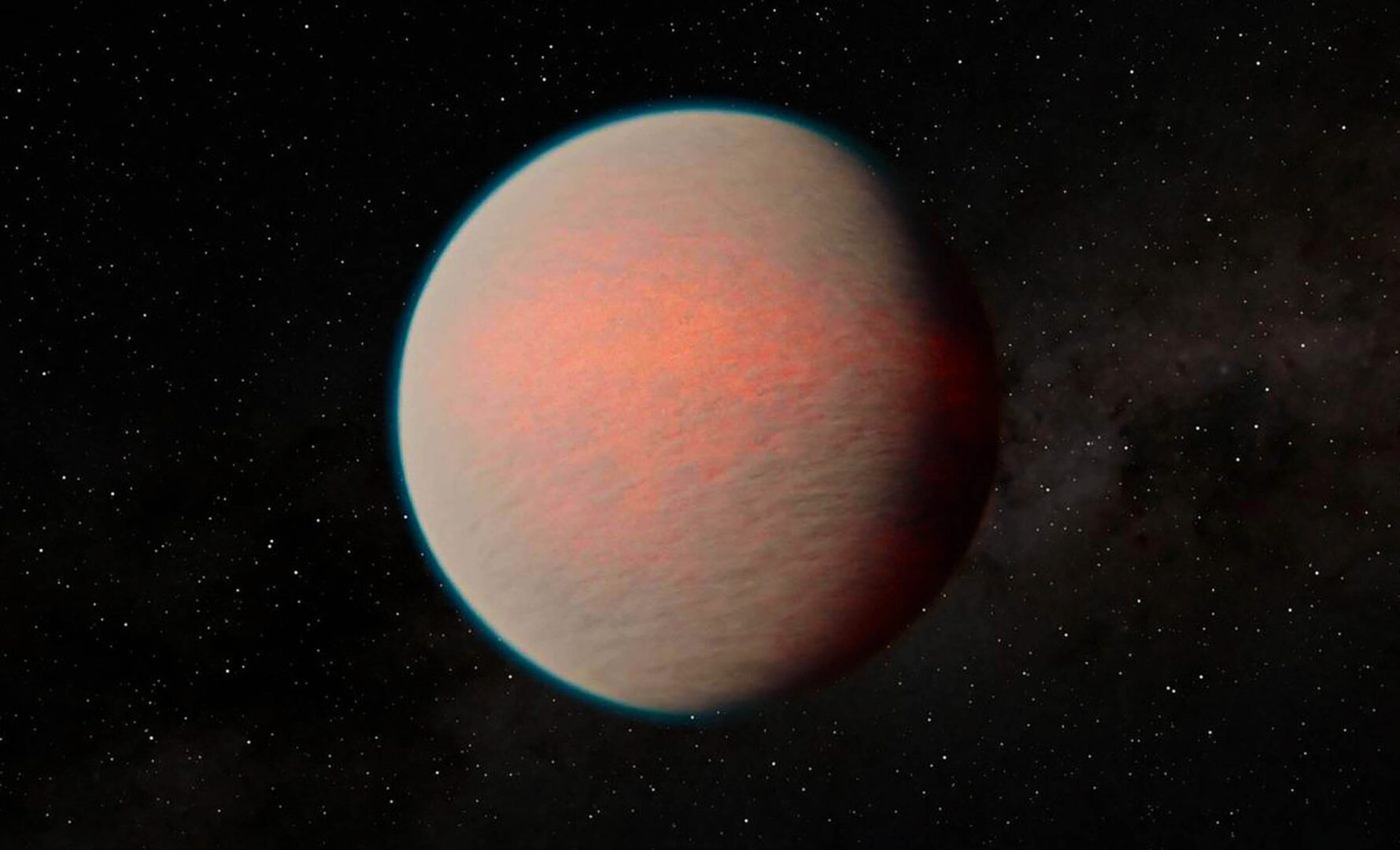


The discovery of the exoplanet Enaiposha reveals an intermediate celestial body between Earth and Neptune, with a dense atmosphere that intrigues the global scientific community.
The discovery of the exoplanet GJ 1214 b, recently named Enaiposha, revealed a world that challenges conventional astronomical classifications and has no parallel in the Solar System.
Located about 40 light-years away, this celestial body is significantly larger than Earth but smaller than Neptune, occupying a category known as “sub-Neptune.” What makes the exoplanet Enaiposha unique is its dense, water-rich atmospheric composition, suggesting the existence of a global ocean beneath a thick layer of vapor.
The atmospheric composition of the exoplanet Enaiposha
Observations made by state-of-the-art telescopes indicate that the atmosphere of the exoplanet Enaiposha is composed of a complex mixture of hydrogen and helium, saturated with high levels of water vapor.
-
China Develops Custom 140-Ton Electric Mining Truck with 770 kWh Swappable Battery, Deploys 290 Units in Xinjiang’s Largest Zinc Mine

-
Meta to Launch Arena, a New Prediction App Targeting 3.56 Billion Users, Competing with Polymarket and Kalshi

-
Scientist Challenges Famous Human Evolution Theory, Argues Homo Sapiens Evolved Gradually Over Thousands of Years
-
15-Year-Old American Builds Ocean Generator with PVC Pipe and 3D-Printed Propeller for $12, Wins National Prize, Presents at White House, and Makes Forbes 30 Under 30 List




Unlike gas giants that have small solid cores, this planet appears to have a structure dominated by volatile compounds, giving it a very low density. Scientists believe that high atmospheric pressures may create exotic states of water, such as “superionic ice,” in its deeper layers.
The estimated surface temperature for the exoplanet Enaiposha is extremely high, preventing the existence of liquid water in the same way it occurs on Earth. Instead, the planet is enveloped by a persistent haze of aerosols that reflects the light of its host star, a cool red dwarf.
This cloud cover makes direct observation of the surface a technical challenge, requiring advanced spectroscopy methods to identify the present chemical elements.
Fundamental differences with the Solar System
The exoplanet Enaiposha stands out for filling a size gap that does not exist among the planets orbiting our Sun. While the Solar System has small rocky planets and immense gas giants, the exoplanet Enaiposha represents an intermediate class that seems to be very common in other parts of the Milky Way.
The absence of such worlds in our immediate neighborhood makes the study of Enaiposha essential for understanding the diversity of planetary formation in the galaxy.
Studies suggest that the exoplanet Enaiposha may have formed in a colder and more distant region of its stellar system, later migrating to its current orbit closer to the star. This migration process would explain the high concentration of ice and water, elements that are typically found beyond the “ice line” in forming planetary systems. The planet’s orbital journey has shaped its current characteristics, resulting in an oceanic world under extreme greenhouse conditions.
New frontiers in the search for aquatic worlds
The naming of the exoplanet Enaiposha, a term that refers to the idea of a large body of water in Maa culture, reflects the wet and mysterious nature of this celestial body.
Ongoing research utilizes the James Webb Space Telescope to penetrate the layer of haze and measure the exact ratio of methane and carbon dioxide in the atmosphere. The exoplanet Enaiposha serves as a natural laboratory to test models of how water-rich planets evolve under the influence of radiation from dwarf stars.
Success in characterizing this world paves the way for the discovery of other “sub-Neptunes” that may harbor even more interesting conditions. As detection technology evolves, the exoplanet Enaiposha remains the prime example that the Universe hosts types of planets that humanity could not even imagine a few decades ago.
Understanding this vapor giant is an essential step in mapping the habitability and chemical composition of the cosmos.
Click here to access the study.






