Portuguese
  Spanish


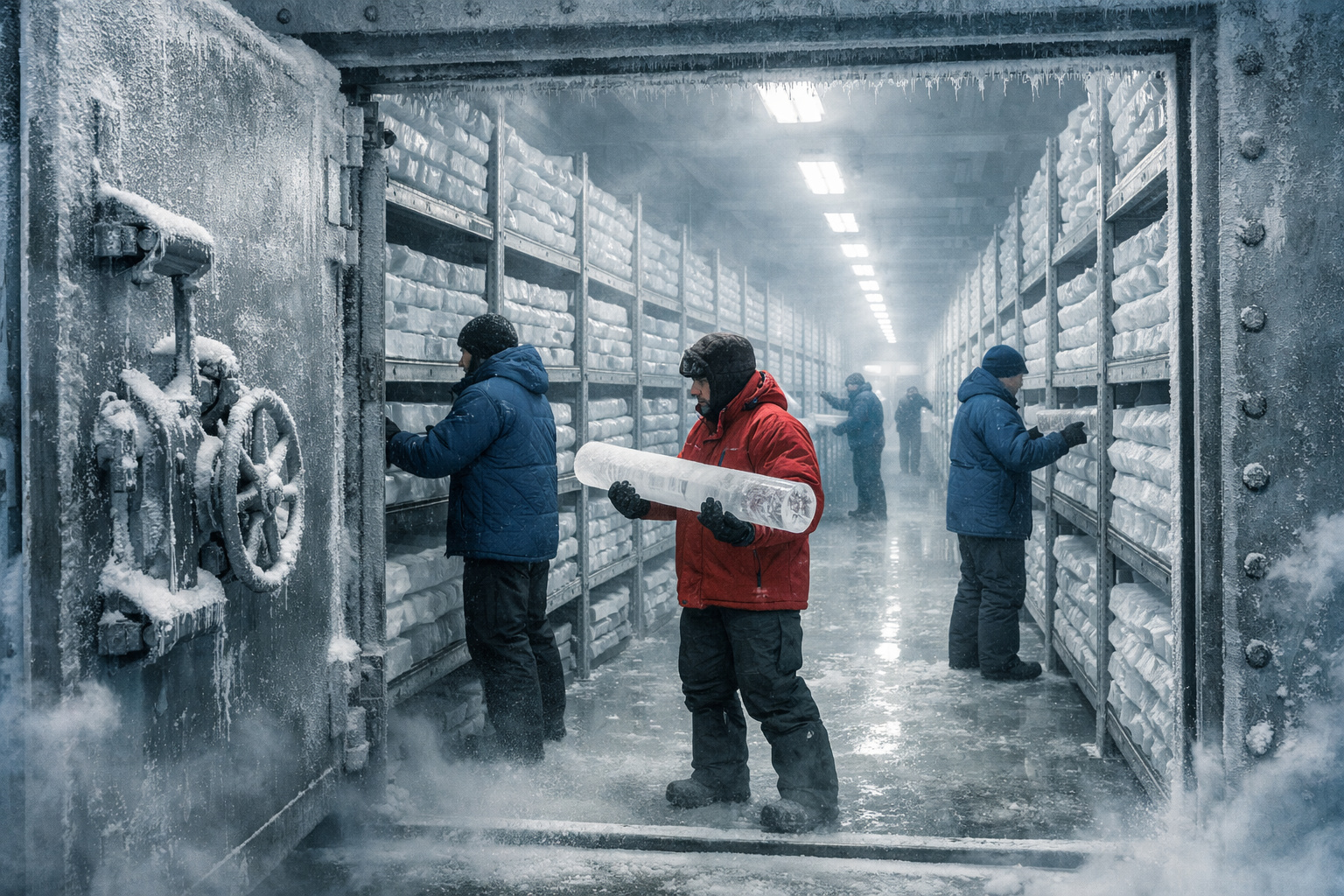

Scientists Inaugurate In Antarctica The First Global Glacier Archive To Save Ice Cores That Record The Earth’s Climatic History Before They Disappear.
On Wednesday, January 14, 2026, a historic moment for climate science was recorded on the Antarctic Plateau, near the Concordia Station: researchers officially inaugurated the world’s first glacier archive, designed to preserve ice cores extracted from at-risk glaciers around the planet, before global warming consumes them.
This initiative, led by the Ice Memory Foundation and an international consortium of scientific institutions, represents an urgent response to the accelerated loss of glaciers that preserve valuable records of the Earth’s atmosphere and climate over centuries — and even millennia.
What Is The Global Glacier Archive And Why It Matters
The site inaugurated in Antarctica is not a simple storage facility, but a natural ice sanctuary excavated about 5 meters below the surface with an average stable temperature around −52 °C (−61 °F) — ideal conditions for keeping ice cores intact for decades or centuries without the need for artificial refrigeration.
-
Ship Returns from Brazilian Coast with Thirty Newly Discovered Life Forms

-
Nigerian Professor Invents Electricity-Free Refrigerator Using Clay Pots and Wet Sand, Extending Shelf Life of Vegetables to 27 Days; 7,000 Units Distributed in Energy-Deprived Villages

-
Flower Farms Supplying London and Amsterdam Face Backlash for Environmental Impact on African Lake, Threatening Jobs for 50,000 Workers

-
World’s Largest Container Ship Departs Shanghai with 24,000 Containers, Set to Debut in Europe in July



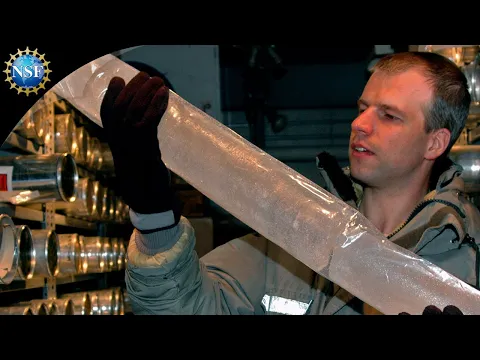

Ice cores are longitudinal samples of layers of ice that accumulate over thousands of years in glaciers. Each layer contains air bubbles, aerosols, dust particles, and pollutants, functioning as a kind of climate time capsule. This information is essential for reconstructing the Earth’s climate and understanding how it responded to natural and anthropogenic variations over past eras.
The preservation of these cores in an environment as cold as Antarctica is considered critical because many mountain glaciers, particularly in the Alps, Andes, and Caucasus, are melting rapidly due to global warming. Once these glaciers disappear, the information encapsulated in these cores would also be lost forever.
How The Archive Was Created And The Role Of Global Institutions
The project has its roots in Ice Memory, launched in 2015 by researchers from the Italy’s Consiglio Nazionale delle Ricerche (CNR) and Ca’ Foscari University of Venice, with support from institutions such as CNRS (France), IRD (France), and the Paul Scherrer Institute (Switzerland).
The process of creating the archive began with the collection of ice cores from threatened glaciers in the European Alps — including Mont Blanc, France, and Grand Combin, Switzerland — which were transported for over 50 days under controlled conditions to Antarctica’s interior.

The infrastructure of the archive was designed to take advantage of the natural climatic conditions of the frozen continent, minimizing the need for mechanical equipment and ensuring long-term stability.
The Scientific Value Of Ice Cores
Each ice core may contain records of:
- Concentrations of ancient atmospheric gases, such as carbon dioxide and methane;
- Dust particles from volcanic eruptions and sandstorms;
- Signs of industrial pollutants that began to appear in the past centuries;
- Traces of abrupt climatic events, such as periods of rapid warming or cooling.
By preserving this material in a stable repository, scientists ensure that future generations can analyze it with technologies that may not yet exist, expanding the understanding of the Earth’s climatic evolution.
Urgency And Appeals From The Scientific Community
Project coordinators and experts who participated in the inauguration made urgent public appeals to expand the archive before many glaciers disappear. They are calling for international cooperation and resources for drilling campaigns in more mountainous regions of the planet, including the Andes, Pamir, and Caucasus.
According to researchers, the loss of these glaciers in the coming years could occur so rapidly that much of the climatic record they contain has not yet been collected or preserved.
The need to protect these archives was also highlighted as a global responsibility, not just a scientific one, because the information they contain has direct implications for climate modeling, environmental policies, and adaptation to changes.
The Archive As A Legacy For Humanity
In addition to its scientific importance, the newly inaugurated ice archive is seen as a historical and cultural legacy: a physical testament to how the planet has changed over time and a source of data to answer questions that the current generation of scientists has only just begun to formulate.

Project leaders state that the first stored cores represent only the beginning of a larger international effort aimed at building a shared global climate heritage for researchers from all nations.
Challenges And Future Of Glacial Preservation
As the planet continues to warm and many low-altitude glaciers — which have already lost between 2% and 39% of their mass since 2000 in some regions — melt, the value of these archives grows exponentially.
The archive in Concordia is located at about 3,200 meters above sea level, in the heart of the Antarctic Plateau, under an international treaty that seeks to preserve the region as a common heritage of humanity.
In the coming years, scientists expect that dozens of other ice cores from various mountain ranges will be added to the archive, transforming it into a definitive resource for understanding the Earth’s climate before glacial memory disappears.