






 Portuguese
  Spanish
  3 min of reading
  0 comments


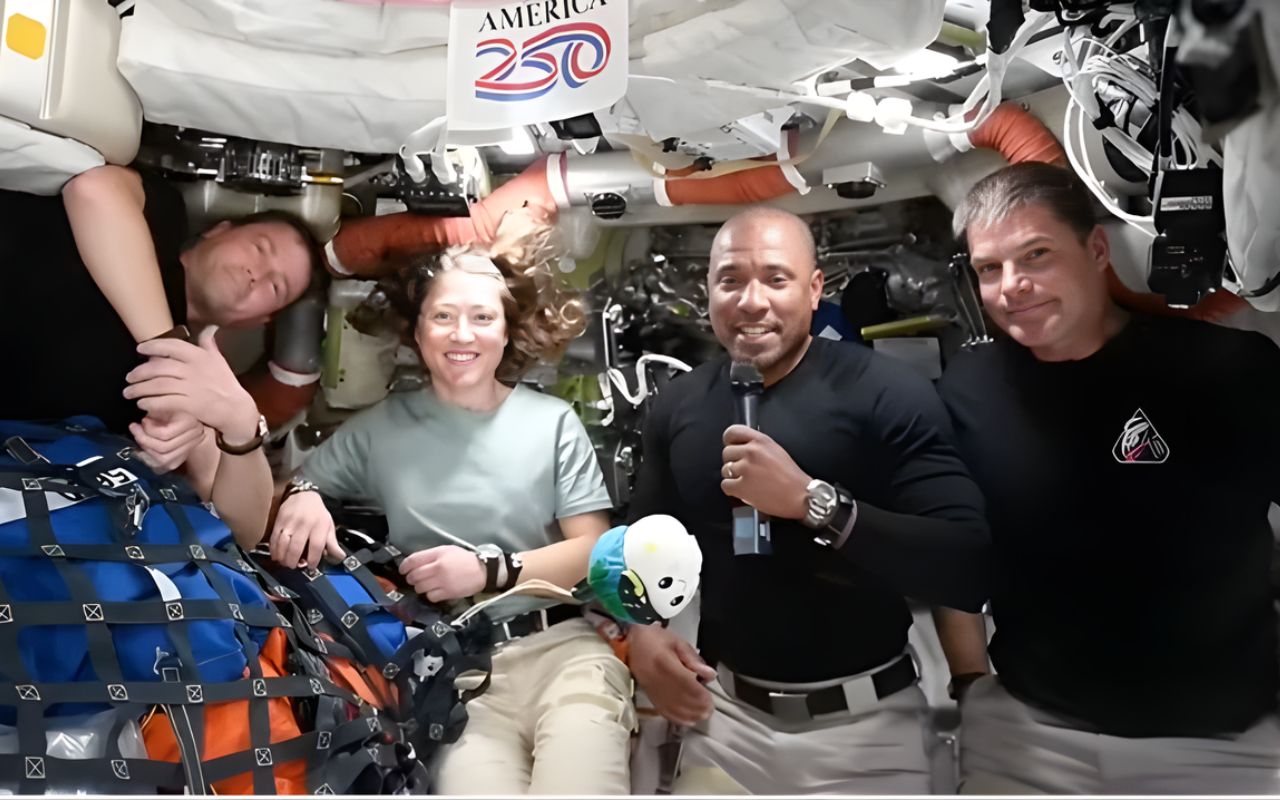
Artemis 2 mission sets record communicating with the ISS almost 374 thousand km from Earth, highlighting technological advancement.
The Artemis 2 mission reached a new level in space exploration by recording the farthest communication ever made by humans. On April 7, astronauts aboard the spacecraft established a voice call with colleagues at the International Space Station when they were about 373,595 kilometers from Earth. The achievement occurred after flying over the far side of the Moon and demonstrates the advancement of communication systems that will be essential for future missions.
Artemis 2 pushes limits and sets distance record
During the mission, the spacecraft reached approximately 406,771 kilometers from Earth, surpassing previous historical marks. This advancement positions Artemis 2 as one of the most significant missions today.
The previous record belonged to Apollo 13. With this, the new generation of missions significantly expands the boundaries of human exploration. Even at such a great distance, communication between the teams occurred efficiently. The signal took only a few seconds to travel the distance.
-
USA prepares a 408 kg time capsule with synthetic DNA, national treasures, and a secret message to reveal to Americans in 2276 what it was like to live in the country in 2026.

-
At just 15 years old, prodigy Laurent Simons completed a PhD in quantum physics, masters equations used by NASA, solves advanced problems, and redefines the limits of human intelligence.

-
Brazilian mechanic invented a lamp made from a PET bottle during the 2001 blackout, the idea turned into an NGO present in 30 countries and has already illuminated 40,000 people in 200 communities without electricity in Brazil.

-
The first trillionaire in history, Elon Musk, opens his wallet and pays the equivalent of R$ 306 billion, or US$ 60 billion, for the artificial intelligence programming startup Cursor, in yet another AI investment made through SpaceX, his rocket company.




To put it into perspective, this distance is equivalent to about ten complete laps around the Earth. Still, the transmission maintained sufficient quality for a clear conversation. Later, NASA released a video of the call with adjustments to reduce natural delays.
During the contact, the astronauts took the opportunity to share experiences about life outside Earth. Jeremy Hansen emphasized the importance of the moment and the connection between the teams.
At the station, Jessica Meir commented on the privileged view of the planet. According to her, observing Earth from space reinforces the notion of its fragility. Christina Koch drew attention to the contrast between the light of Earth and the darkness surrounding it.
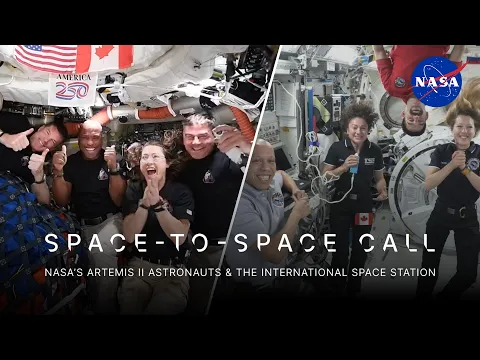

Routine in space takes center stage in the call
In addition to reflections, the daily lives of the astronauts were also a topic of conversation. Simple activities, like eating, can become challenging in microgravity.
Commander Reid Wiseman recalled memorable moments from the mission, such as the view of Earth approaching rapidly. Meanwhile, Victor Glover highlighted the importance of planning for more distant missions.
The food in space has also generated comments among the astronauts. They mentioned dishes like sweet and sour chicken, coffee, and vegetables.
Moreover, spicier foods are preferred. This is because taste can be affected by microgravity. These adaptations are part of the routine in the space environment.
At the end of the conversation, the astronauts emphasized the importance of international cooperation. Even in different missions, integration is essential.
More than a record, the call demonstrates that communication over long distances is already a reality. This will be crucial for future journeys, such as crewed missions to Mars.
With information from Olhar Digital




Be the first to react!