






 Portuguese
  Spanish


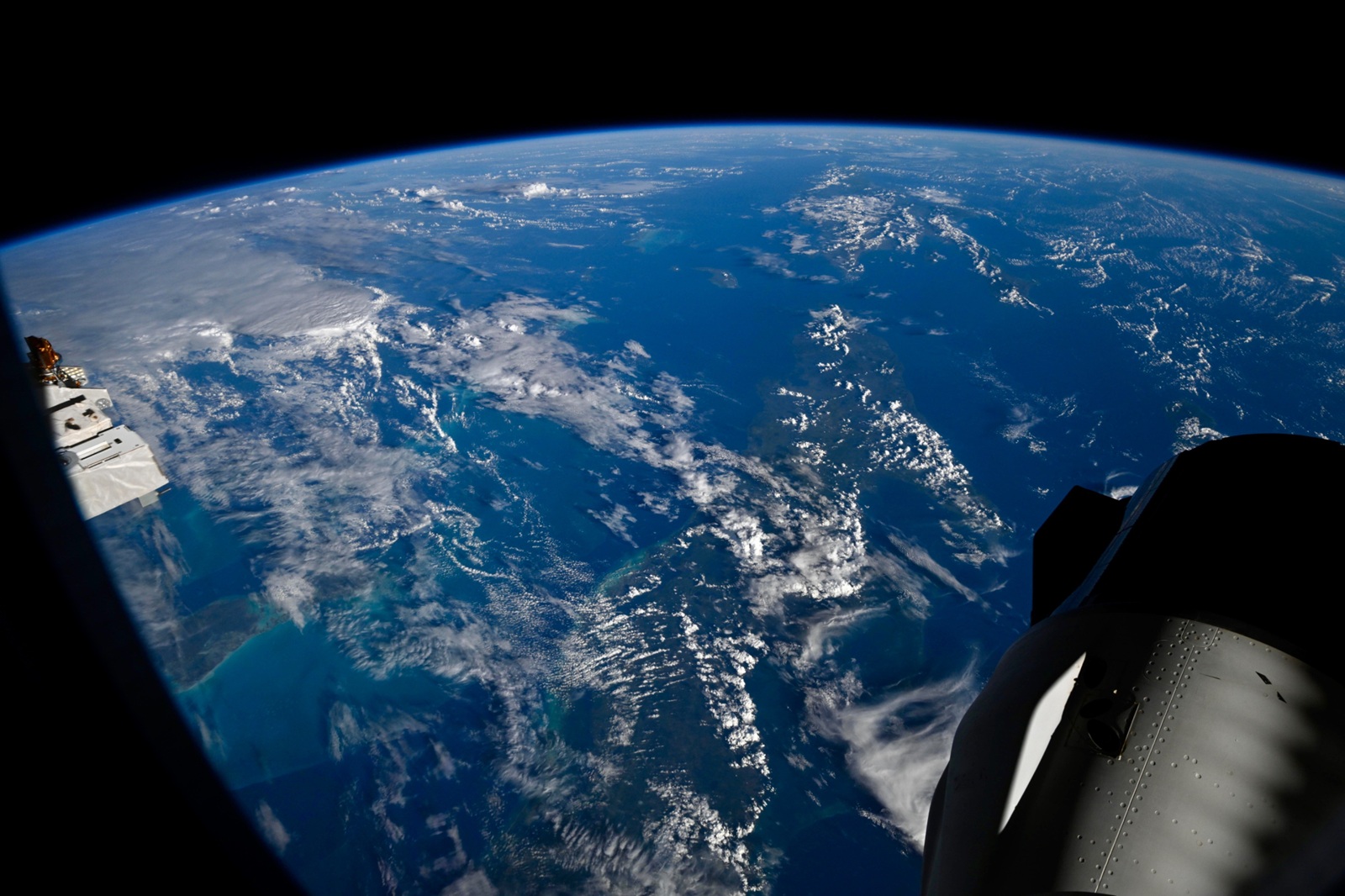


Astronaut from JAXA Captures Images of Earth from the ISS During Expedition 74, While Crew Conducts Research in Microgravity, Stem Cell Tests, Entrance Exam Studies, and Station Maintenance Between December 8 and 12, 2025
Astronaut Kimiya Yui from JAXA, a member of Expedition 74 on the International Space Station, shared images of Earth captured in December 2025, highlighting the orbital perspective while the crew conducted essential scientific experiments and maintenance activities for the station’s operation.
The released photographs show the planet with a deep blue sky and white clouds, taken from low Earth orbit, emphasizing the uniqueness of the daily view available to astronauts aboard the International Space Station.
According to a report shared by Yui on social media and echoed by Space.com, the capture of the images occurred spontaneously, just before the rest period, demonstrating how observing Earth is integrated into the orbital routine.
-
China Develops Custom 140-Ton Electric Mining Truck with 770 kWh Swappable Battery, Deploys 290 Units in Xinjiang’s Largest Zinc Mine

-
Meta to Launch Arena, a New Prediction App Targeting 3.56 Billion Users, Competing with Polymarket and Kalshi

-
Scientist Challenges Famous Human Evolution Theory, Argues Homo Sapiens Evolved Gradually Over Thousands of Years
-
15-Year-Old American Builds Ocean Generator with PVC Pipe and 3D-Printed Propeller for $12, Wins National Prize, Presents at White House, and Makes Forbes 30 Under 30 List




The astronaut stated that she thought of the collective desire to see the planet from space and emphasized that one of the most impressive features of the ISS is the ease with which landscapes like these can be observed daily, as reported by Space.com.
Besides the visual impact, the images symbolize an experience limited to a few space professionals, providing a rare perspective that reinforces the human dimension of scientific missions conducted in low Earth orbit.
Scientific Research Conducted During Expedition 74
Alongside the visual recordings, the crew of Expedition 74 maintained an intense agenda of scientific research between December 8 and 12, 2025, aimed at broadening human knowledge and preparing for future lunar and Martian missions.
One of the highlighted studies involved stem cells in a microgravity environment, led by NASA astronaut Zena Cardman, focusing on observing cellular behavior in the absence of gravity.
According to NASA, the experiment seeks to understand how stem cells develop in space, allowing for the assessment of future applications in repairing damaged tissues and organs in terrestrial environments.
The analysis of cellular development in microgravity is part of an ongoing line of research in regenerative medicine, with the potential to influence therapeutic approaches in the future of human health.
Another relevant experiment focused on the vestibular system, responsible for body balance, conducted by Russian cosmonauts Sergey Kud-Sverchkov and Sergei Mikaev during the same week.
Using virtual reality glasses, the cosmonauts monitored visual and perceptual adaptations in microgravity, providing data on how the human body reacts to prolonged space missions, as reported by Space.com.
These observations are considered important for reducing physical risks in long-duration flights, especially in scenarios of future crewed trips to Mars.
Maintenance and Logistics Keep the ISS Operational
In addition to scientific research, the crew dedicated a significant part of their time to maintaining the infrastructure of the International Space Station, essential for ensuring safe and habitable conditions in orbit.
One of the central tasks of the week involved the preparation of the HTV-X1 cargo spacecraft, with a launch scheduled for January, according to information released by NASA.
Astronauts Chris Williams and Mike Fincke from NASA worked on loading trash, obsolete equipment, and organizing a support for scientific instruments that will be transferred to the spacecraft.
This logistical preparation is considered fundamental to maintaining the ISS’s operational capacity and ensuring the continuous flow of supplies and disposal of materials accumulated throughout the missions.
Fincke also carried out the replacement of components in the orbital hydraulic system in one of the bathrooms located in the Harmony module, an activity considered routine but technically complex in the space environment.
The maintenance of vital systems, even in seemingly simple tasks, requires precision and rigorous planning, reinforcing the importance of the crew’s continuous work to sustain scientific and human activities in orbit, even with small natural disruptions to the space routine.







Fabio Lucas Carvalho jorNAZISTAS especialista em diversos assuntos, ou seja, não sabe pørrª nenhuma de nada e escreve sobre tudo, tí**** imprensa marrom brasileira.