






 Portuguese
  Spanish
  3 min of reading
  0 comments


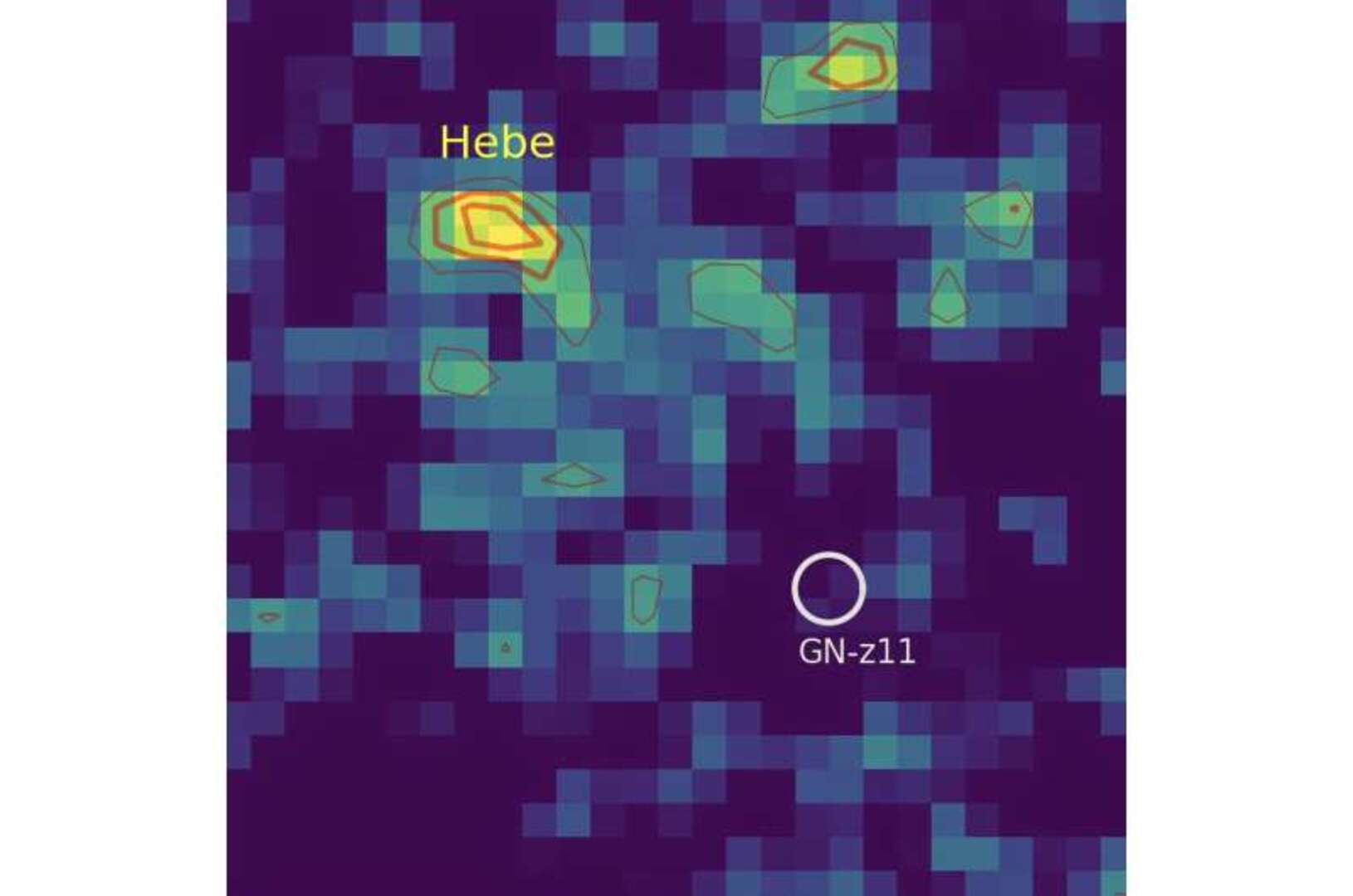
The detection of the chemical signatures of primordial stars represents a milestone in cosmic archaeology, allowing scientists to see through billions of years. By understanding how these first giants lived and died, astronomy can finally explain the origin of the elements that make up everything we know today.
An international team of astronomers has detected what they describe as the most robust evidence yet of the existence of the first stars that shone in the cosmos.
Using data from state-of-the-art observatories, the researchers identified a peculiar chemical signature in a distant gas cloud, suggesting the presence of remnants from Population III. These primordial stars, composed almost entirely of hydrogen and helium, were fundamental to the evolution of galaxies and to the end of the cosmic “dark ages.”
The chemical signature of Population III
The study is based on the analysis of an extremely ancient gas cloud, whose chemical element ratios do not match the patterns observed in modern stars. The first stars of the universe were massive, reaching hundreds of times the size of the Sun, and had short lives that ended in violent supernova explosions.
-
Space technology used to search for water on Mars is now hunting for invisible leaks under the streets of São Paulo, using satellites, AI, and chlorine signals to help Sabesp recover up to 6.7 billion liters of water.

-
Japan sends ship to extract mud rich in rare earths at nearly 6,000 meters deep in the Pacific, attempts to lift 350 tons per day from the seabed, and transforms sediments near Minamitori Island into a strategic weapon to reduce dependence on China.
-
Venus Aerospace promises a rotating detonation hypersonic engine that takes the Stargazer to Mach 9 and crosses oceans in 1 hour, but the flight that made history barely surpassed the speed of sound.

-
Brazilian student creates a cheap formula that makes plants grow up to 90% faster and wins an award in a global scientific competition.





These explosions spread the first heavy elements throughout space, but in very specific proportions that scientists were able to measure through high-precision spectroscopy.
Unlike later stellar generations, which contain metals like iron in abundance, the first stars of the universe created a limited inventory of elements. The detection of a low abundance of heavy metals relative to carbon and magnesium serves as a “fingerprint” of these extinct giants. This chemical fossil record allows astronomers to reconstruct the physical properties of the original stars, even though they disappeared billions of years ago.
The crucial role in cosmic reionization
The intense ultraviolet radiation emitted by the first stars of the universe played a vital role in the reionization of the neutral hydrogen that filled space. This process made the universe transparent to light, allowing the first galactic structures to become visible.
The new discovery helps fill important gaps about the exact timeline of this transition, providing data on how quickly these stars formed after the Big Bang.
In addition to illuminating the cosmos, these stars acted as initial chemical factories that prepared the ground for the formation of planets and, eventually, life. The data suggests that the first stars of the universe emerged in small isolated groups before congregating in the protogalaxies we see in deep space images. Understanding their mass and explosion energy is essential for computational simulation models that attempt to replicate the growth of the young universe.
New horizons with infrared astronomy
The detection of this evidence was driven by the sensitivity of new instruments capable of capturing light that has traveled for over 13 billion years.
As the universe expands, the light from the first stars of the universe is stretched to infrared wavelengths, requiring cutting-edge technology for its observation. The success of this research paves the way for future observation campaigns that will seek to directly observe the clusters where these stars resided.
Scientists are now planning to investigate other regions of the sky in search of similar signatures to determine if the formation of these stars followed a uniform pattern. The definitive confirmation of the characteristics of Population III will transform astrophysics, validating theories about nucleosynthesis and the formation of primordial black holes.
The search for the first stars of the universe remains one of the greatest challenges of modern science, bringing humanity closer to understanding its deeper cosmic origins.
Click here to access the study.


Be the first to react!