






 Portuguese
  Spanish
  5 min of reading
  0 comments


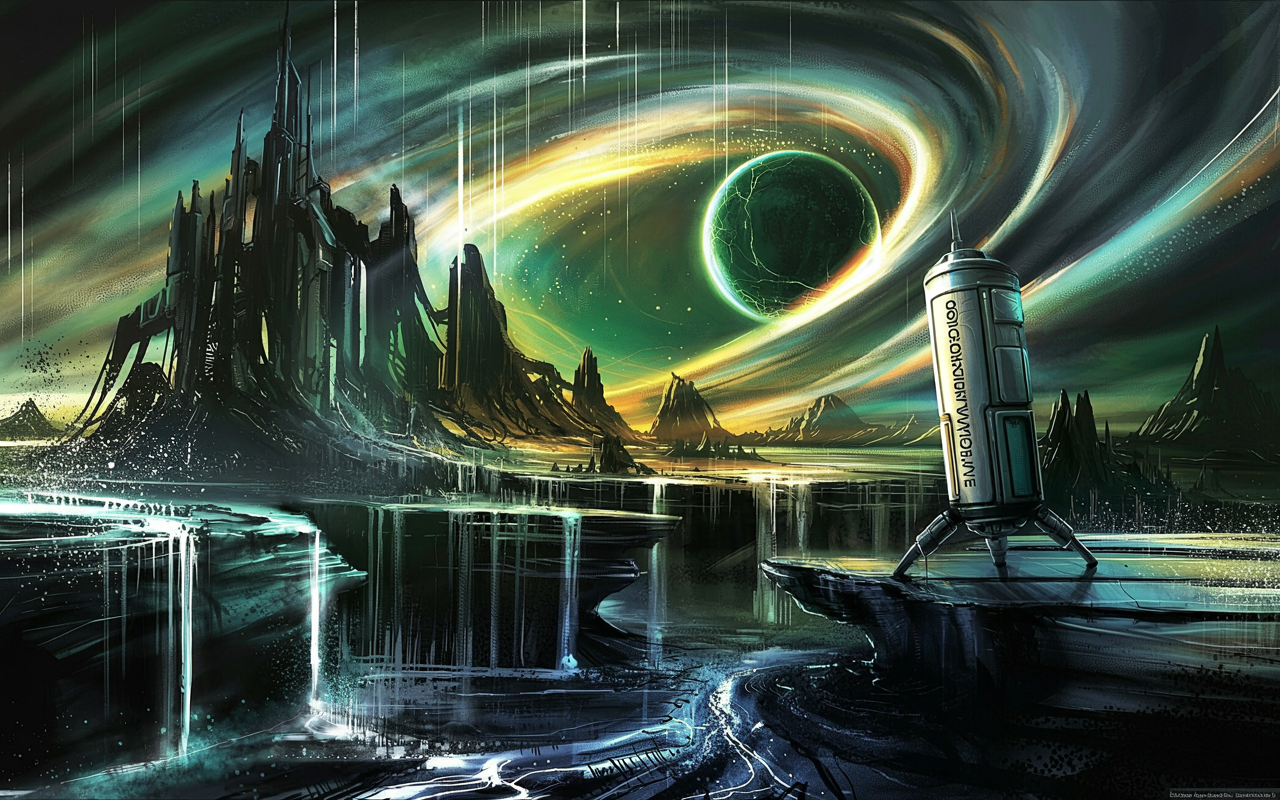
Astronomers Are Working On The Discovery Of A Planet Where It Rains Metal. Meet WASP-121b, The World That Rains Metal And Has Winds Exceeding 8,000 Km/h
Astronomers have identified an extraordinary exoplanet with extreme climate conditions, challenging everything we know about planetary meteorology. This planet is WASP-121b, a celestial body where winds can exceed 8,000 km/h and there are strong indications of metal rain in its upper atmosphere. Located about 900 light-years from Earth, this exoplanet has become one of the most studied due to its potential to reveal the physical limits of planetary formation and evolution. The discovery, based on data collected by space telescopes such as Hubble and TESS, shows that this is possibly the most extreme metal-raining world ever observed.
What Is WASP-121b?
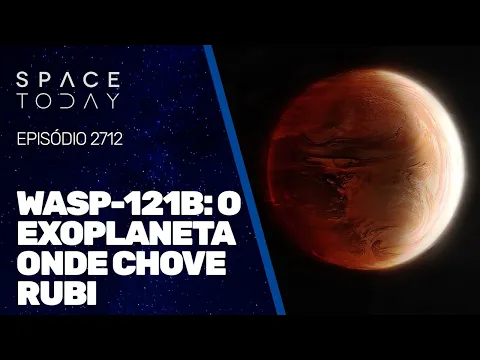

WASP-121b is classified as a “Hot Jupiter,” meaning it is a gas giant with a mass similar to that of Jupiter, but orbits very close to its star. Its orbit lasts only 1.27 Earth days, placing it in an incredibly close position to its host star, WASP-121, causing its temperature to reach values exceeding 2,500°C on the side facing the star.
This proximity creates a Tidal Locking effect, causing the planet to have one side permanently in daylight and the other eternally in darkness—conditions that favor a violent atmospheric dynamic, with supersonic winds and transport of metallic elements in vapor form.
-
Brazilian family creates machine that transforms seawater into fresh water, produces up to 130 liters per hour, facilitates routine on vessels, and boosts family business along the country’s coast.

-
A doctor from Minas Gerais warns that sleeping with the fan pointed at the body all night is not as harmless as you think; it dries out the respiratory tract, causes mucus buildup, spreads dust mites, and can even irritate the cornea of the eyes.

-
Ecuadorian volcano at 6,268 meters is more than 2,000 meters closer to space than Everest, which is 8,848 meters, because the Earth is wider at the equator.
-
Public school students in the hinterlands of Maranhão create a bioinsecticide with neem and castor to protect corn crops, transform rural waste into biogas and biofertilizer, and bring sustainable technology to producers at ExpoSertão.




Metal Rain: A Reality In Superheated Atmospheres
Data obtained from the Hubble telescope revealed that the upper atmosphere of WASP-121b contains vapor of iron and magnesium. During the atmospheric cycle, these elements are vaporized on the daytime side and transported to the nighttime side, where there is enough cooling for these vapors to condense and precipitate. In other words, metal rain occurs—something never before observed so clearly on another planet.
An article published in Nature Astronomy (Evans et al., 2020) confirms the presence of metallic ions in the planet’s thermosphere, indicating that the ultraviolet radiation from the star is strong enough to break molecules and ionize atoms—a truly inhospitable environment.
Supersonic Winds: Up To 10 Times Faster Than Those On Earth
Simulations conducted by scientists at the University of Exeter in the UK suggest that winds in the atmosphere of WASP-121b can reach speeds of up to 8,500 km/h. This represents about seven times the speed of sound.
The winds are generated by the extreme thermal difference between the daytime and nighttime hemispheres, causing a continuous atmospheric current that transports heat and matter from one side of the planet to the other.
On Earth, the strongest winds in tornadoes and hurricanes rarely exceed 300 km/h, while on Jupiter, the winds in the Great Red Spot reach approximately 430 km/h. In comparison, WASP-121b completely redefines the concept of planetary storm.
The Planet Where It Rains Metal: Implications For Science
WASP-121b is one of the few exoplanets that astronomers can study in detail regarding its atmosphere, due to its proximity to the star and its large size. These characteristics facilitate the observation of absorption spectra during the planet’s transits in front of its star.
Among the elements detected in the atmosphere are:
- Water (in vapor form)
- Iron and Magnesium (in gas phase)
- Calcium, Vanadium, and Nickel (in ionized form)
This data allows scientists to build more realistic atmospheric models and understand how gases and metals behave at extremely high temperatures. Additionally, it helps to predict the composition of other exoplanets, including those in habitable zones.
The Importance Of WASP-121b In The Search For Other Worlds
Although the planet where it rains metal is inhospitable to any form of life, it offers clues about the diversity of planetary systems in the Milky Way. The unusual chemistry of its atmosphere and the intensity of its winds are phenomena that challenge traditional theories about the formation of gas giants.
Moreover, WASP-121b is an excellent target for future studies with the James Webb Space Telescope (JWST), which will be able to identify complex molecules and traces of elements not yet detected, including in the infrared spectrum.
The Role Of Space Telescopes In The Discovery
The Hubble Space Telescope was responsible for the initial detection of heavy metals in the atmosphere of WASP-121b, using absorption spectroscopy during the transits. The TESS (Transiting Exoplanet Survey Satellite) helped refine the planet’s orbital period, confirming its classification as an extreme hot Jupiter.
With technological advancements and the operational capabilities of the James Webb, scientists will be able to analyze the atmospheric layers of exoplanets with much greater precision. This includes the ability to identify volatile compounds, such as ammonia and carbon dioxide, which are important for understanding planetary chemistry on cosmic scales.
Curiosities About WASP-121b
- Distance from Earth: about 900 light-years;
- Size: approximately 1.8 times the radius of Jupiter;
- Atmospheric Temperature: up to 2,500 °C;
- Length of Year: 1.27 Earth days;
- Wind Speed: estimated above 8,000 km/h;
- Metal Rain: liquid iron and nickel may precipitate on the nighttime side.
These characteristics make WASP-121b one of the best-documented exoplanets in terms of climate, structure, and atmospheric dynamics.
The discovery of WASP-121b—a possible world that rains metal with fierce winds—represents a watershed moment in modern astronomy. It demonstrates that the universe is far more diverse and surprising than we had imagined.
By revealing the extreme conditions of a planet where literal metal rain occurs, astronomers not only expand our understanding of planetary formation but also pave the way for future discoveries. Even uninhabitable worlds have much to teach us about the mechanisms of the cosmos.
With new missions and technologies, our ability to investigate planets like WASP-121b is only set to grow, reinforcing the essential role of science in exploring the limits of the universe.


Be the first to react!