






 Portuguese
  Spanish


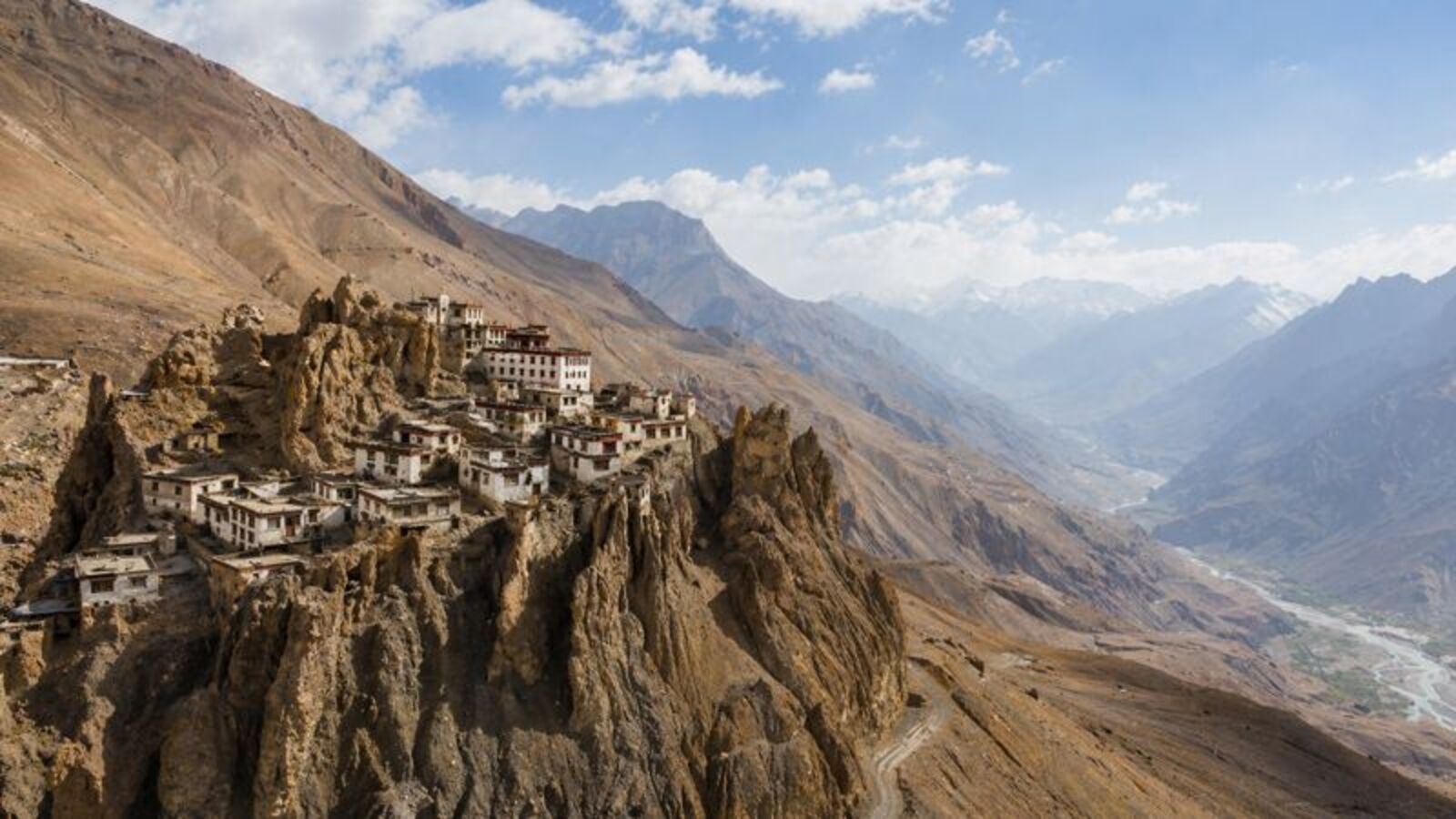


In the former capital of Spiti, the village of Dhankar houses a thousand-year-old monastery on the cliff, a lake accessible by steep trail, and an arid landscape at almost 3,900 meters altitude
Perched on the edge of a cliff at almost 3,900 meters, the Dhankar Monastery dominates an ancient village in the Spiti Valley, in Himachal Pradesh, where history, faith, and survival remain intertwined in an extreme setting.


Dhankar at the top of the Spiti Valley
Dhankar is located in the Spiti Valley, in Himachal Pradesh, about 32 km from Kaza, the main town in the region.
The village is situated on an arid slope of a Himalayan desert and overlooks deep gorges and snow-fed rivers.
-
Psychologist in Brazil’s Acre Calls Alligator by Name, Shares Unlikely Bond Story

-
Baby born healthy after being frozen as an embryo for 31 years, showcasing the reach of scientific advancements
-
29-Year-Old Bodybuilder with Cerebral Palsy Wins Championship, Redefining Competitive Limits and Promoting Inclusion
-
Boy with Water Allergy Receives Expensive Medication and Fulfills Dream of Seeing the Ocean for the First Time




Its position, at almost 3,900 meters above sea level, makes Dhankar one of the most strikingly located settlements in the Himalayas.
This isolation has shaped the village’s identity over time. Previously, Dhankar served as a natural fortress. Later, it became a spiritual center in a high-altitude environment.
Protected from invasions by its own geography, the village has preserved the connection between landscape, faith, and survival in Spiti.
Dhankar was once the capital of Spiti, a status that reinforces the historical significance of the site within the region.
Monastery Resists on the Cliff
The main highlight of the village is the Dhankar Monastery, which is believed to be over a thousand years old.
Built on a rocky spur, the monastery appears almost impossible when viewed from below, as if it is balanced on the edge of the cliff.
Inside, narrow corridors lead to prayer rooms adorned with murals and statues. The faded colors bear visible marks of the passage of centuries.
Despite erosion and the risk of earthquakes, the monastery remains in operation.
Resident monks continue to live on-site and keep alive the religious traditions associated with the Dhankar Monastery.
The structure atop the cliff concentrates the most well-known element of the village and summarizes how Dhankar relates to the surrounding terrain.
Arid Landscape and Lake Above the Village
Dhankar does not resemble the greener and busier mountain resorts that many travelers associate with the Himalayas.
The landscape is austere, arid, and almost lunar. There are no pine forests or bustling bazaars. There is silence, wind, and open space.
Near the monastery, the valley drops sharply. The view shows how local life and the landscape of Spiti remain deeply connected.
A short, steep walk from the village leads to Dhankar Lake.
The trail takes about 45 minutes and opens up views of the valley below.
The lake is small and tranquil, surrounded by brown hills and a vast sky. At many moments, it reflects the surrounding mountains.
The site stands out as a more serene stop within the routine of moving through Dhankar.
Best Time and Precautions for Visiting
The best time to visit Spiti is from June to September, when the roads are open and weather conditions are relatively stable.
In winter, heavy snowfall blocks access and temperatures drop well below zero.
Even in summer, nights are cold. The thin air also requires preparation for sudden weather changes.
Therefore, visiting Dhankar depends on the season and the conditions of the roads leading to the valley.
How to Get There and Where to Stay in Dhankar
Access is usually made via Kaza, the base town for those traveling through Spiti and visiting Dhankar.
By road, arrival can occur via Manali, through Kunzum Pass, on a seasonal route, or via Shimla, through Kinnaur.
The route through Shimla is longer but is also described as more reliable.
The nearest airport is Bhuntar, near Kullu.
From there, the rest of the journey is by road and crosses the mountains to the Spiti Valley. Many travelers go first to Kaza and then continue to Dhankar.
For those traveling by train, the nearest stations are Shimla or Kalka.
From either of them, the journey continues by road to Spiti. Local taxis and rented vehicles are common options for the final stretch.
Accommodation in Dhankar is simple. Most options include homestays and small guesthouses with basic rooms and homemade meals.
There is no luxury accommodation, which helps maintain the untouched character of the place and the tranquility of the experience.
Reaching the village is not easy, and this difficulty helps explain why the journey and the view appear as inseparable parts of the Dhankar experience.
Dhankar is not described as a destination for rushed itineraries or for those who prioritize comfort. The place connects more with calm journeys, high-altitude landscapes, and deep historical roots.
The image of the thousand-year-old monastery clinging to the cliff, still standing, encapsulates what makes the village unique within Spiti.
For those who wish to understand Spiti beyond photographs, Dhankar appears as a pausing point amidst a long journey through the mountains.
With information from NDTV.


