Portuguese
  Spanish


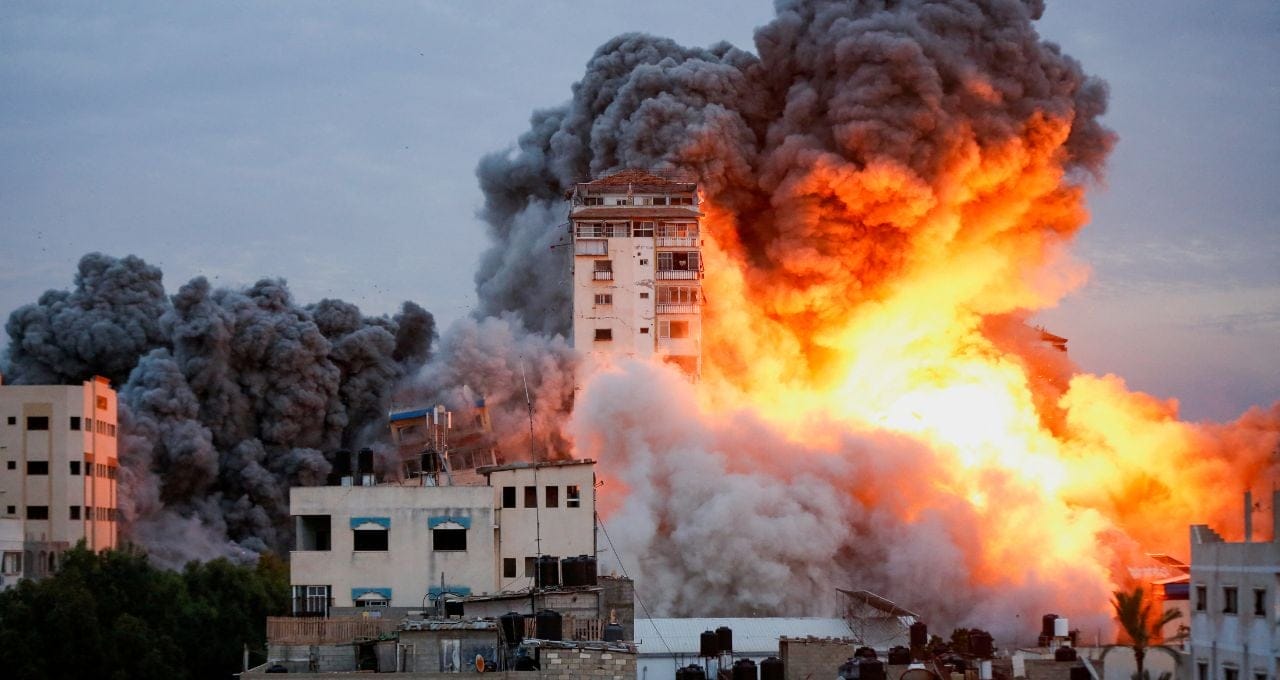

The Rising Tension Between Israel and Hamas in the Middle East Raises Significant Concerns in the Global Economic and Political Context.
The war in Israel and Gaza affects commodities, oil and may impact the Central Bank’s decision regarding the continuation of the Selic rate decrease. The escalation of the conflict between Israel and Hamas in the Middle East generates serious concerns in the global economic and political arena.
Currency fluctuations and uncertainties regarding the economic recovery outlook are just some of the potential consequences of this situation. A worrying development would be the postponement of hopes for interest rate cuts by the Central Bank (BC), which would have significant impacts on the reactivation of the Brazilian real estate market.
This war has the potential to cause significant impacts on both the global and Brazilian economies. As we know, geopolitical conflicts create uncertainties in financial markets, causing currency fluctuations and stock market volatility. The clash between Israelis and Palestinians has implications that transcend regional borders, echoing in the world economy, particularly in the commodities market, such as the agricultural sector.
-
An old ferry rusted for more than 10 years in New York, almost sank after the engine room was flooded, and now volunteers are rushing to clean the hull, remove wires, life jackets, and loose paint before sinking it in the Atlantic to become an artificial reef full of marine life.
-
An old ferry rusted for more than 10 years in New York, almost sank after the engine room was flooded, and now volunteers are rushing to clean the hull, remove wires, life jackets, and loose paint before sinking it in the Atlantic to become an artificial reef full of marine life.
-
Real Estate Agent Buys Marvel Movie Subway Car for $5,000 and Converts It into Themed Airbnb
-
Real Estate Agent Buys Marvel Movie Subway Car for $5,000 and Converts It into Themed Airbnb
Israel vs. Hamas, Oil, and Diplomacy
Brazil, as one of the main exporters of agricultural products, would face impacts on trade relations with other nations, generating indirect effects on the domestic economy. The rise in oil prices, which was already increasing before the conflict, is now under greater pressure.
This reflects on commodities and the financial market. The Brazilian government’s neutral stance, which condemns attacks against civilians on both sides and denounces the escalation of violence, asserting its commitment to a two-state solution in the region and appealing for peace, results in a neutrality that may generate some type of diplomatic discontent from one of the parties involved.
On the other hand, the ongoing conflict between Russia and Ukraine adds another layer of instability to an already concerning global macroeconomic context. This conflict carries significant implications for the region. Furthermore, it has economic consequences that exceed Ukrainian borders, generating ongoing concerns regarding trade relations and trade flows in the region.
As is known, Ukraine plays a crucial role in supplying natural gas to Europe. Thus, any disruption or instability in this flow can affect energy supply and provoke volatility in gas and oil prices.
Besides the conflicts that generate uncertainties in financial markets, the lack of political and economic stability in Brazil, along with the rising fiscal deficit and the flight of international investors who prefer the U.S. market over Brazil and Latin America’s risks, undermines investor confidence and has a negative impact on the overall business climate.
It is known that the real estate market is often the first to feel the crises and is usually the last to recover from them. However, it is essential to keep in mind that the global economy is a complex and constantly changing topic. Understanding its impact on the real estate sector is a significant challenge.
Could War Put the Central Bank on Hold?
Political and economic instability shakes market confidence, which may hinder the prospects for a Selic rate reduction by the Central Bank, impacting the recovery of the real estate market. This results in insecurity and a decrease in the launch of new projects, as indicated by the results released by construction companies and developers listed on the stock exchange.
According to statements from the Central Bank president, Roberto Campos Neto, the strategy for interest rate reduction would only be altered in the event of a scenario that truly affects the inflation outlook. Therefore, as long as this does not occur, we will continue in a “soft landing” scenario. In practice, it may stimulate the market, even though international concerns and conflicts work against it. We hope that the market overcomes the wave of global pessimism and writes its own story during such a complex and troubled period. *Rogério Santos is one of the founders of UBlink.
Read also: Results. Vale (VALE3) reports a profit of US$ 2.85 billion in Q3 2023. Companies. Petrobras (PETR4): Total oil production in Q3 2023 rises 8% to 2.8 million.