






 Portuguese
  Spanish
  4 min of reading
  0 comments


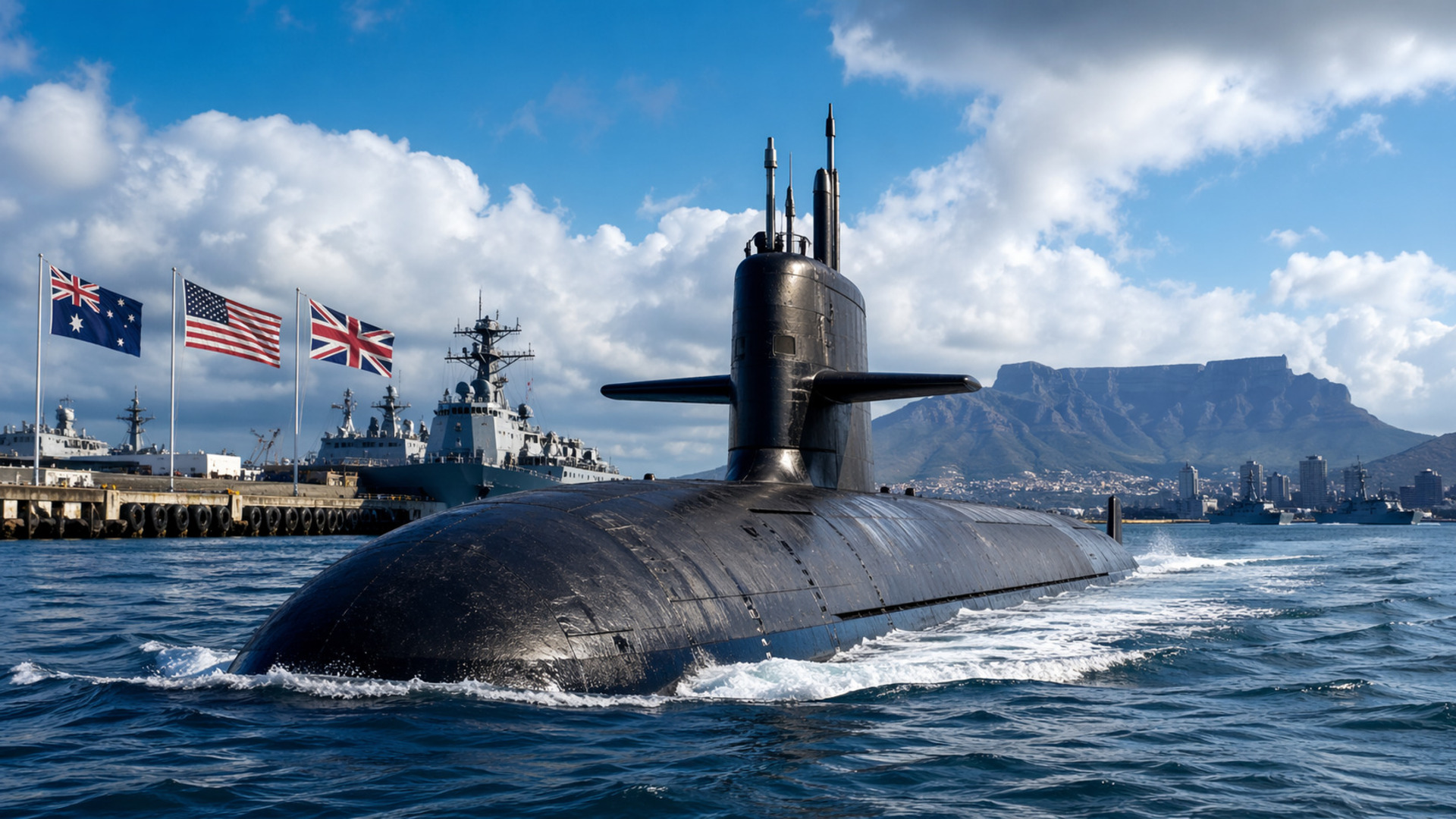
New contract awarded to General Dynamics Electric Boat reinforces AUKUS progress and brings Australia closer to nuclear submarine capability transfer, with support from the United States and United Kingdom, Australian payment, and plans to form a fleet of eight attack vessels.
Australia’s plan to acquire nuclear submarines received a new boost with a US$197 million contract signed by the United States Department of Defense to support the AUKUS agreement. The move brings the transfer of US nuclear-powered submarine capabilities to the Royal Australian Navy closer and strengthens cooperation between the United States, United Kingdom, and Australia.
The contract was awarded to General Dynamics Electric Boat and will be used for engineering and design work related to the program. The initiative is part of an effort to enable Australia to develop nuclear-powered submarine capability as quickly as possible, while maintaining the non-proliferation standards defined by the three partners.
AUKUS advances with new US$197 million contract
The new US Department of Defense contract aims to support the AUKUS agreement and assist Australia in acquiring nuclear-powered submarines. The initial value is US$197 million, but the contract includes options that could raise the total to US$930 million.
-
Space technology used to search for water on Mars is now hunting for invisible leaks under the streets of São Paulo, using satellites, AI, and chlorine signals to help Sabesp recover up to 6.7 billion liters of water.

-
Japan sends ship to extract mud rich in rare earths at nearly 6,000 meters deep in the Pacific, attempts to lift 350 tons per day from the seabed, and transforms sediments near Minamitori Island into a strategic weapon to reduce dependence on China.
-
Venus Aerospace promises a rotating detonation hypersonic engine that takes the Stargazer to Mach 9 and crosses oceans in 1 hour, but the flight that made history barely surpassed the speed of sound.

-
Brazilian student creates a cheap formula that makes plants grow up to 90% faster and wins an award in a global scientific competition.



The planned work involves engineering and design to support the transfer of nuclear submarine capabilities from the United States to Australia. Payment will be covered by the Australian government, as part of the US$3 billion transfer made to the US under AUKUS.
The announcement reinforces an important stage of the plan signed between the three countries. On March 13, 2023, the United States, United Kingdom, and Australia announced an optimized path to develop Australia’s nuclear-powered submarine capability as quickly as possible.
Trilateral partnership announced in 2021
The creation of AUKUS was announced in September 2021 by the leaders of Australia, the United Kingdom, and the United States. The enhanced trilateral security partnership was born with the aim of expanding each government’s ability to protect its security and defense interests.
The agreement is based on long-standing bilateral ties between the three countries. The proposal involves deeper sharing of information and technologies, as well as greater integration in science, technology, industrial bases, and supply chains related to security and defense.
Within this framework, Australia’s acquisition of nuclear submarines has become one of the central points. The program also foresees technical and industrial cooperation to expand Australia’s capacity and align the efforts of the three partners in the defense sector.
Production of Virginia-class submarines becomes central to the plan
The United States Navy has been purchasing Virginia-class nuclear submarines, identified as SSN-774, since fiscal year 1998. By fiscal year 2025, a total of 41 units had been acquired.
Between fiscal years 2011 and 2024, these vessels were purchased at a rate of two per year. In fiscal year 2025, only one Virginia-class unit was acquired by the US Navy.
Considering the acquisition rate of two units per year, the estimated purchase cost indicated in the Navy’s budget proposal for fiscal year 2026 is approximately US$5 billion per vessel. The same budget proposal requested the acquisition of two more Virginia-class units.
US wants to accelerate construction pace
To sell submarines to Australia under AUKUS, the United States Navy intends to almost double the construction pace to 2.33 vessels per year. The challenge arises because the production rate had fallen to 1.1 vessels per year.
This point is relevant for the advancement of the agreement, as the plan involves both the sale of submarines to Australia and the replacement of the American fleet. Expanding construction capacity becomes an important condition for fulfilling the commitments foreseen.
Under AUKUS, the United States will sell three to five Virginia-class nuclear attack submarines to Australia. After that, they will build three to five replacement nuclear attack submarines for the US Navy itself.
Australia to Form Planned Fleet of Eight Submarines
The agreement also provides for the rotational presence of nuclear-powered attack submarines on Australian territory. The United States will deploy four American nuclear-powered attack submarines and the United Kingdom will deploy one British nuclear-powered attack submarine from a port in Western Australia.
In addition to the sale of Virginia-class vessels, the United States and the United Kingdom will assist Australia in its own construction effort. The plan foresees three to five more nuclear-powered attack submarines of a new joint British-Australian design.
This stage is expected to complete a planned Australian force of eight nuclear-powered attack submarines. With the new US$197 million contract, AUKUS advances in engineering, design, and capability transfer, bringing Australia closer to operating nuclear-powered submarines.
With information from Interesting Engineering


Be the first to react!