Portuguese
  Spanish


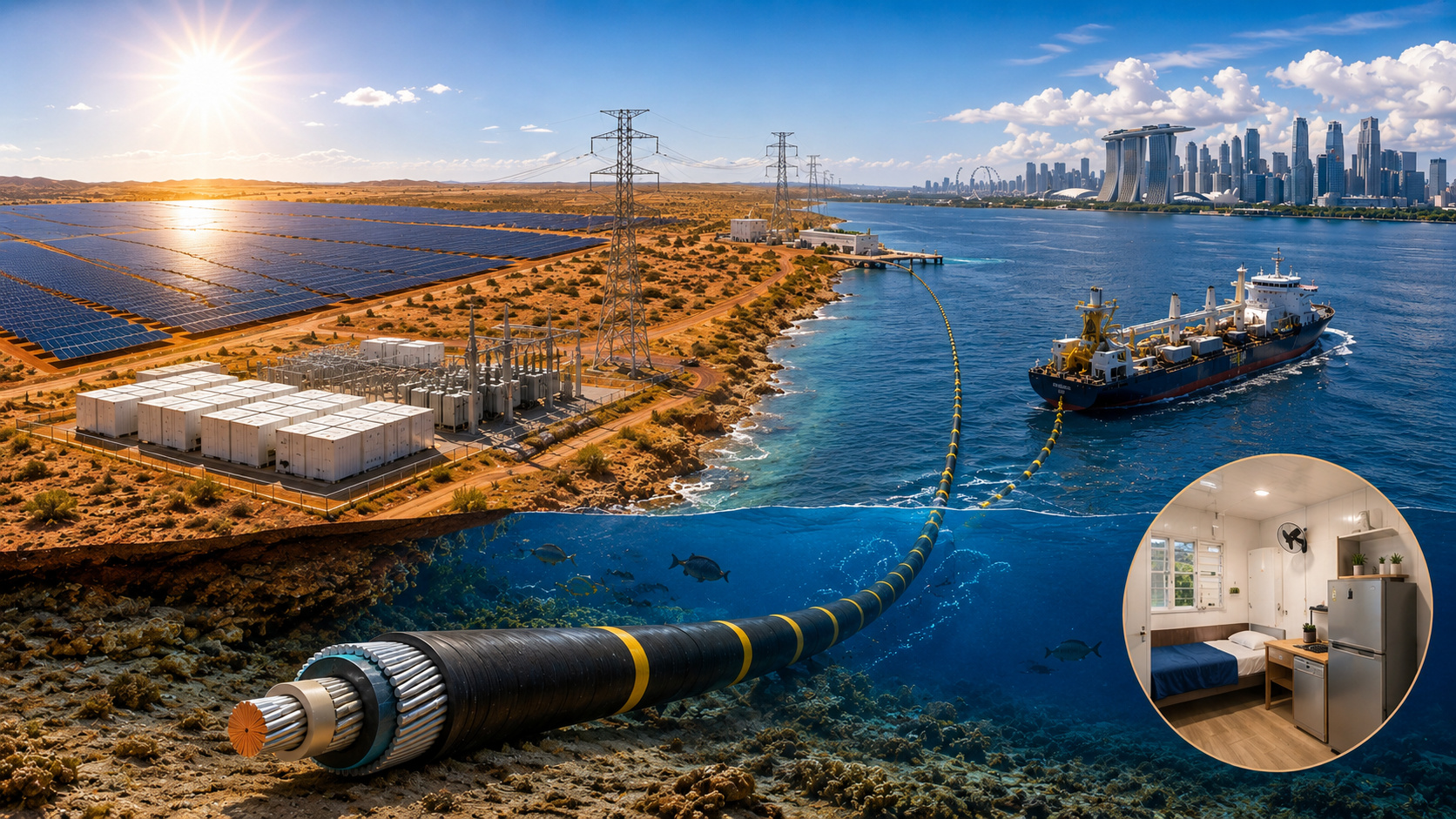

The Australia-Asia PowerLink by Sun Cable plans to generate solar electricity in the Northern Territory and send it to Singapore after 2035
Australia wants to transform the desert’s strong sun into clean energy for Asia. The plan seems futuristic, but it has already advanced in official stages. We are talking about the Australia-Asia PowerLink, a megaproject by Sun Cable estimated at US$ 35 billion.
The idea is simple to explain and difficult to execute. First, a massive solar farm will be installed in Powell Creek, in Australia’s Northern Territory. Then, the electricity will travel to Darwin. Next, it will cross the sea through a submarine cable of about 4,300 km to Singapore.
The most important data came on October 22, 2024. The Energy Market Authority of Singapore granted conditional approval to import 1.75 GW of renewable electricity from Australia. The commercial operation is scheduled for after 2035.
-
Archaeologists Discover 9,000-Year-Old Stone Hammer with Perfect Hole During Routine Inspection for Norwegian Bike Path

-
New Regulations in Brazil Require Dedicated Circuit and Safety Measures for Electric Car Chargers in Condos, Highlighting Hidden Risks of Overnight Charging

-
Argentinian Students Transform Cigarette Butts into Eco-Friendly Bricks, Cutting Cement Use by Over 50% and Halving Costs
-
For the First Time, Scientists Extract Ancient Human DNA from Cave Art, Revealing Insights into Prehistoric Cave Dwellers




Why Singapore looks to the Australian sun
Singapore has a known problem. The country is small, urban, and has little space for large solar parks. Moreover, more than 90% of its electricity still depends on natural gas.
Therefore, importing solar energy from Australia appears as a strategic solution. Thus, Singapore can diversify its electricity matrix and reduce emissions without relying solely on local generation.
For those looking from afar, the proposal seems exaggerated. However, for Singapore, receiving clean energy by cable can be as important as importing gas today.


How the energy would leave the desert and reach Asia
The heart of the project is in Powell Creek, a region with strong solar incidence. There, Sun Cable intends to generate electricity on a large scale.
After that, the energy would be carried by an overhead transmission line in high-voltage direct current, HVDC technology. This system is used because it loses less energy over long distances.
Upon reaching Darwin, the electricity would enter the submarine system. Then, the cables would follow through Indonesian waters until reaching Singapore.
Additionally, the project includes large-scale batteries. They would help stabilize the supply when there is no direct solar generation.

The submarine cable that could break records
Here is the greatest technical challenge in history. No submarine power cable of this size has entered operation to date.
At about 4,300 km, the system would be the largest submarine power cable in the world. Therefore, engineering, cost, and feasibility are still decisive points.
According to Reuters, the approval allows Sun Cable to advance to the next phase of development. Even so, the project depends on licenses, agreements, and commercial decisions.
The timeline that defines the future of the project
Sun Cable has already faced disputes among investors, corporate restructuring, and doubts about feasibility. Even so, the project resumed under control linked to businessman Mike Cannon-Brookes.
The final investment decision is expected by 2027, according to Reuters and Sun Cable. Before exporting energy to Singapore, the plan is to deliver electricity to Darwin.
If it advances, Australia could open a new global route for clean energy. Instead of selling only coal or gas, it could export solar electricity directly to neighboring countries.
In the end, the megaproject leaves a strategic question. Will the future of clean energy be made by giant submarine cables or by green fuels like hydrogen and ammonia?
And you, do you believe that solar energy crossing oceans will be common in the coming decades?