






 Portuguese
  Spanish


What would have been just another stretch of bike trail revealed an entire Stone Age village and a piece that shows a level of manual engineering hard to believe for the time
The stone hammer found in eastern Norway is about 9,000 years old and has a detail that intrigues scientists: a perfectly made hole in the center, to fit a handle, made at a time when no one had a drill, motor, or metal. The contraption emerged in the most unlikely place, on the path of a future bike path.
The find impresses less by its size and more by the technique. Drilling a stone from side to side, with precision, using only bone, sand, and water, is the kind of feat that makes one rethink how much Stone Age peoples mastered.
A bike path that became an archaeological site
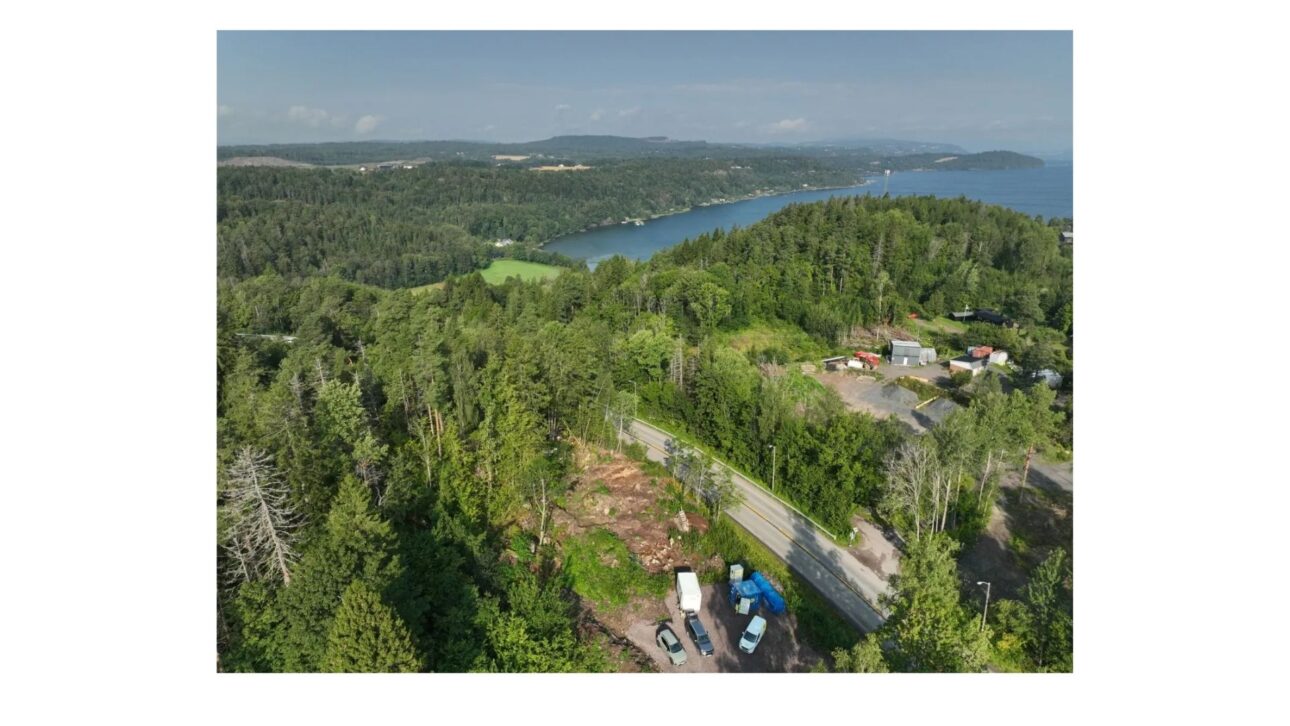
(Photo: Steinar Kristensen/Museum of Cultural History)
The starting point was a common construction. According to ScienceNorway, the piece appeared during an excavation in Horten, in eastern Norway, in a forest area that is supposed to become a bike path.
-
New Regulations in Brazil Require Dedicated Circuit and Safety Measures for Electric Car Chargers in Condos, Highlighting Hidden Risks of Overnight Charging

-
Argentinian Students Transform Cigarette Butts into Eco-Friendly Bricks, Cutting Cement Use by Over 50% and Halving Costs
-
For the First Time, Scientists Extract Ancient Human DNA from Cave Art, Revealing Insights into Prehistoric Cave Dwellers

-
Australian Teen Invents Device to Simultaneously Purify Water and Generate Electricity Using Sunlight





What was routine turned into a significant discovery. According to Arkeonews, the find was classified as one of the most important archaeological discoveries in the region in recent years, and the work was led by archaeologist Silje Hårstad, from the Museum of Cultural History.
The contrast is what adds flavor to the story. Where bicycles would pass, traces of people who lived there nine millennia ago appeared. The law requiring investigation of the land before construction was, once again, what brought the past to light.
A perfect hole made in the Stone Age
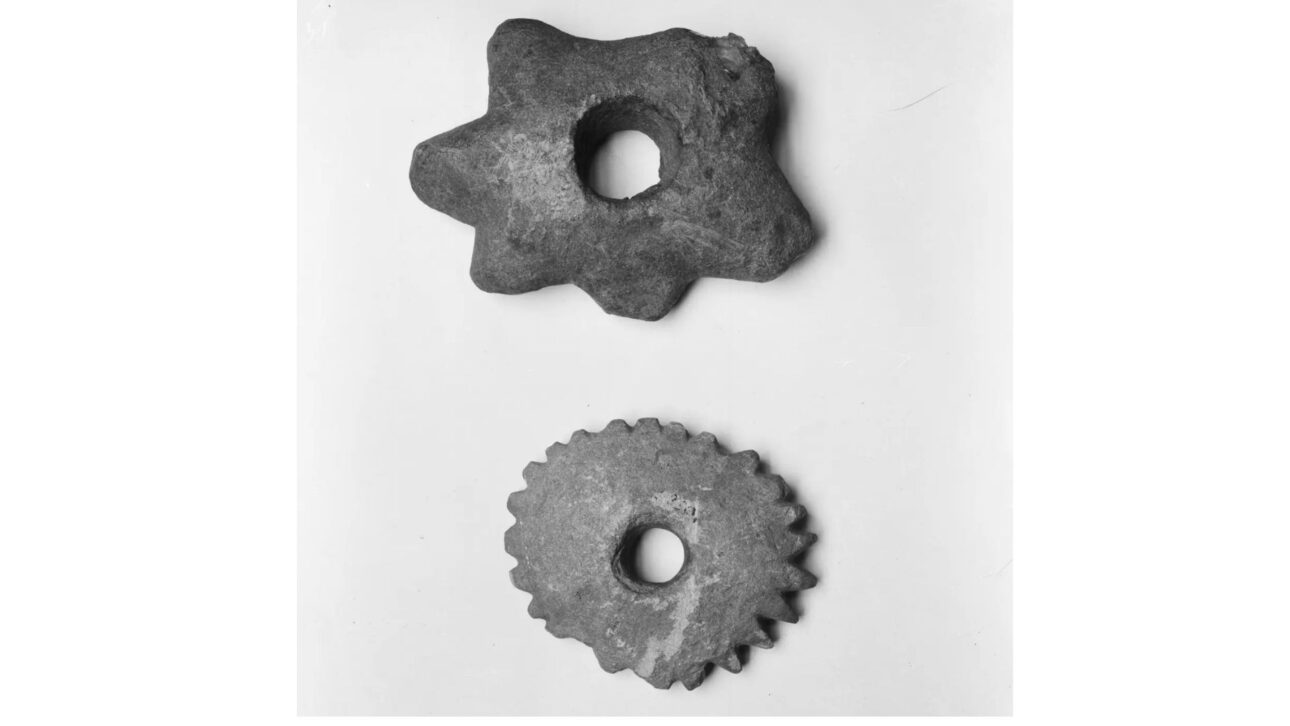
(Photo: Museum of Archaeology / Unimusportal / CC BY-NC-ND 3.0)
The detail that steals the scene is the hole in the middle of the stone. According to ScienceNorway, announced in the second half of 2025. the object is half of a perforated club, round and slightly oval, with a well-marked hole in the center, where a handle once fit.
The execution is what impresses. According to ScienceNorway, the hole was drilled from both sides of the stone, becoming wider at the edges and tapering towards the middle, a sign of planned work, not improvised.
Doing this without metal tools is almost unbelievable. A hammer with a centered hole, opened by someone who only had bone and sand, is manual engineering in its purest form.
Bone, sand, and patience: how they drilled the stone
The technique reconstructed by the researchers is ingenious. According to ScienceNorway, the craftsmen probably used a long deer or elk bone, cut at the ends, as if it were a drill.
The secret was in the abrasive and persistence. According to Arkeonews, the hollow bone was combined with sand and water, and, with much time and patience, the craftsmen managed to penetrate the stone until they opened the complete hole.
This process says a lot about those people. It wasn’t brute force, it was method: spin, wet, throw sand, and repeat for hours or days until conquering the rock. Patience was the technology of the time.
What the hammer was used for
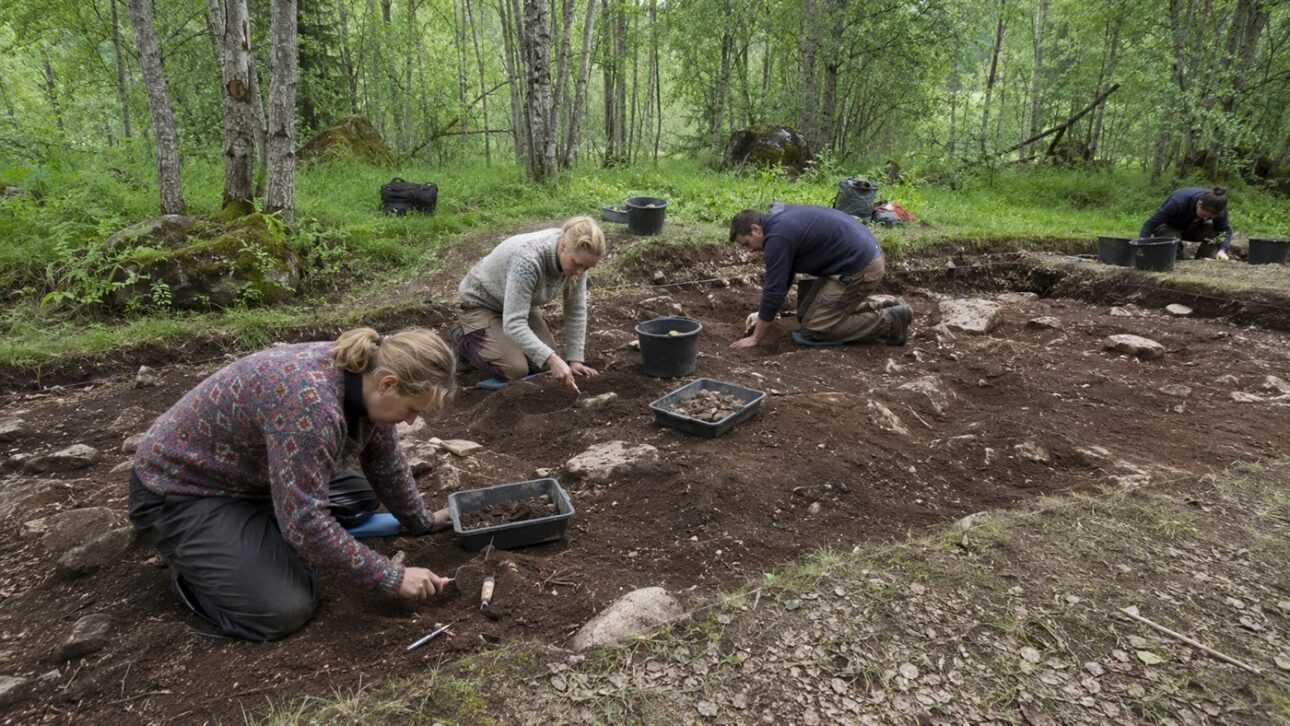
The piece was not an ornament, it was a working tool. According to ScienceNorway, the object shows slight wear and crushing marks on one side, indicating that it was indeed used.
The probable use has practical logic. According to Arkeonews, the responsible archaeologist explained that the piece may have been used to beat or soften fibers, essentially being a Stone Age hammer.
This brings the object closer to our daily lives. Nine thousand years later, the function is the same as any hammer: to transfer force to shape or crush something. The need changes little; the technology, a lot.
The village by the cove that disappeared
The hammer was not alone; it was part of a village. According to ScienceNorway, the site held more than 5,000 artifacts, including axes, fragments of fishhooks, and bone remains, as well as a small cabin of about 10 square meters at the highest point.
The landscape back then was quite different. According to ScienceNorway, the ancient coastline was about 70 meters higher and 500 meters further inland than today, which placed the village by a sheltered cove.
This scenario explains the choice of location. A protected cove served to dock boats and process game, exactly the type of spot a Stone Age community would seek to settle.
Five thousand objects and a window to the past
The hammer is the star, but not the only treasure. According to ScienceNorway, among the more than 5,000 objects recovered were various tools that help piece together the portrait of a daily life from almost ten millennia ago.
Some findings serve the science of dating. According to Arkeonews, fragments of bones and charred hazelnuts were collected, precious materials to accurately confirm the site’s age.
Each piece is a thread of the same story. Together, the club, the fishhooks, the cabin, and the food remains return the routine of a group that fished, hunted, and made their own tools.
Why a stone hammer impresses scientists
The case of Horten shows that sophistication is not a modern invention. A stone hammer with a precision hole, made only with bone, sand, and persistence, proves that ingenuity and method already guided humanity long before machines.
The lesson remains about the value of what seems simple. If making a hole in a stone 9,000 years ago required planning and hours of work, each well-made ancient object is, in essence, a monument to the intelligence of those who came before. Underestimating the past is underestimating ourselves.
And here’s the provocation for you: how much engineering and patience are hidden in ancient objects that we look at without noticing, thinking that people from millennia ago didn’t know what they were doing?


