






 Portuguese
  Spanish
  6 min of reading
  0 comments


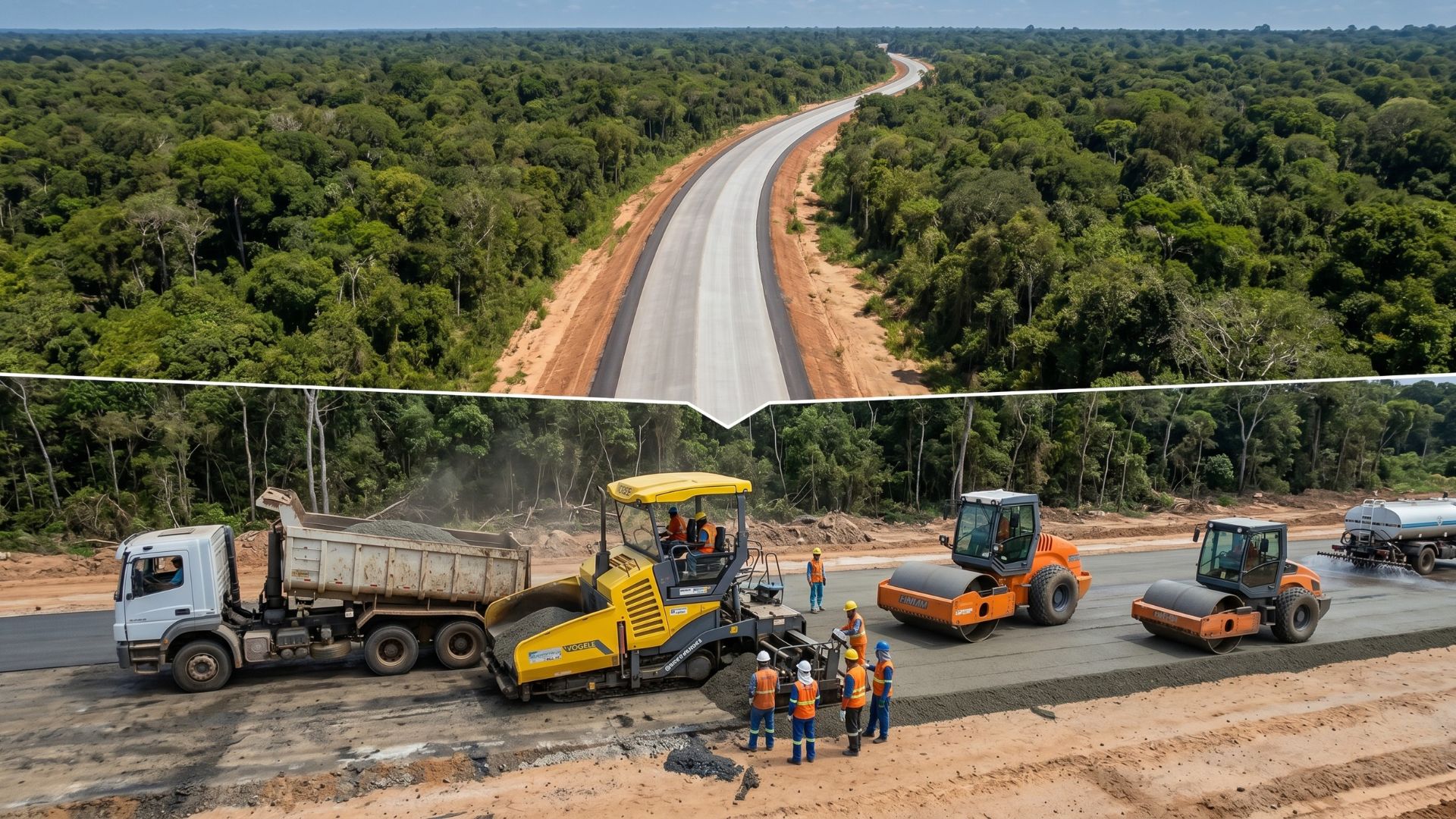
Roller Compacted Concrete Technology can change the future of BR-230 by creating a more resistant pavement for the Trans-Amazonian.
The BR-230, better known as the Trans-Amazonian Highway, crosses some of the most difficult terrains in Brazil. Cutting through areas of dense forest, regions of extreme rainfall, and historically unstable soils, the road has transformed over the decades into one of the greatest challenges of Brazilian road engineering. In many sections, especially during the Amazonian winter, mud still interrupts traffic, isolates cities, stalls trucks, and hinders the transport of food, fuel, and agricultural production.
Now, a technology that has already been used in heavy construction and logistical corridors has begun to enter the center of discussions about the future of the highway: Roller Compacted Concrete (RCC). The system uses a low-fluidity concrete compacted with vibratory rollers, creating a rigid pavement considered more resistant to extreme weight, deformations, and constant rains that punish Amazonian roads. DNIT itself has specific standards for the use of RCC in rigid pavement.
The proposal gained attention because the Trans-Amazonian faces a historical structural problem. Unlike highways built in dry regions or stable soil, the BR-230 crosses areas where excess moisture, erosion, and heavy traffic accelerate the destruction of traditional asphalt. In many points, the pavement suffers constant deformations, forming potholes, sinkholes, and sections that are practically impassable during periods of heavy rain.
-
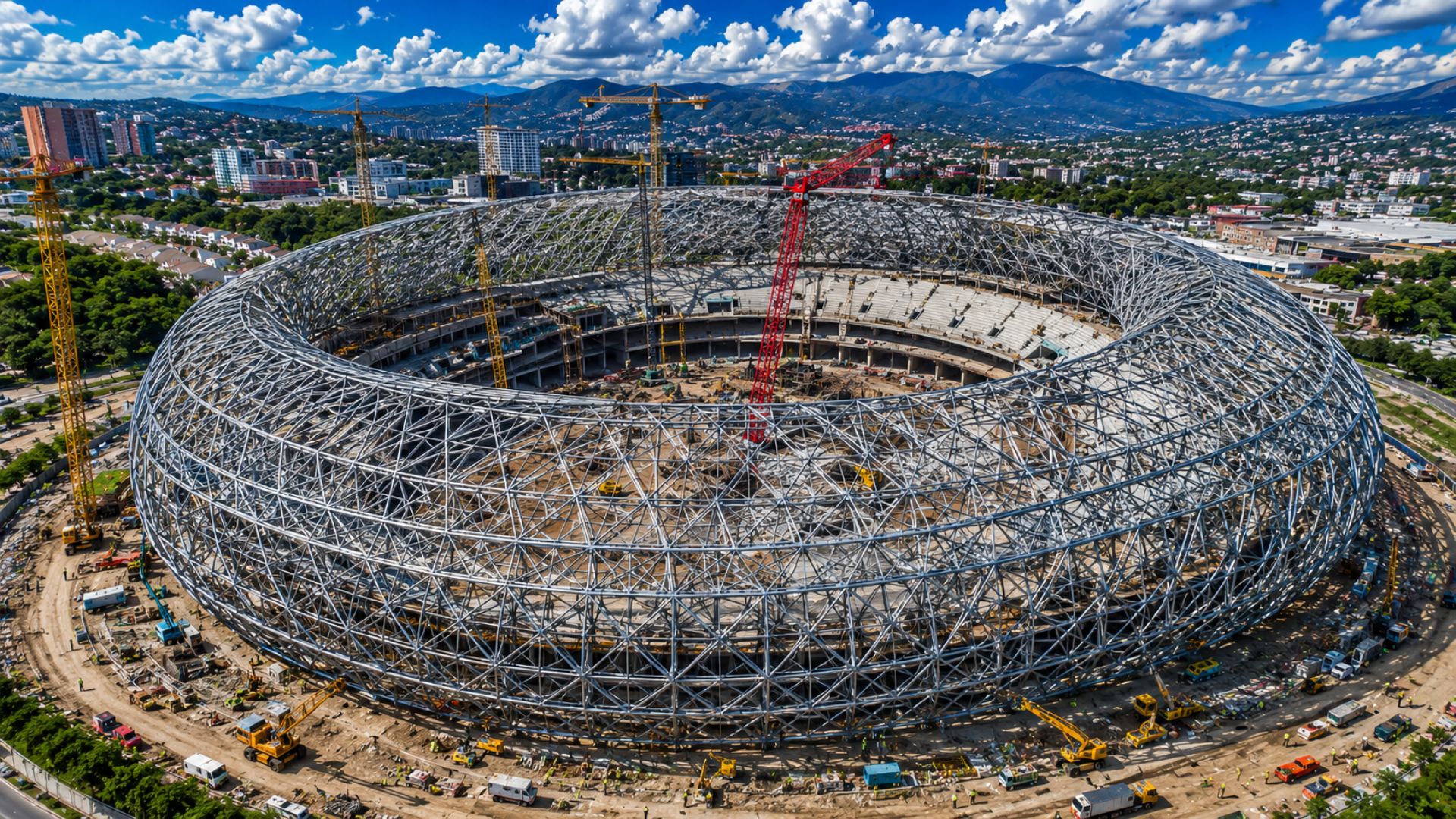
Mega stadium of R$ 2.5 billion financed by China completes perimeter metal structure at 40 meters above ground in El Salvador, with stands and internal systems advancing in parallel towards delivery in 2027

-
Bothered by millions of bricks discarded every year in Norway, a company cuts old pieces into thin slices, secures them with a metal system, and transforms demolition into a new 1,800 m² facade.

-
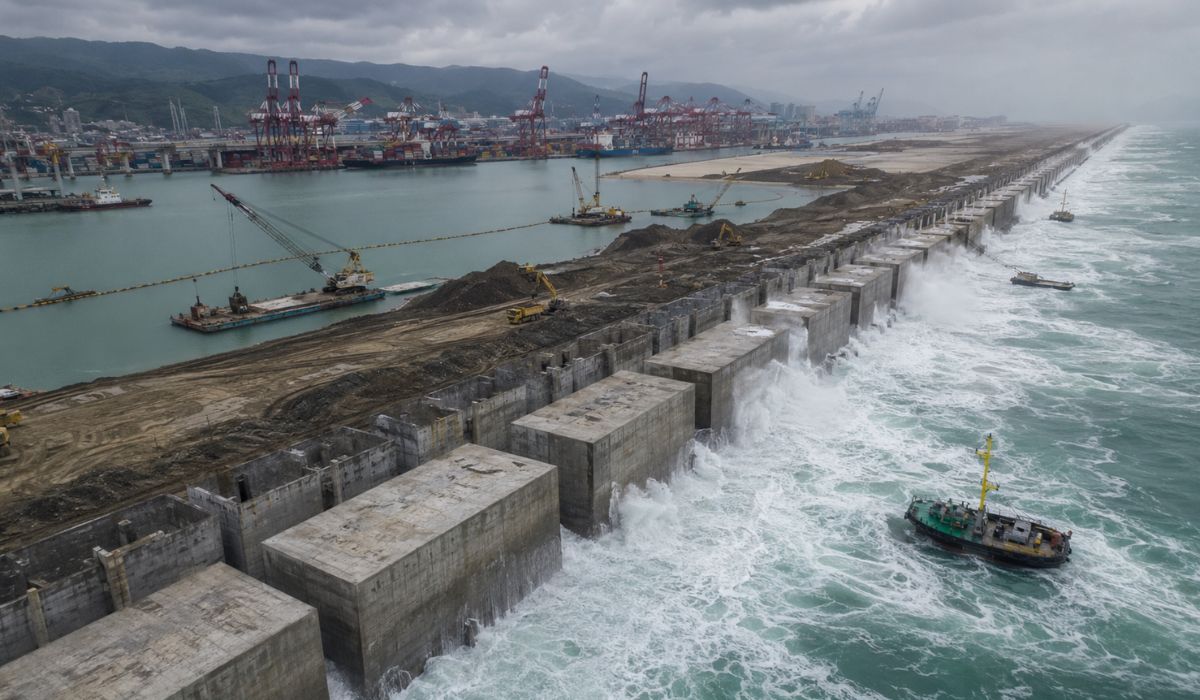
Taiwan erects a 4 km maritime wall in the Port of Taipei, installs concrete coffers against waves up to 7 meters, and transforms dredged sediments into new land to expand one of the island’s most strategic ports.

-
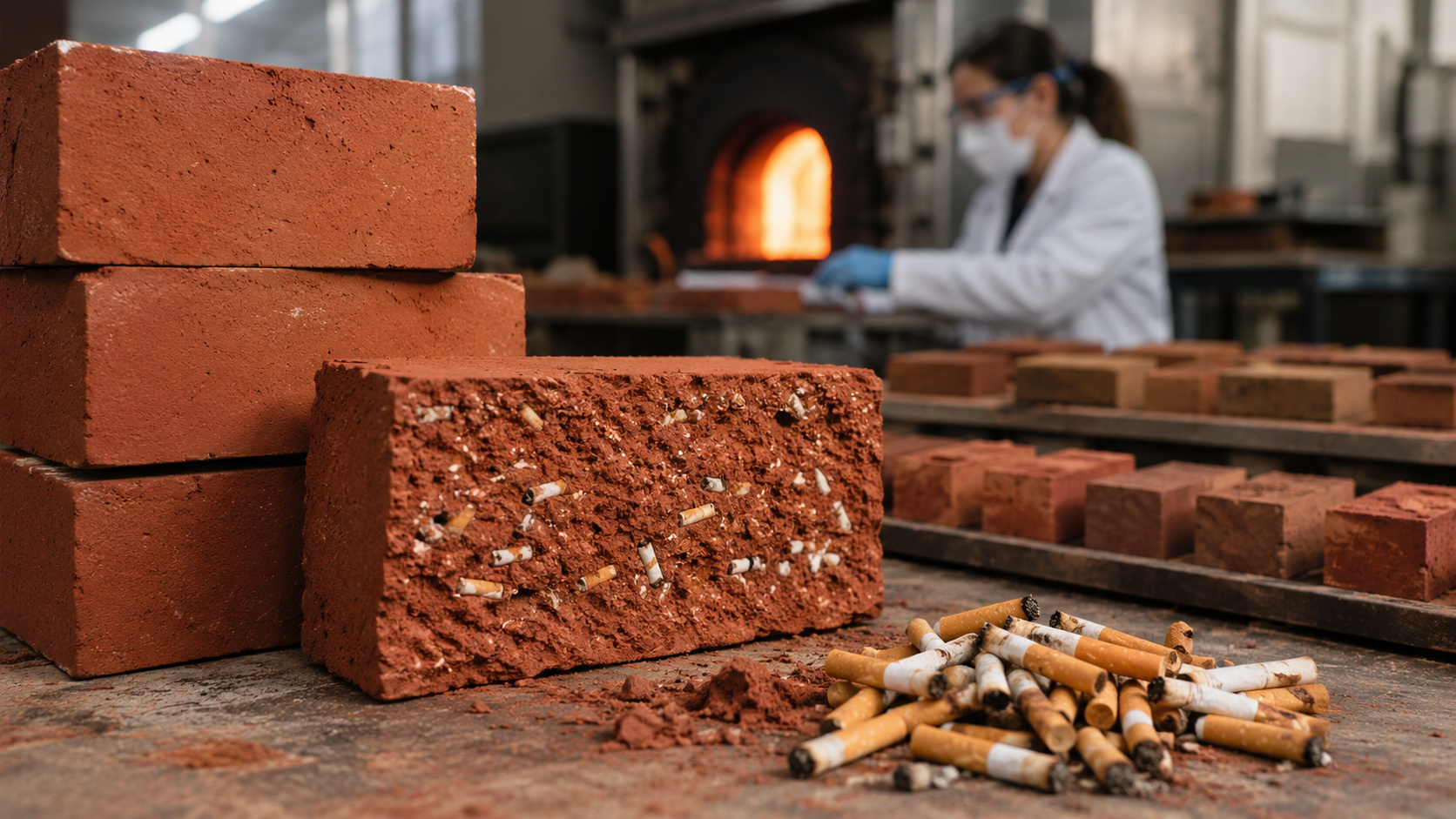
While cigarette butts appear on sidewalks, beaches, and sewers, researchers tested the waste in clay bricks and calculated a 10% savings in burning with just 1% in the mixture.

Roller Compacted Concrete was born to withstand extreme loads and aggressive conditions
RCC does not work like conventional concrete used in buildings and sidewalks. The mixture has a low water content, a drier appearance, and mechanized application with equipment similar to those used in asphalt compaction. After being spread, the material is compressed by vibratory rollers until it reaches high density and structural strength.


According to DNIT technical specifications, the system can be used in bases and sub-bases of rigid pavements, especially in situations that require high mechanical resistance and great load-bearing capacity.
The great differentiator is precisely in durability. Studies and technical analyses indicate that RCC can have a much longer lifespan than conventional asphalt in heavy traffic corridors.

Recent reports on the advancement of rigid pavement in Brazil indicate that the material can last over 20 years and, in some scenarios, achieve a lifespan up to three times longer than traditional asphalt solutions.
This durability is one of the reasons why the technology has become considered strategic for highways subjected to heavy trucks, excess moisture, and extreme temperature variations.
Mud became a historical symbol of the Trans-Amazonian since the 1970s
Inaugurated during the military government in the 1970s, the Trans-Amazonian was born as one of the largest territorial integration projects in Brazilian history. The proposal was to connect isolated areas of the Amazon to the rest of the country, creating corridors of occupation, transport, and economic development.
The problem is that much of the highway crosses extremely challenging areas from a geological and climatic perspective.

Torrential rains, complex drainage, and unstable soils have caused the road to accumulate maintenance problems over the decades. In some sections, trucks have been stuck for days during the rainy season.
Even with recovery and paving works carried out under different governments, many segments continue to require constant maintenance. The DNIT continues to execute conservation, drainage, and paving works at various points of the BR-230.

In 2021, the federal government delivered a paved section of the Trans-Amazonian in Pará after years of halted works. The segment was part of a revitalization package aimed at improving the logistical connection between producing regions in the North.
New technology promises to reduce deformations and better withstand Amazonian rains
The main technical argument in favor of CCR on the Transamazonian involves precisely the behavior of the pavement under heavy load and intense rain.
While conventional asphalt tends to deform under high temperature and constant truck pressure, rigid concrete better distributes the weight along the structure. This reduces the formation of the so-called wheel tracks, undulations, and permanent deformations that quickly appear in heavy transport corridors.

Another important factor considered is water resistance. In Amazonian regions, infiltration and excess moisture accelerate asphalt wear and compromise the road base. CCR presents a different structural behavior, reducing part of this destructive effect on the pavement.
Moreover, mechanized application allows relatively quick execution over large linear extensions, a characteristic considered strategic in highways of thousands of kilometers like BR-230.
DNIT already has technical regulations for the use of CCR on Brazilian highways
The use of Roller Compacted Concrete ceased to be experimental years ago in Brazil. DNIT has specific regulations for production, dosage, compaction, and quality control of the material.
The standards define parameters such as resistance, compaction, workability, mixture moisture, and execution control. The goal is to ensure that the pavement maintains adequate performance even under high loads and intense traffic.
The system is also already being used in different heavy infrastructure applications in the country, including industrial yards, logistics corridors, port areas, and rigid pavement structures.
Road engineering experts point out that the combination of rigid concrete, efficient drainage, and structural reinforcement can represent an important change for regions historically affected by accelerated asphalt degradation.
BR-230 remains one of the most strategic and difficult highways in the country
With almost 5,000 kilometers of projected extension, the Transamazonian crosses different Brazilian states and connects areas considered essential for agriculture, mining, regional transport, and territorial integration.
The highway also plays a strategic role in the flow of agricultural production in parts of Pará and other Amazonian regions. During critical rainy periods, road interruptions can directly affect supply chains and logistical costs.
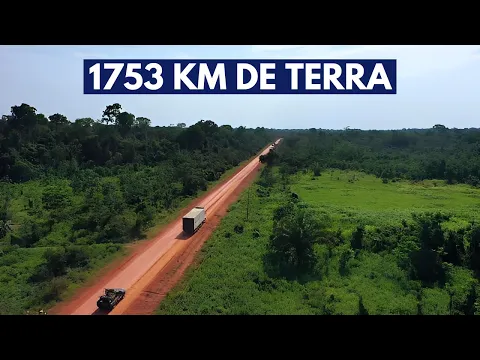
It is precisely for this reason that any new technology applied to the BR-230 attracts national attention. The history of the highway has turned the road into a kind of symbol of the Brazilian difficulties in building and maintaining heavy infrastructure in extreme environments.
At the same time, the advancement of rigid pavements in the country shows that the infrastructure sector is seeking alternatives capable of reducing constant maintenance, increasing durability, and supporting the growth of heavy transport in the coming decades.
The big question now is whether CCR will be able to face the most difficult test of Brazilian road engineering
The idea of using a rigid pavement technology to combat the historical mud of the Transamazonian helps explain why the topic has gained so much attention. The BR-230 is not just an ordinary road: it encompasses some of the most aggressive environments for road engineering across the continent.
The challenge involves extreme rains, unstable soil, heavy traffic, long distances, and logistical difficulties that make any maintenance more expensive and complex.
Therefore, the possibility of applying a more resistant, durable pavement that is less vulnerable to rapid destruction caused by water has come to be seen as one of the most promising alternatives ever discussed for the highway.
The big question now is whether Roller Compacted Concrete will really be able to overcome, in practice, a problem that has accompanied the Transamazonian since its creation and has turned the BR-230 into one of the most challenging roads on the planet.





-

2 people reacted to this.