






 Portuguese
  Spanish
  3 min of reading
  18 comments


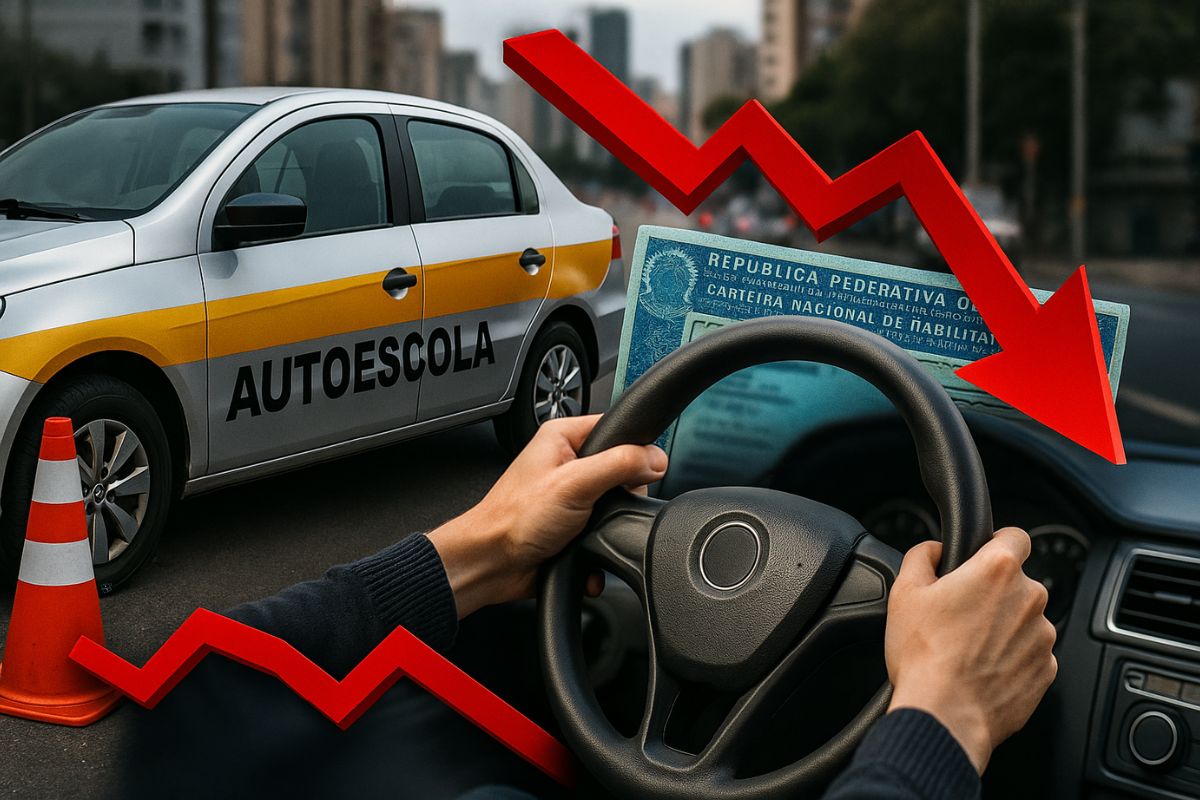


Driving Schools React To The Government Proposal That Dispensess Mandatory Classes In The CNH And Warn About The Risk Of Losing R$ 14 Billion And 300 Thousand Jobs
The government’s proposal to relax the CNH has opened one of the biggest recent debates in the traffic sector. The Ministry of Transport has put on the table the possibility of eliminating the requirement for theoretical and practical lessons in categories A (motorcycles) and B (passenger cars), in addition to dispensing with the use of simulators and adapted vehicles.
The government’s aim is to reduce the average cost of obtaining a license, currently estimated at R$ 3,200 per candidate, of which approximately R$ 2,500 goes directly to driving schools. According to the ministry, this measure seeks to democratize access to CNH, especially for young people and workers who depend on the document to earn a living.
Driving Schools Talk About Threat of Collapse in the Sector
The reaction was immediate. The National Federation of Driving Schools (Feneauto) stated that the proposal jeopardizes a market worth R$ 14 billion annually and about 300 thousand direct and indirect jobs. The president of the entity, Ygor Valença, accused the government of “overriding the technical debate,” reminding that the Thematic Chamber of Contran, responsible for discussing changes in the licensing process, has been deactivated for more than a year.
-
Land Rover to Halt Production in July, Putting 371 Jobs at Risk, as Chinese Automaker Negotiates to Convert Factory to 100,000 Vehicles Annually by 2027

-
Mexican Pest Threatens U.S. Cattle Herds at Historic Lows, Potentially Boosting Brazilian Beef Exports as Burger Prices Soar

-
Brazilian Freight Bill Progresses in Congress with $5,000 Minimum Wage, 70% Advance Payment, and Fines Up to $1 Million, as Agriculture and Industry Warn of Rising Costs and Legal Uncertainty

-
High Interest Rates and Record Defaults Lead to Surge in Vehicle Repossessions and Crowded Car Auctions in Brazil by 2026


According to Valença, the measure does not represent modernization, but replacement: self-employed instructors could operate without the same structure required of driving schools, while the schools themselves would still be prevented from offering distance education. For the sector, the change would weaken the driver training process and increase risks on the road.
Political Pressure and Mobilization in Congress
The issue has already gained political traction. Leaders of driving schools held meetings with Minister Gleisi Hoffmann and allied lawmakers, arguing that the proposal threatens the survival of thousands of family businesses. This week, the Chamber of Deputies held a public hearing (02/09) and scheduled a General Commission for this Wednesday (03/09), where the topic will be widely debated.
The sector argues that, without a regulated model, there will be a degradation in driver training, in addition to the loss of tax revenue. On the other hand, lawmakers aligned with the government emphasize that the current cost of CNH is prohibitive for millions of Brazilians, and that relaxation could expand access.
Government Advocates Democratization and Cost Cutting
For the Ministry of Transport, the priority is to reduce economic barriers. The ministry argues that the government’s proposal to relax the CNH would help include more citizens in formalization and urban mobility. In a statement, it emphasized that the intention is not to eliminate driving schools, but to allow greater competition and cheaper alternatives for candidates.
The ministry’s technical team reinforces that the current model artificially raises costs and that countries like the United States already operate with more flexible rules, without serious detriments to traffic safety. Nonetheless, experts warn that, in a country with high accident rates, any change must be accompanied by strict oversight measures.
The clash puts two pillars in opposition: the democratization of access to CNH and the preservation of jobs and businesses in the driving school sector. While the government insists on the need to cut costs for drivers, driving schools warn of the risk of collapse in a billion-dollar market that is strategic for traffic safety.
And you, do you support the government’s proposal to relax the CNH to reduce costs or do you believe that this will compromise safety and thousands of jobs? Leave your opinion in the comments — we want to hear from those who live this reality closely.








Concerteza apoio a decisão do governo isso é uma melhoria para 80%90% da população do Brasil principalmente para os mais fracos
Eu moro praça da fé município de São Francisco de Itabapoana, meu filho queria tirar carteira de motorista mais fica muito caro, aí vem as passagem São Francisco depois passagem pra ir pra campo goytacaz fazer a prova, aí depois tem que pagar um Detran o governo tem mesmo que abaixar a taxa tá muito caro pra população que e pobre,
Sim rico mais ricos, dinheiro fácil fechar auto escolas. Lula na cabeça….