Portuguese
  Spanish


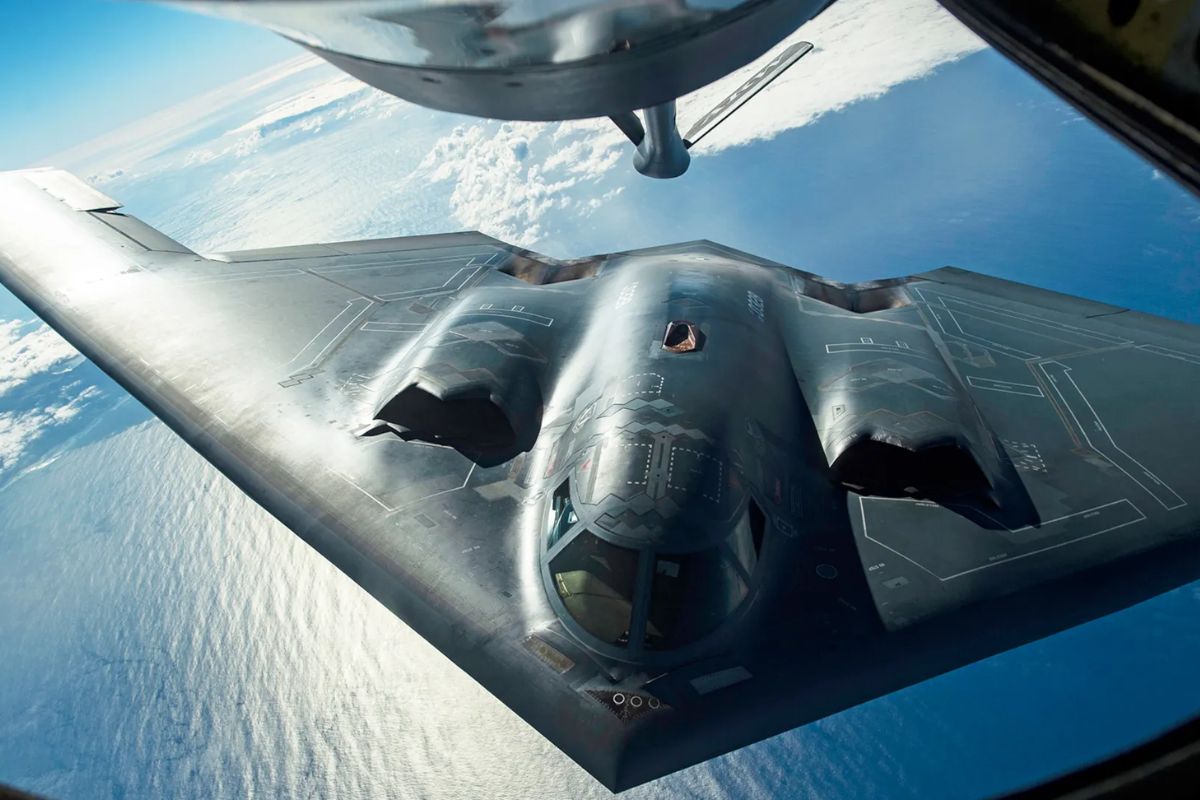


With a Range of 11,000 km and a Flight Time of 37 Hours, the B-2 Spirit Remains the Most Expensive and Secret Bomber in History, According to Specialist Fernando de Borthole.
The B-2 Spirit is considered the most expensive aircraft in the history of military aviation: each unit exceeded US$ 2 billion in adjusted values. Even with such an investment, only 21 aircraft were produced, all for the exclusive use of the United States.
According to military analyst Fernando de Borthole, the B-2 Spirit is one of the biggest symbols of the Cold War and continues to be a key component of American air strategy, even after 35 years in operation.
The Birth of the Stealth Bomber
Developed in the late 1970s and officially unveiled in 1989, the B-2 Spirit was designed to penetrate Soviet defenses during the Cold War, using pioneering stealth technology.
-
Scientists Develop Method to Store Wind and Solar Energy by Liquefying Air for On-Demand Power Generation

-
Brazilian Engineer Who Grew Up Without Electricity Develops Software, Expands AltoQi to 67,000 Clients, Aiming for $21 Million by Digitizing Brazil’s Construction Industry

-
Spain Launches World’s Largest Floating Dry Dock: 56-Meter Giant Produces Massive Concrete Structures in A Coruña Using Technology Proven in Brazil

-
AI-powered toys that talk, recognize faces, and collect data face scrutiny from Brazilian government over children’s privacy concerns



Its flying wing design and the use of materials that absorb radar waves reduce its detectability to nearly insignificant levels, comparable to a simple bee.
Fernando de Borthole explains that the B-2 was not designed for speed, but for strategic invisibility, allowing nuclear or conventional strikes on enemy territory without being detected.
The Price That Changed History
The original program called for hundreds of units, but the dissolution of the Soviet Union in 1991 reduced demand.
As a result, production was halted at only 21 aircraft, each costing over US$ 2 billion.
This exorbitant cost made the B-2 a landmark in the debate over U.S. military spending, while also consolidating its image as an “untouchable aircraft,” reserved for critical and high-complexity missions.
Unprecedented Range and Endurance
Among its most impressive technical features, the B-2 Spirit has a range of 11,000 kilometers without refueling and has conducted missions of up to 37 uninterrupted hours thanks to aerial refueling.
Its ability to carry conventional or nuclear bombs makes it a central piece of the U.S. strategic arsenal.
Even though it is a subsonic aircraft, flying at around 900 km/h, its mission has never been air combat, but penetration into highly defended areas.
Updates and Relevance After 35 Years
Although designed in the 1980s, the B-2 Spirit remains operational due to constant electronic and structural updates, which ensure its strategic relevance.
For Fernando de Borthole, the secret to the B-2’s success is the combination of innovative design and ongoing maintenance, which keeps it competitive even in the face of new technologies.
Even today, the bomber generates curiosity when used in real operations, reinforcing its character as a “legendary aircraft.”
American Exclusivity and the Future with the B-21 Raider


No other country operates a similar stealth bomber.
China and Russia have ongoing programs, but none have reached the same level of operational maturity.
Currently, the United States is already developing the B-21 Raider, aimed to be more modern and less costly.
Still, the B-2 Spirit continues to serve as the ultimate symbol of American air power, carrying as much prestige as controversy for its billion-dollar cost.
In your opinion, does the B-2 Spirit justify its billion-dollar cost as an unmatched strategic weapon or does it represent excess in U.S. military spending? Do you think the new B-21 Raider will be able to replace its fame? Leave your opinion in the comments — we want to hear from those following this debate in practice.