






 Portuguese
  Spanish


Chinese Company Launches The B2, A New Quadruped Robot Dog, Twice As Fast And Strong As Its Predecessors, Equipped With Advanced Technologies.
The field of robotic quadrupeds receives a significant innovation from China with the launch of the B2, a robot dog developed by Unitree. This model features remarkable advancements compared to its predecessor, the B1. Designed for a wide range of applications, the B2 is ideal for tasks such as industrial automation, inspection, emergency rescue, and security patrol.
New Chinese Robot Dog Features Cutting-Edge Technologies
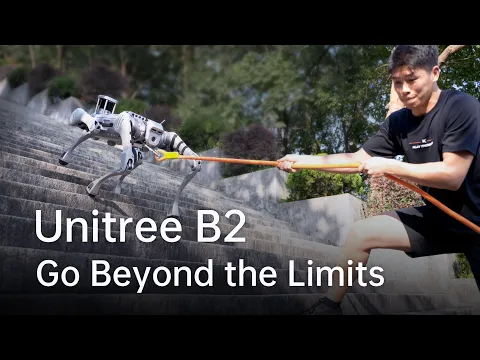

Although developed for the various important tasks mentioned earlier, the B2 goes much further, serving as a robotic dog that also acts as an educational tool for those studying robotics.
The Chinese robot dog is equipped with an impressive array of sensors, including two HD optical cameras, two depth-sensing cameras, and a LiDAR module. This technology enables the robot to autonomously navigate complex and uneven terrains. Another highlight of the robot is its speed, as it can run at an impressive 6 meters per second, which is over 21 km/h.
-
Digital Transformation Essential in Energy, Oil, and Gas Industries, But IT Infrastructure Often Overlooked

-
Brazilian Students Repurpose Clay Tea Cups to Create Cooler That Lowers Room Temperature by Up to 10°C Without Air Conditioning or Fans
-
353-Year-Old Mystery Deepens as Archaeologist Arrested with Teeth and Bone Fragment Possibly Linked to d’Artagnan, the Real Musketeer Behind Alexandre Dumas’ Inspiration

-
16-Year-Old Invents CoolTowel, a Fitness Towel That Stays Cold for Up to 2 Hours, Wins Global Alibaba Competition with Over 15,000 Participants, Earning $1 Million




According to the developing company, this makes the B2 the fastest industrial robot dog available on the market. It is worth noting that the robot can also jump up to 1.6 meters in distance, overcome obstacles of 40 cm in height, and much more. When it comes to strength, the Chinese robot dog does not lag behind either.
While the B1 can carry up to 20 kg, the B2 doubles this number to 40 kg in motion and can withstand up to 120 kg when stationary. And if that were not enough, its 45 Ah/2,250 Wh lithium battery provides an incredible autonomy of 5 hours without needing to recharge. This may reduce somewhat depending on the amount of load it carries. When carrying 20 kg, for example, it can last around four hours per charge.
Brazil Is Also Making Progress With A Robot Dog
Still regarding the Chinese robot dog, the actuators at the joints of the model were enhanced for 170% more torque than those of the B1, reaching up to 360 Nm. The responsible company highlights that this improvement essential expands the flexibility and stability of the robotic dog for industrial activities. Not many details about the price and availability have been disclosed, but it appears that this Chinese robot dog will not be very light on consumers’ pockets.
In terms of robotic technology, Brazil is not considered outdated, as the country received a robot dog with AI and 5G connectivity in September 2023. This AI-powered robot can operate in situations such as suspected gas leaks and damaged structures. The technology allows it to walk on debris and has an infrared camera. Named Spot, the 5G-connected robot dog is the first of its kind to operate in Brazil.
Robot Dog Is Used At The Itaipu Technological Park (PTI)
The robot is produced by Boston Dynamics, has four articulated legs, and features AI, allowing it to have greater mobility than other types of wheeled or tracked equipment.
To optimize the accuracy of activities, the model is equipped with several sensors, cameras, and microphones connected to 5G, a network that allows for lower latency, meaning less response time to commands.
The technology is already being used at the Itaipu Technological Park (PTI) in Foz do Iguaçu, Paraná. Spot is expected to be tested in an industrial environment with a private 5G network, and the results may be useful for similar solutions in other areas.


