Portuguese
  Spanish


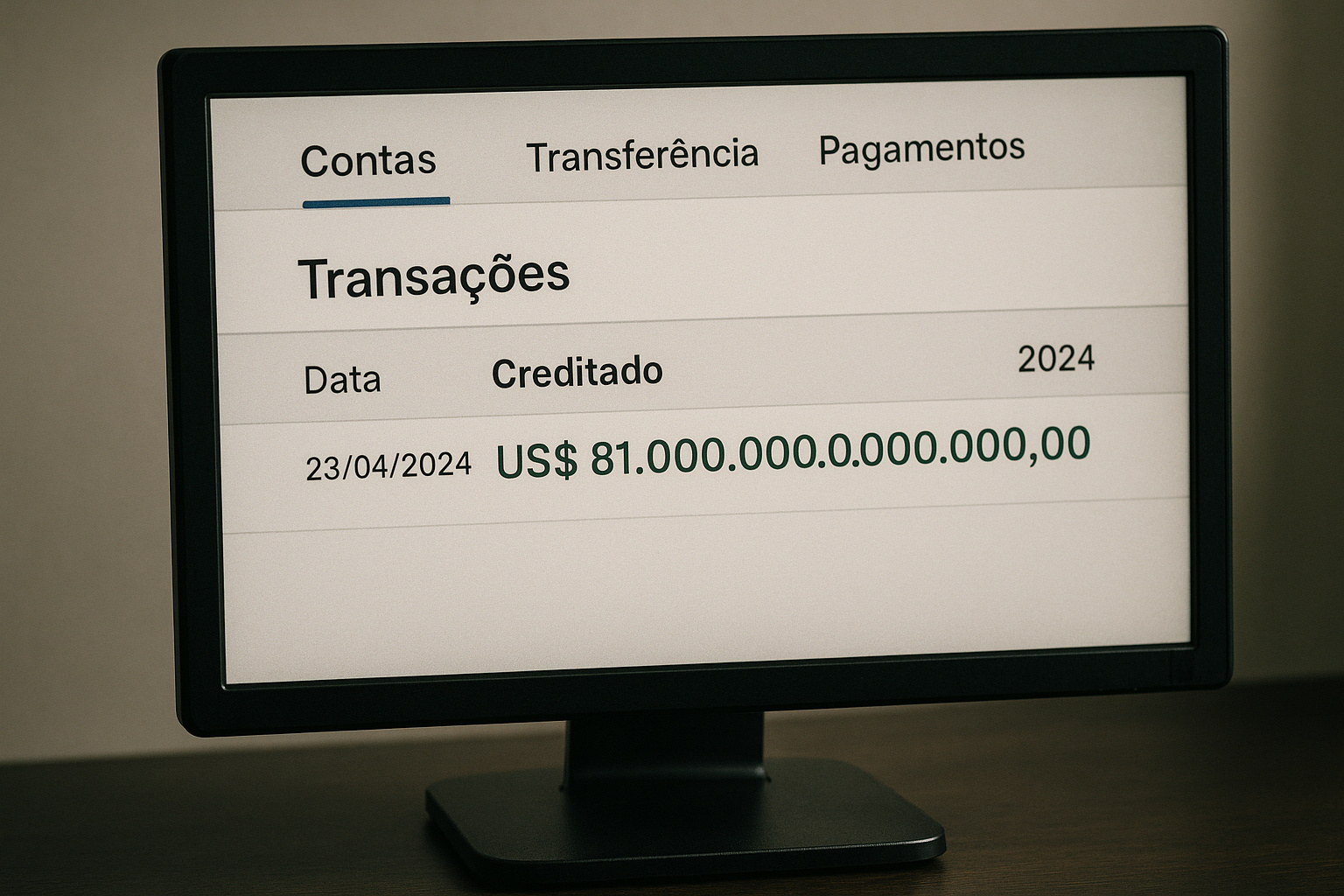


An Internal Error in April 2024 Made Citigroup Launch US$ 81 Trillion to a Customer Account; Failure Passed Through Two Employees and Was Only Noticed by a Third After 90 Minutes
A Citigroup customer had an unbelievable surprise in April 2024: when checking their account, instead of the expected US$ 280, they found a deposit of US$ 81 trillion. The incident, which quickly gained international attention, was confirmed by the bank and initially reported by the Financial Times.
According to the publication, the wrong transfer passed through two levels of internal checks: one employee responsible for the payment and another in charge of the review before processing. Both let the error slip through, which only heightened the seriousness of the situation.
Error Detection and Immediate Reaction
It was only a third employee, 90 minutes after the value was entered into the account, who noticed the problem. However, the reversal of the transaction took several hours to complete. The information was reported by the Times, which cited an internal report and sources close to the case.
-
American Youth Transforms from Severe Obesity to U.S. Air Force Enlistment, Losing 90 Kilograms in Two Years

-
11-Year-Old Entrepreneur Sells 60 Homemade Sweets Daily, Mastering Cost Calculation, Social Media Promotion, and Client Negotiation Since Age 7

-
Peruvian Mountain’s 5,200 Aligned Holes May Unveil Ancient Indigenous Market for Corn and Cotton
-
The Little-Known Story of a Home-Built Airplane That Promised Freedom but Faced Safety Issues After Numerous Accidents


Despite the magnitude of the blunder, no amount actually left Citigroup. The institution reported the “near miss” to the Federal Reserve and the Office of the Comptroller of the Currency (OCC), emphasizing that the internal controls, although faulty at first, managed to detect and prevent the amount from being actually moved.
Official Statement and Containment Measures
After the incident, the bank stated to PEOPLE that its “detective controls quickly identified the entry error”. According to the statement, despite the absurd amount entered in the account, “a payment of that size could never have been executed.”
The statement further reinforced that the internal systems quickly reversed the transaction between two Citi accounting accounts, ensuring that no dollar left the institution. The company also highlighted that its preventive controls would have prevented any outflow of resources even if the error had gone unnoticed for a longer time.
According to Citigroup, the case serves as evidence of the need to reduce manual processes and enhance the automation of internal controls, part of a global project called “Transformation,” announced by current CEO Jane Fraser.
History of Failures and Million-Dollar Fines
Although no customer was directly harmed in this episode, it was not an isolated case. In 2022, a bank employee added a zero to a transaction, triggering a stock liquidation that caused a crisis in European markets. The error proved costly: in 2023, Citigroup was fined £62 million (about US$ 78 million) by British regulators.
The history of mistakes also dates back to 2020, when the bank transferred US$ 893 million to creditors of Revlon Inc. instead of the US$ 7.8 million in interest expected. The error gave the impression that the company had prematurely paid off a loan that was not due until 2023.
That same year, the OCC (Office of the Comptroller of the Currency) imposed a fine of US$ 400 million on Citigroup for long-standing failures in its risk management and internal control programs.
And the problems persisted: in 2023, U.S. regulators penalized the bank again, this time with US$ 136 million, claiming that progress in correcting its data governance deficiencies was still insufficient.
Lessons and Impacts on the Banking Sector
The 2024 episode, although quickly reversed, underlined an important alert: human errors, even in global institutions managing billions of dollars, can still generate situations of systemic risk.
Experts remind us that the digitization of the financial system increases efficiency but also requires automated protocols capable of preventing simple typing errors from turning into global crises.
As highlighted by the Financial Times and outlets like Reuters and The New York Times, the succession of failures demonstrates that the promised transformation by Citigroup still faces a long and costly road, in a scenario of strong regulatory pressure.