Portuguese
  Spanish


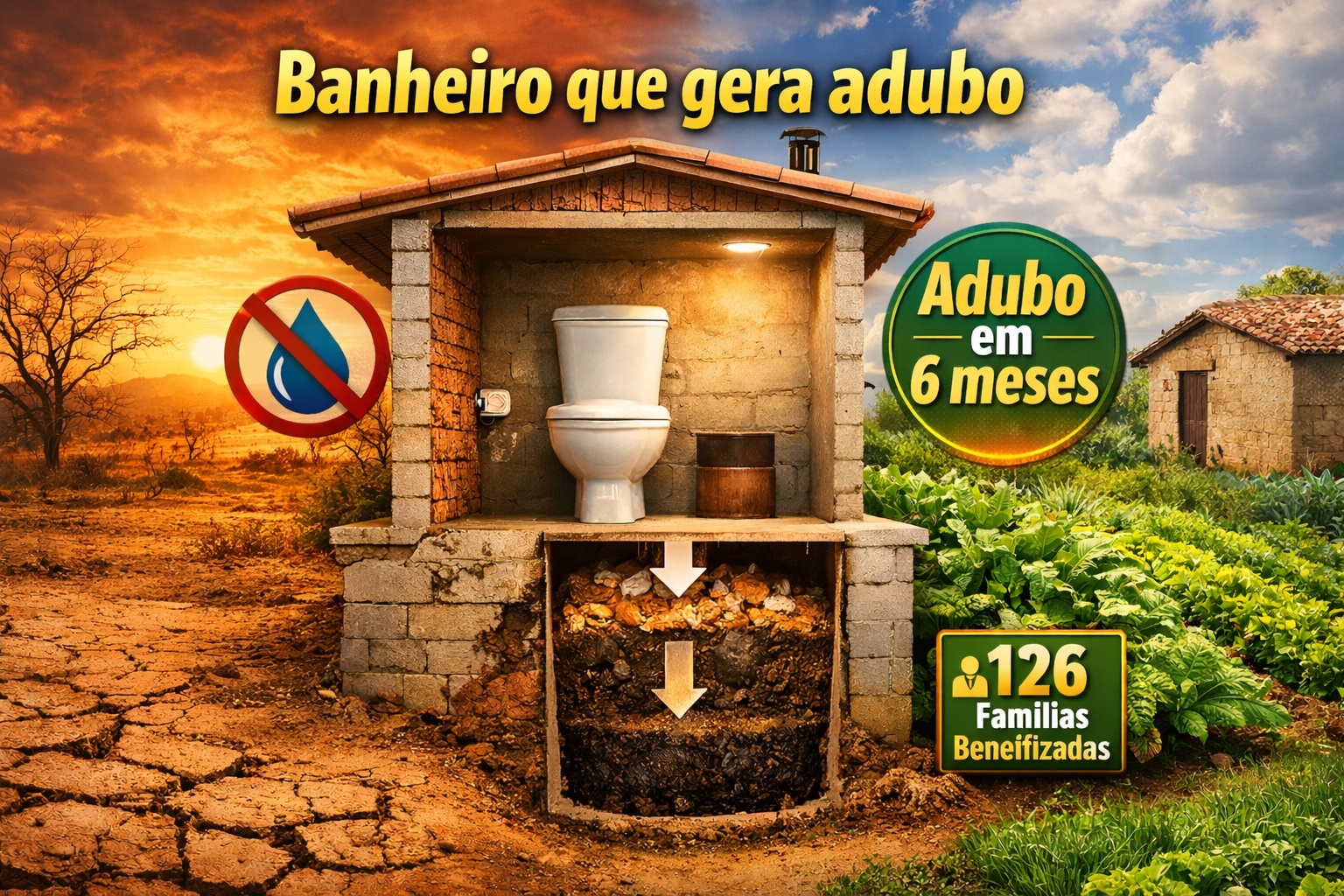

In the Pernambuco Semi-Arid, Where Water is More Precious Than Gold and Sewage is a Problem Without a Solution for Decades, 126 Families Decided Not to Wait for the Government. Instead of Septic Tanks That Contaminate the Soil or Sewage Systems That Never Arrive, They Built Bathrooms That Transform Feces into Compost and Proved That It is Possible to Have Dignity, Health, and Sustainability for Less Than the Cost of a Used Motorcycle.
Belo Horizonte, March 2008. From a chat during a meeting of grantees of the Inter-American Foundation (IAF), an idea emerged that continues to bear fruit: the construction of Dry Toilets in the Northeast Semi-Arid. The conversation was between technicians from Cepagro (Center for Studies and Promotion of Group Agriculture) and the Diocesan Center for Support to Small Producers (Cedapp), an organization based in the city of Pesqueira, 180 km from Recife, on the borders of the sertão. The idea seemed simple: bring a technology that was already working on the coast of Santa Catarina to the arid sertão. But the question was: would people from the sertão accept using a toilet without a flush? After a testing period, with funding from the IAF, technical assistance from Cepagro, and the work of Cedapp with the local population, 126 Dry Toilets were built in 17 communities of the Pernambuco Semi-Arid between 2009 and 2010.
The Water Drama in the Sertão and the Arrival of “HUMUS SAPIENS”
To understand why the dry toilet makes sense in the semi-arid region, it is essential to know the reality of the area. In Brazil, data from the National Water Agency (ANA) reveal that Brazilians consume up to 200 liters per day, well above the amount recommended by the UN. About 30% of this consumption is directly linked to the use of toilets.
Now imagine spending 30% of your water that you collect in cisterns or from water trucks to flush. In the sertão, this is not waste. It is a crime against survival.
-
In Rural Brazil, José Sirval Operates a Water-Powered Mill Grinding 125 Kilograms of Corn Daily Using His Great-Grandfather’s Century-Old Monjolo

-
From Market Stall to Agribusiness: Patagonian Fruit Grower Owns 550 Hectares and Processes 18 Million Kilos of Pears and Apples Annually, Exporting Directly to Brazil
-
At 93, Brazilian Farmer Restores 56 Hectares of Forest and Revives Spring in the Amazon, Installs First Climate Tower in the Region
-
Brazilian Cheesemaker Wins European Award for Ant-Infused Cheese with Nutty Flavor Inspired by Indigenous Tradition


The drought has been fought for many years. There is even a National Department of Works Against Droughts. Large-scale projects, such as the transposition of the São Francisco River, have historically been promised to communities. However, political issues and the region’s geographical characteristics make this horizon increasingly distant.
Therefore, some organizations started to work with the idea of coexisting with the semi-arid — beginning with the construction of cisterns and continuing with social technologies like the Dry Toilet.
The Toilet That Does Not Need Water
The model adopted in Pesqueira is ingeniously simple. This Dry Toilet model is one of the cheapest and easiest to build. The basic idea is to collect feces in plastic drums of 50 or 60 liters that, when full, are exchanged and taken for composting or dehydration and alkalinization.
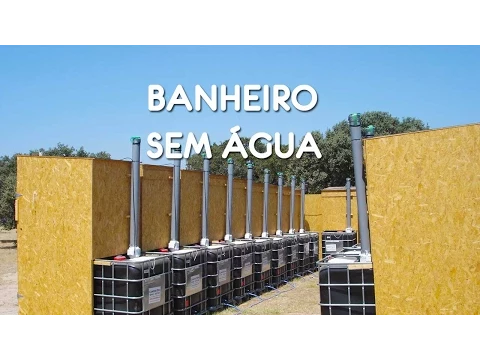

The toilet also has a shower, a sink for handwashing, and a male urinal. All liquids from the toilet are directed to a circle of banana trees.
HOW IT WORKS:
The dry toilet fulfills all the functions of a conventional toilet without using water in its system, in addition to producing inputs that can be used for fertilizing crops and agroforestry.
After using the toilet, the person pours sawdust over the feces. When the system works correctly, a chemical reaction between the nitrogen from the feces and the carbon from the sawdust creates a stable and odorless mixture.
The ecological dry toilet needs to have a high temperature, above 37°C (which is the average human body temperature). Additionally, factors such as pH, humidity, ammonia levels, and composting time also influence the elimination of odors and harmful pathogenic organisms.
To ensure the cleanliness and hygiene of the compostable toilet, it is ideal for the collecting drum to be changed every six months.
The Science Behind the Transformation
The waste does not go to the sewer. They can go to a composter, where, mixed with dry leaves, straw, and food scraps, they become fertilizer after a few months. This process is called composting and eliminates bacteria and microorganisms causing diseases present in the feces.

After being produced – in a process that takes up to six months – the compost is taken to a worm bin where it is transformed into organic fertilizer, which can be used in agriculture.
Human urine is a significant source of nitrogen, serving to nourish and feed plants. Thus, the contact of nitrogen with the soil ensures stronger and healthier growth for the vegetative area where the toilet is installed.
Building with Your Own Hands
Technicians from Cepagro went to Pesqueira and presented a video about the experience with Dry Toilets on the coast of Santa Catarina and conducted training with masons from the communities for building the first toilets.
Additionally, they gave awareness-raising lectures for the population, showing how it is possible to have a toilet that works without water.

Starting the construction of the first 95 Dry Toilets. The unit cost was approximately R$ 1,400, using masonry and including a shower, since many families also did not have a place to bathe.
Each project involved a family helper and technical supervision. Workshops with the Cedapp team were also fundamental: from this training, the professionals could pass on the knowledge of how to make and use the Dry Toilet to more people.
The Transformation in the Lives of Families
The results exceeded expectations: 96 toilets built, 96 families who stopped polluting the environment.
CONCRETE IMPACTS:
- Improvement in the health level of families, especially children, pregnant women, and the elderly
- Organic compost used in family and community gardens improves people’s health and reduces infant mortality
- Reduction in the amount of contaminating waste
- Easy handling process, no machinery required, affordable cost, does not need complex plumbing installations
Facing problems with drought and lack of access to sewage networks, communities in the region are receiving ecological installations. In addition to environmental benefits, the new structures have significantly reduced the incidence of intestinal diseases.
The Voices of the Sertão
A resident of Sítio Serra da Cruz (municipality of Pesqueira) shares her experience: “There is no bad smell. I don’t have a gas stove, only a wood stove there. I keep collecting the ashes” to use in composting.
The acceptance was surprising. What might seem strange or “gross” to someone unfamiliar became a source of pride for families.
The dry toilet can be a good option for places lacking basic sanitation and with limited access to water, reducing problems resulting from social inequality.
Furthermore, the waste collected can be used by agricultural organizations as fertilizers. This way, it avoids the use of pesticides and other harmful substances to the environment and human health.
The dry toilet can also be a great tool for social inclusion for families without access to piped water, as this sanitary format allows for easier access to basic sanitation.
This is still a viable alternative for homes located in farms, rural areas, and places where agriculture is developed, as the waste becomes potential fertilizers.
Economy That Makes a Difference
The numbers prove that the dry toilet is viable:
COST:
- Approximately R$ 1,400 per unit (with masonry and shower included)
- Does not require sewage system
- Does not need a septic tank
- Avoids complex plumbing installations
- Simple and inexpensive maintenance
WATER SAVINGS:
- About 30% of domestic water consumption is linked to the use of toilets
- A family of 4 saves approximately 8,000 liters of water per month
- In the semi-arid, this can mean the difference between having water to drink or not
The Complete Sustainability Cycle
With the basic principle of using solar heat to raise the internal temperature of the place where the waste will settle and eliminate any harmful pathogens to health and originate fertilizers, ecological sanitation models are adaptable options for every situation.
The dry toilet closes the nutrient cycle that conventional flushing interrupts:
- Food → humans consume nutrients
- Excretion → nutrients leave the body
- Composting → microorganisms transform waste into fertilizer
- Soil → fertilizer nourishes plants
- Food → plants feed humans again
“It is certain that human feces and urine are rich in nutrients. So why is it not common to use them in crops? I believe that the biggest difficulty in using them as fertilizer lies, less in the lack of knowledge on the subject, and more in the prejudice that has been passed down through generations.”
“The only problem against human composting is prejudice,” says American author and carpenter Joseph Jenkins, author of the book “The Humanure Handbook.”
When talking about a dry toilet, the first reaction is: “It must smell terrible!”
The reality is different. “Although the dry toilet still seems ‘gross’ to a large part of the population, it can be just as hygienic as any conventional toilet — in addition to being sustainable and cheaper.”
Accounts from users: “I spent a week using the dry toilet and once again I could prove that the reputation that dry toilets smell bad is nothing but a myth. Everything is about how you take care of your toilet. Surely you have felt bad smells in some concert, bar, or party bathroom, haven’t you?”
The Experience Spreads
The success in Pesqueira inspired other communities.
In Pirenópolis, Goiás, the Permaculture and Ecovillages Institute of the Cerrado created a project with a suggestive name: Húmus Sapiens. These are dry toilets, made of masonry, that cost half of a traditional toilet.
The technology also reached Maranhão, where academic studies proved the benefits: “Social participation in the implementation of the dry toilet as an alternative for promoting health in ten rural communities in Maranhão.”
The Numbers of the Project in Pesqueira
STRUCTURE:
- 126 Dry Toilets built in 17 communities
- Start of construction of the first 95 Dry Toilets
- Unit cost of approximately R$ 1,400
COMPONENTS:
- Toilet with a 50-60 liter drum
- Shower
- Sink for handwashing
- Male urinal
- Drainage system for the circle of banana trees
- Masonry structure
RESULTS:
- Zero contamination of groundwater
- Drastic reduction in intestinal diseases
- 30% savings in water consumption
- Production of certified organic fertilizer
- Total autonomy without depending on public networks
The Future of Sanitation
“The planet is dying, and we, humans, are responsible for this imbalance. We have destroyed more in the last 50 years than since the emergence of man up to 50 years ago. We generate sewage and interrupt the natural cycle of nutrients and healthy life.”
“With a simple change of habit, we can reverse this. We can make a difference. Starting now is the best thing we can do.”
The dry toilet is not just a solution for the sertão. It is a viable alternative for:
- Rural areas without sewage systems
- Farms and sites
- Permaculture projects
- Ecovillages
- Temporary events (portable models)
- Even for apartments (there are urban and luxury models now)
Why This Matters to You
While Brazil spends billions on sanitation projects that never get completed, 126 families in the sertão of Pernambuco proved that it is possible to have dignity, health, and sustainability for R$ 1,400.
Without waiting for the government. Without contaminating the soil. Without wasting water. Without generating sewage. And still producing organic fertilizer that feeds gardens and generates income.
“If seen as a solution within a closed reality such as we live, it can be the answer to various problems related to public sanitation, as this single technology prevents soil and water contamination.”
The dry toilet is not a technology of the past; it is the future that insists on being ignored. While cities fill rivers with sewage and families die due to lack of basic sanitation, people in the sertão show that the solution is in nature, in ancestral knowledge adapted, and in the courage to do things differently.
In the semi-arid region, where every drop of water is sacred and sewage is a distant luxury, 126 families proved that feces are not waste; they are a resource. And that the solution for basic sanitation does not need billions in projects. It needs R$ 1,400, a drum, sawdust, and the courage to do things differently.