






 Portuguese
  Spanish
  4 min of reading
  0 comments


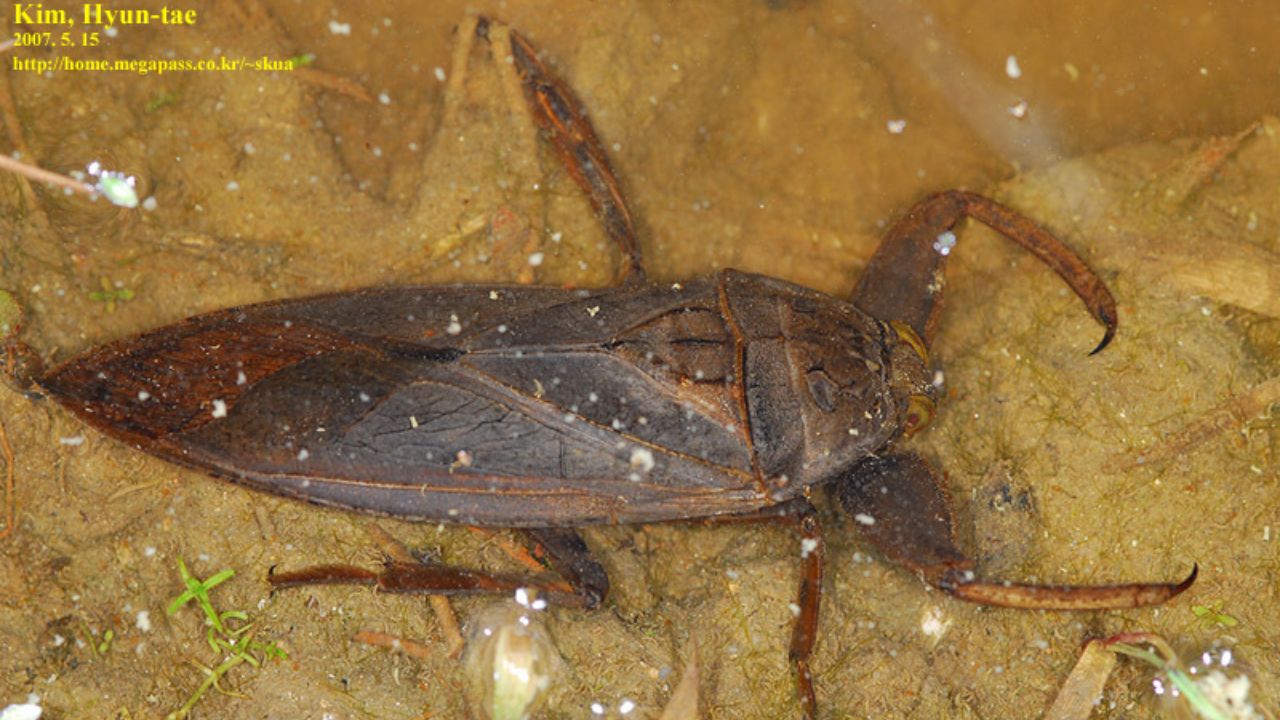
Giant Water Bugs Occupy The Top Of The Food Chain And Use Silent Techniques To Capture Larger Prey, According To Scientific Studies.
The giant water bugs are among the most impressive insects in the world’s aquatic fauna. A scientific study that gathered decades of research revealed that these predators not only survive in flooded environments but also dominate the food chain by capturing much larger prey, including ducklings, turtles, and even venomous snakes.
The research was conducted by international specialists, published in the journal Entomological Science, and helps explain why these insects play a central role in freshwater ecosystems.
Found in ponds, swamps, and flooded agricultural areas, the giant water bugs act as ambush predators.
-
Federal Police involved in the case to identify the person responsible for hacking the Civil Defense system, which sent ten false alerts, frightened residents of different capitals, and turned messages about real risks into notifications with “misanthropy” and even alien attacks.

-
Extreme drought causes ghost village to reappear at the bottom of the reservoir that supplies Athens, revealing houses, a school, and ruins swallowed since the 1980s as the lake shrinks and exposes the water crisis threatening the capital of Greece.

-
An entire village lay asleep at the bottom of a lake for 3,000 years: divers suction sediments in Italy and reveal more than 600 wooden stakes, bronze tools, and traces of a Bronze Age settlement hidden underwater.
-
They call it the “Shopee house” and even cardboard, but the R$ 20,000 house is a certified Wood Frame from Alea, financed by Minha Casa Minha Vida: understand if it’s worth more than masonry.



This strategy, combined with their large size, gives them an advantage over other species sharing the same environment.
Giant Water Bugs: Global Distribution And Impressive Size
The giant water bugs belong to a group of about 150 known species.
They are present on almost every continent, adapted to different climates and types of freshwater.
Some of the largest species live in South America, such as Lethocerus grandis and Lethocerus maximus, which can exceed ten centimeters in length.
This size places these insects among the largest invertebrate predators in shallow aquatic environments.
How Giant Water Bugs Hunt
Unlike active hunters, the giant water bugs adopt a motionless posture. Clinging to submerged vegetation, they patiently wait for an animal to approach.
Charles Swart, a professor at Trinity College in Connecticut, describes this behavior:

“They remain positioned, holding onto a plant in the water and catch everything that moves in front of them, trying to devour them.”
This strategy reduces energy expenditure and increases the success rate during capture.
Natural Weapons And Feeding Method
When the prey enters the attack range, the insect reacts quickly. The front legs close like pincers while the others ensure the immobilization of the animal.
Next, a sharp proboscis pierces the victim, allowing the release of digestive enzymes that dissolve the tissues internally.
“They break down the tissue and then suck it up,” explains Swart, adding that in larger prey, the process can take hours and that the attacked animal may remain alive during part of that time.
There is still no scientific consensus on the presence of venom itself, but the effects are sufficient to neutralize significantly sized prey.

Rare Records Reveal Extreme Attacks
When reviewing previous scientific publications, entomologist Shin-ya Ohba, an assistant professor at Nagasaki University, found surprising reports about the behavior of the giant water bugs.
In one of the most emblematic episodes, documented in 2011, a species was observed capturing and feeding on a turtle, an event considered rare until then.
Ohba highlights that these insects show little hesitation when facing large prey, reinforcing their status as dominant predators.
Uncommon Reproductive Behavior
In addition to their hunting ability, the giant water bugs stand out for their reproduction.
Unlike most insects, in several species, the males take on the responsibility of caring for the eggs.
They can protect up to five clutches simultaneously or carry the eggs attached to their bodies until they hatch. However, competition among females can be intense.
“By destroying the competitor’s eggs, a female can copulate with the other’s partner and ensure that the male takes care of her eggs,” explains Ohba.
From Young, Survival Depends On Courage
The lifecycle of the giant water bugs lasts about 60 days. Soon after hatching, the nymphs already need to hunt for survival.
As they often emerge during periods of scarcity of small prey, they resort to seemingly disproportionate animals, such as tadpoles and young fish.
According to Ohba, the curved front legs work as essential tools for this type of attack.
Ecological Importance Of Giant Water Bugs
Despite their intimidating appearance, the giant water bugs play a fundamental role in environmental balance.
As top predators in the food chain, they help regulate populations of other aquatic organisms.
However, water pollution and the introduction of invasive species pose significant risks.
For researchers, preserving freshwater environments is essential to ensure the survival of these insects and the stability of the ecosystems where they live.
With information from National Geographic Brasil




-

-

-

-

11 people reacted to this.