






 Portuguese
  Spanish


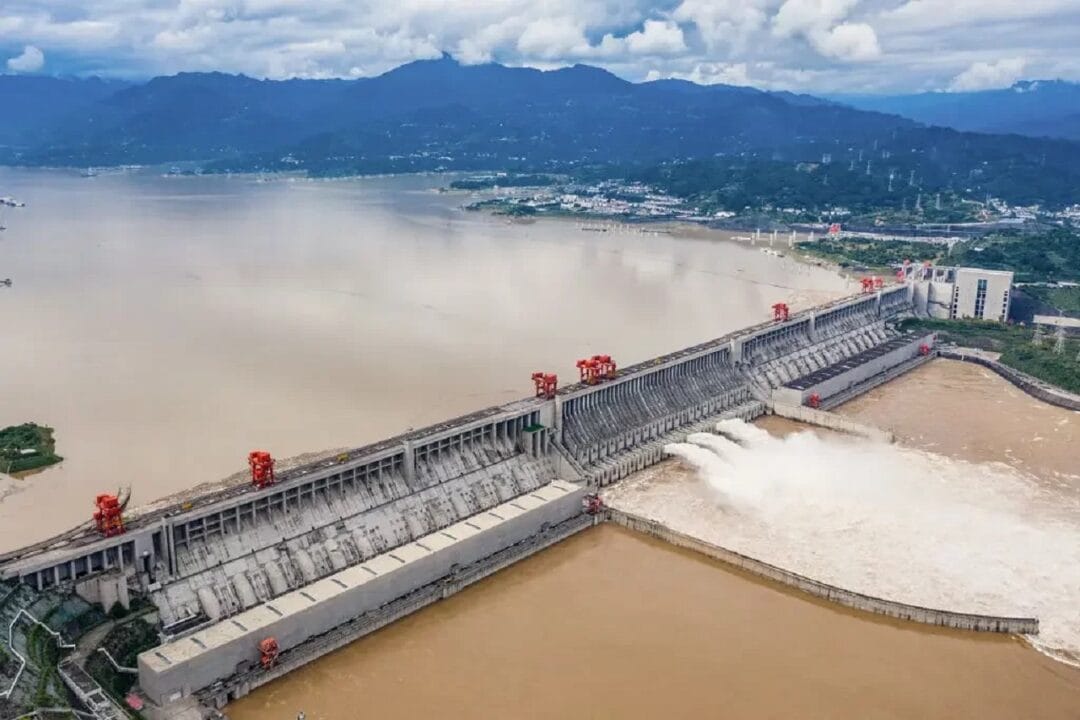


The Three Gorges Dam: A Wonder of Chinese Engineering, But What Are the Associated Risks? Find Out in This Article.
In China, where everything takes on gigantic proportions, from metropolises to roads, a project of impressive magnitude stands out: the Three Gorges Dam. This is the largest and most powerful dam in the world, with a colossal reservoir, so immense that it can even impact the Earth’s rotation. Although the structure is an inspiring feat of engineering, it also carries a number of significant risks, reflecting the complexity and challenges of such megaconstructions.
Dam in China Has a Capacity of 22.5 GB


While it supplies electricity to countless people, it also faces frequent criticism due to the possibility of imminent collapse. However, it is important to deeply analyze the issue to determine whether the dam is genuinely in danger.
Spanning 2.3 km at its maximum length and rising over 180 meters, the dam in China, located in Hu Bei, is of colossal dimensions. Situated across the imposing Yangtze River, the Three Gorges Dam houses a reservoir of giant proportions, extending over 600 km.
-
Rio de Janeiro Traffic Relief: Long-Awaited Change Promises to Cut 15-30 Minutes from BR-040 Commute, Easing Access to Avenida Brasil.

-
China Installs Massive Domes Over Urban Construction Sites, Blocking Up to 99% of Dust

-
Brazil’s Minas Gerais Government Signs Agreement for Ring Road to Divert Heavy Trucks Away from Urban Center

-
The Great Wall of China was built with a surprising kitchen secret: sticky rice mixed with lime created a mortar so durable it has withstood centuries, earthquakes, and human destruction.



However, the most notable feature is not just the structure itself. With an impressive installed capacity of 22.5 GB, it holds the title of the largest power plant in the world, regardless of type.
For comparison, the most powerful dam in the United States has only a quarter of the capacity of the Three Gorges Dam. Even nuclear power plants cannot compete in terms of capacity.
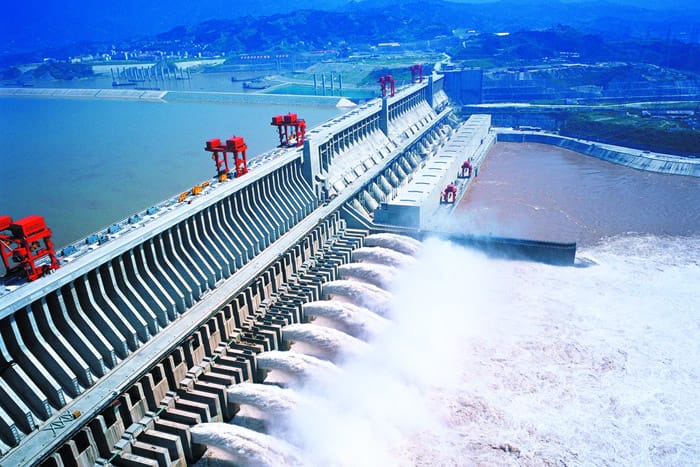
Operating at its theoretical maximum capacity, the entire facility can provide power to over 4.5 million people year-round. In addition to generating a constant supply of clean and renewable energy for millions of individuals, the construction of this dam was also motivated by another crucial reason.
The villages and cities around the Yangtze River have suffered from several devastating floods. In light of this scenario, the idea of a colossal dam capable of controlling the flow of the Yang River emerged.
Problems Found in the Three Gorges Dam System
Currently, with over 400 million people inhabiting the region, this structure plays a crucial role in potentially preserving lives. The dam in China has the capacity to mitigate catastrophic flooding further downstream, in cities like Wuhan and Shanghai. This feat is achieved by storing large volumes of water in the reservoir during rainy seasons and controlling the amount of water released.
However, it is important to recognize that this system is not infallible. During the heavy rains of 2010, for example, there was a need to release water to avoid overloading the reservoir. This resulted in floods, landslides, and unfortunately, the loss of several hundred lives. In general, it is estimated that the frequency of major floods could be reduced from occurring once a decade to once a century.
Find Out How the Dam in China Was Built

Building something of this magnitude along a huge river proved to be no simple task and the undertaking took 17 years of effort. Before even beginning construction, engineers had to face two complexities. They had to interrupt the flow of the Yangtze while simultaneously ensuring adequate water flow.
Maintaining the continuity of the river’s flow was essential for the surrounding cities, and to achieve this goal, stone dams were installed upstream during the construction phase. This allowed workers to begin building the first foundations on solid ground to achieve precise balance.
The engineers employed levees and rerouted the course of the Yangtze around the construction area. Once the concrete structure was completed, the installation of the first turbines proceeded, and later the levees were demolished, allowing water to reach the turbines of the dam for the first time.





A capacidade da usina é de 25 GW e não 25 GB. Façam a correção. Abraços