Portuguese
  Spanish


Fernando de Noronha and Natal Air Base Back on the U.S. Radar, Negotiating Unrestricted Use of Facilities with Support from Diplomats Linked to Trump
The United States continues its strategy – either explicit or disguised – of declaring which sovereign territories it wishes to appropriate, use under lease, or claim rights to based on its expansionist history. This has been documented since the country’s own declaration of independence. Its annexationist claims have been practiced in various forms: through acquisition (as happened with Alaska, Florida, and Louisiana), invasion (Mexico), appropriating total or partial possessions that belonged to Spain after winning a war in the early 20th century (Cuba, the Philippines, Guam, and Puerto Rico), or with the argument that they built infrastructure in the past – as Donald Trump claims now.
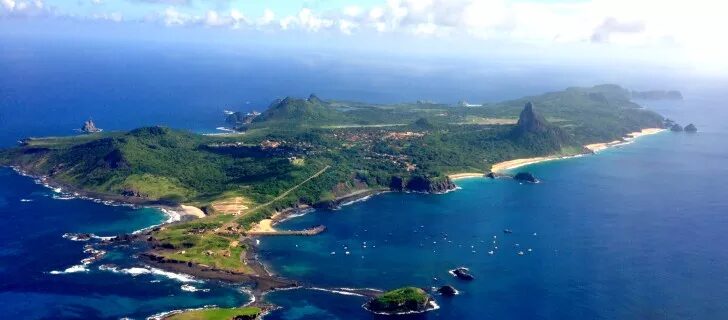
To the bluster of the former president against Canada, Greenland, or the Panama Canal, made throughout this year, has recently been added the idea of obtaining the usufruct of a strategic portion of Brazil: the paradise island of Fernando de Noronha. This information was revealed last week by a news portal specializing in Defense, which described the proposal as an initiative for “unrestricted use,” based on a supposed “historical right of operational return” due to investments made by the U.S. during World War II in the local airport, which they now wish to resume.
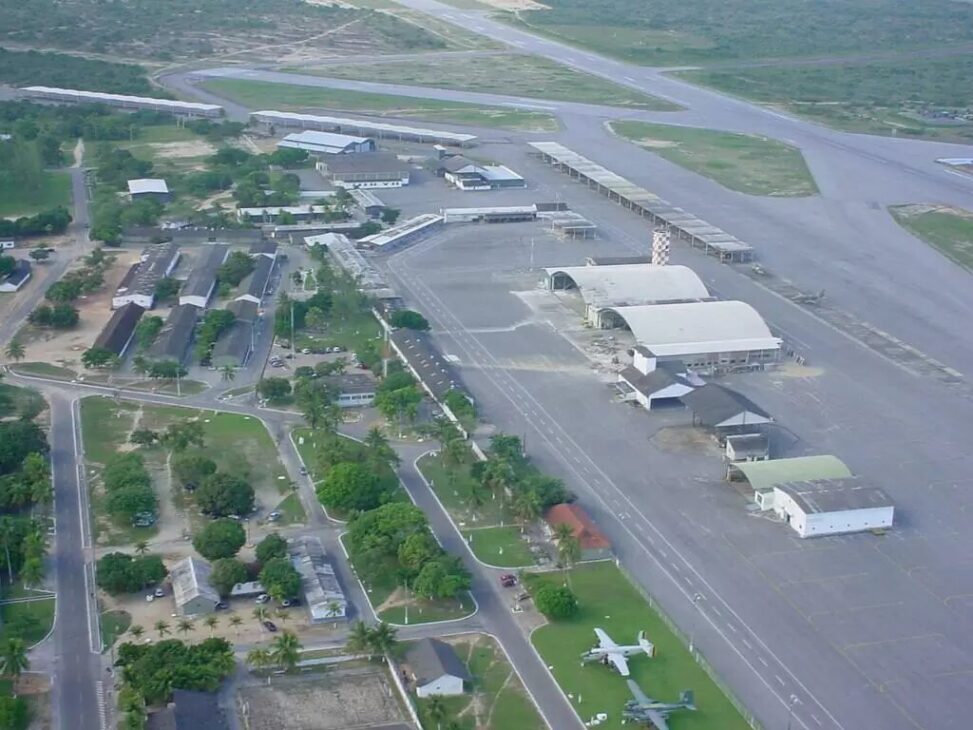
The proposal, according to the site Defesa Net, also involves the strategic airport in Natal, capital of the state of Rio Grande do Norte. The information, which has not been officially confirmed, mentions that “the government of the United States, through diplomats linked to the Republican Party, has been informally negotiating with Brazilian interlocutors” the cession of the island and the air base in that northeastern state.
-
U.S. Women’s History Museum Stalled in Congress Amid Gender Identity and Diversity Debate

-
European Parliament Approves Digital Euro, Aiming to Challenge Visa and Mastercard’s Dominance and Transform Payments Across Europe by 2029
-
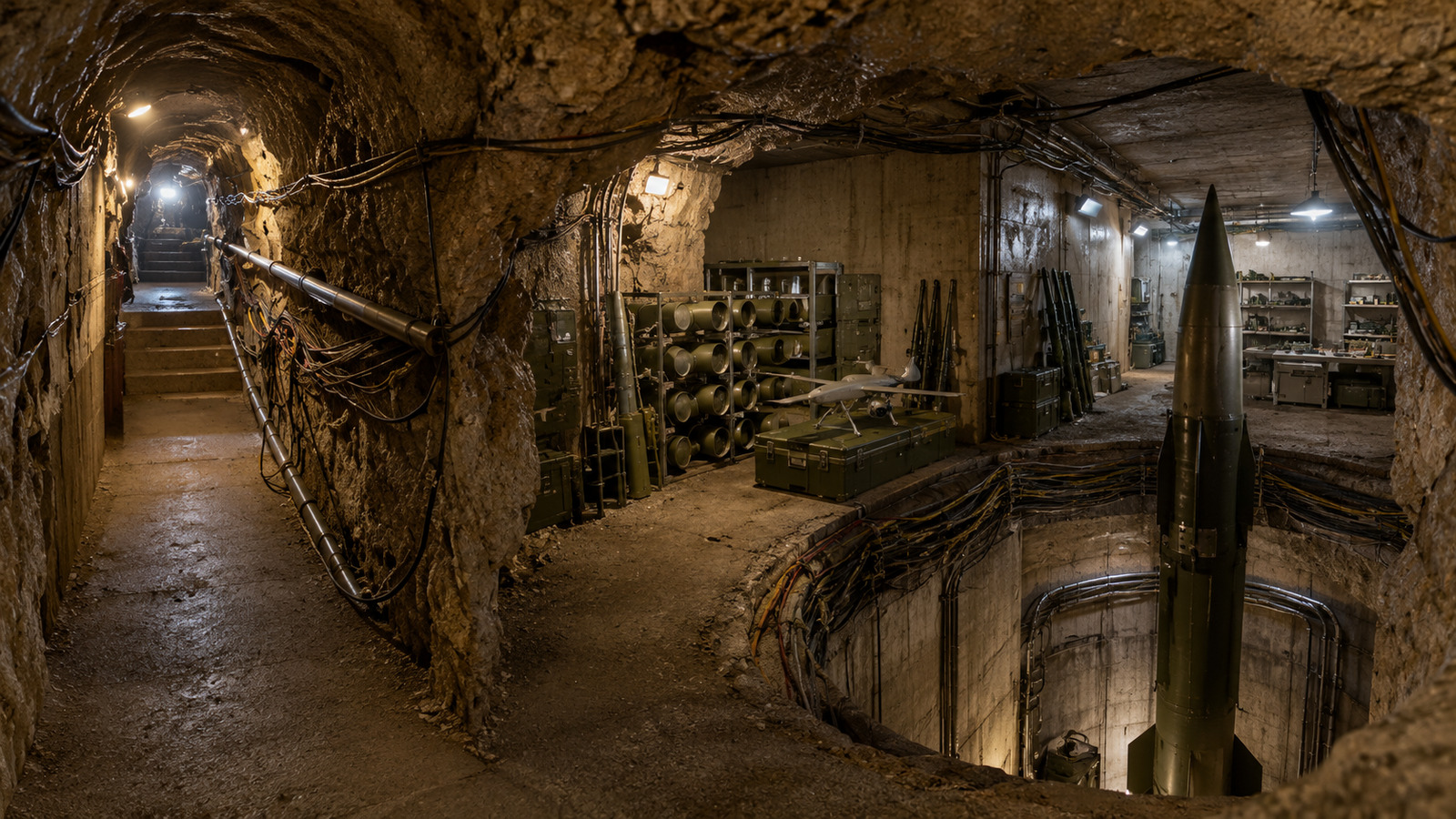
Israel finds Hezbollah militarized tunnel over 200 meters long under village, with 4 missile launch shafts, 12 chambers, anti-tank missiles, drones, and weapons depots at a depth of 25 meters.

-
Ukraine launches largest drone attack on Moscow since 2022, Russia claims to have intercepted nearly 200 aircraft near the capital, Kapotnya refinery targeted again, and offensive reignites alert about war reaching the Russian energy heart just a few kilometers from the Kremlin.



What Would Trump’s New Project Consist Of?
The American proposal would be based on three axes, according to the specialized Defense page. The first argument is of a “historical-operational nature,” related to financial investments, equipment provision, engineering works, and construction of runways carried out by the U.S.
The second argument, as reported by Defesa Net, is the so-called “functional right of return,” based on the idea that “military assets financed by the U.S. in partner countries – especially in contexts of global threat or strategic competition – could be ‘reused’ based on tacit agreements or the principle of hemispheric reciprocity.”
The site adds that the third element invoked by the U.S. “refers to contractual and legislative precedents.” Even though the Military Assistance Agreement between Brazil and the United States (1952) is no longer in effect, it is still frequently cited in technical documents and analyses by RAND Corporation, CSIS, and the Heritage Foundation, as a reference to the tradition of hemispheric interoperability.
The Precedent of Panama
Under a similar pretext, Trump has fueled the idea that the technical-operational control of the Panama Canal should return to the hands of the U.S. To this end, he pressured Panamanian President José Raúl Mulino, who responded: “The Canal is and will continue to be Panama’s.” U.S. Secretary of State Marco Rubio visited the country in February and warned local authorities that “necessary measures will be taken” if they do not immediately reduce the alleged Chinese influence over the canal — a matter that has become obsessive for the Republican government.
According to another Brazilian publication, ICL Notícias, which cites Defesa Net, “representatives of the U.S. diplomatic mission in Brazil discussed, in private meetings, the proposal to resume operations at the facilities in Fernando de Noronha and Natal, under the argument of ‘functional right to strategic reuse.’” The publication adds that Itamaraty “has not commented on the matter.”
The report also highlights that, both in Noronha and Natal, “the two bases would allow the U.S. to establish an Atlantic containment arc that would complement its current network of bases and outposts, such as Ascension Island, São Tomé Island, and facilities in Dakar.”
The analysis further emphasizes the strategic importance of the region for the U.S. in controlling the Atlantic between Brazil and Africa. An example is the difference in distance between the Natal base, on the South American continent, and the island declared a UNESCO World Heritage Site in 2001. It is 360 kilometers, compared to 1,540 kilometers from Ascension Island to the coast of the Gulf of Guinea. The Trump administration would save millions of dollars if its proposal were successful.
The Main Obstacle
However, the operation, already disclosed by Defesa Net and ICL Notícias, faces an almost insurmountable obstacle. The Federal Constitution of 1988 – enacted after the end of the last military dictatorship – in its Article 49, subsection I, expressly prohibits “the transfer of military facilities to foreign forces without prior authorization from the National Congress and formalization by legislative decree.”
Fernando de Noronha, located in the state of Pernambuco – the same state where President Lula was born, in the city of Garanhuns – is a volcanic archipelago with 26 km², consisting of 21 islands and islets. During World War II, in 1944, Brazil handed over the management of the local airport to the United States Navy. However, at the end of the conflict, it resumed control of the area.
Its location is considered strategic for ocean surveillance, able to accommodate “maritime surface radars and ELINT/SIGINT equipment, intended for monitoring naval and aerial routes,” according to the portal that revealed the American proposal. The island also has the capacity for maritime surveillance aircraft operations and medium-altitude long-endurance drones, such as the MQ-9 Reaper and SeaGuardian.
The Natal air base offers similar military capabilities. It presents ideal conditions for air refueling, medical evacuation, rapid mobilization of response forces, and support for missions on the western coast of Africa, the Caribbean, and northern South America, according to ICL Notícias.
It seems that this is not just a matter of hemispheric security for the U.S. The control of Fernando de Noronha may have motivations related to espionage in the region. The crux of the matter was encapsulated in a headline from the influential magazine The Economist, published on July 4, 2024: “China’s Presence in Latin America Has Dramatically Expanded.” Bilateral trade between China and Latin American countries jumped from 18 billion dollars in 2002 to 480 billion in 2023. Currently, China is the biggest trading partner of South America.