






 Portuguese
  Spanish
  4 min of reading
  0 comments


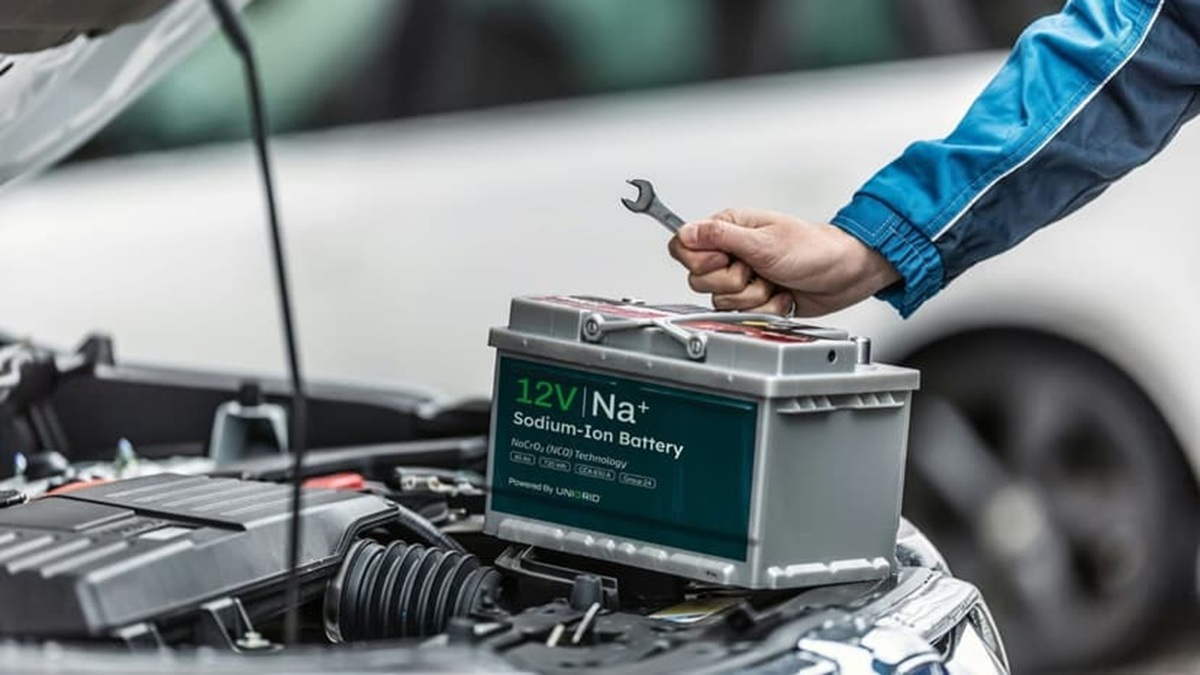
The New 12V Sodium-Ion Battery from UNIGRID Operates Between 8 and 14.4 V, Supports 5,000 Cycles, and Targets the Global Replacement Market Valued at US$ 50 Billion Annually.
UNIGRID has announced a 12V sodium-ion battery with over 5,000 cycles for the global replacement market valued at US$ 50 billion, as it seeks to enhance durability, efficiency, and thermal stability.
Launch and Industrial Integration
UNIGRID introduced the Na⁺ Fleet platform as a 12V system based on NaCrO₂ cells, allowing direct integration by manufacturers looking to incorporate this specific composition into their common global distribution lines.
The company explained that the new component was designed to facilitate industrial adoption because it offers immediate compatibility to original equipment manufacturers, reducing technical steps in projects aimed at the replacement market.
-
They wanted artificial intelligence, but they drained the water from a village in Mexico: the water consumption of data centers caused a hepatitis outbreak, and big tech companies Amazon, Microsoft, and Google were forced to halt billion-dollar projects.

-
System created to save lives in disasters turned ‘against’ Brazilians overnight: a hacker attack sent out a false alert from Civil Defense with the word “misantropia” that went off on the phones of half the country, even in silent mode, and took down the Cell Broadcast.
-
In the cold desert of Ladakh, where it hardly rains, engineer Sonam Wangchuk created the ice stupa, a tower that freezes winter water and stores it for irrigating crops in the spring, a simple engineering feat that mimics nature.
-
For the first time in history, solar and wind energy generated more electricity than natural gas worldwide in a single month, April 2026, a milestone in the energy transition that shows renewable sources taking the lead in the global electric system.




This market moves around US$ 50 billion a year, according to disclosed figures, as hundreds of millions of batteries are regularly replaced due to degradation and typical self-discharge behavior.
Limitations of Traditional Batteries
Lead-acid batteries have been in use for over 70 years for starting, lighting, and ignition purposes, forming a consolidated technological base, but dependent on frequent maintenance throughout use.
These traditional units are heavy and require replacement three to four times during the vehicle’s lifespan, as the company highlighted, pointing to a direct impact on recurring costs for owners.
UNIGRID stated that lithium alternatives address some of these limitations, but face challenges such as poor performance in cold temperatures and the need for active management that can introduce additional risks in the engine.
Extended Lifespan and Storage at 0% Charge
Data provided by the company indicates that the Na⁺ Fleet platform offers 5,000 or more usable cycles, exceeding lead-acid batteries by 10 times, according to internal assessment disclosed.
The company added that the composition allows indefinite storage at 0% state of charge, avoiding typical losses seen in conventional models that rely on prolonged maintenance charging.
The announcement stated that sodium-ion cells enable smaller and lighter formats, offering superior power, greater efficiency, and significantly extended lifespan, although a small typing error has been noted.
Electrical Operation and Thermal Performance
The system operates between 8 and 14.4 V, utilizing passive balancing that eliminates the need for a Battery Management System, as the range remains aligned with existing vehicle alternator parameters.
The company reported that the cells provide more than double the cold cranking amperage of lead-acid solutions, covering stable performance between -40°C and 60°C even in severe scenarios.
These metrics were described as a response to variations frequently recorded in other chemistries, allowing more predictable performance in extreme environments that require prolonged operational stability.
Safety and Assembly Simplification
The platform uses NaCrO₂ chemistry, highlighted by the company as a formulation focused on safety, as it works to reduce thermal runaway risks associated with certain energy configurations used in the industry.
UNIGRID stated that the absence of active management reduces assembly complexity, enabling simpler production lines tailored to the industrial needs of large-scale operations.
CEO Darren HS Tan declared that NCO batteries outperform lead-acid units in virtually all relevant metrics for SLI applications, including total cost, according to the analysis presented by the company.
Market and Covered Applications
Tan stated that this market represents a strategic opportunity because it utilizes technology deemed outdated, creating an environment conducive to sodium solutions that seek to avoid limitations recorded in traditional formats.
The technology supports different sizes and configurations of cells, enabling specific applications for manufacturers operating with varied energy requirements and logistics routines based on high volumes.
UNIGRID declared that the Na⁺ Fleet was designed for vehicles and equipment that use 12V batteries, covering passenger cars, trucks, motorcycles, snowmobiles, golf carts, forklifts, and buses.
The company reported that the cells also integrate into 12V auxiliary systems in hybrid and electric vehicles, allowing direct replacement of lead-acid units installed in these models.
Additional Information and Background
The final statement highlighted that the company seeks to consolidate global partnerships as it identifies growing demand for technologies with longer lifespan, although the market still maintains a strong presence of conventional solutions.
UNIGRID stated that prolonged storage in a low state of charge meets the needs of distributors working with high inventories, reducing common losses in systems with accelerated degradation during long periods.
The company concluded that the platform integrates into multiple automotive segments, maintaining focus on modernizing 12V systems, even as the share of electric vehicles increases in international markets, although a small inconsistency has been noted.





-

2 people reacted to this.