






 Portuguese
  Spanish




Innovative Project Recycles Cigarette Butts, Creates Cellulose Pulp, Supplies Artisans, Reduces Costs in Civil Construction, and Proves That Waste Can Turn into Environmental and Social Solution on a Large Scale
Small, almost invisible on the sand or asphalt, cigarette butts are among the most common and most polluting waste in the world. Present on beaches, streets, and sidewalks, they often go unnoticed but carry a significant environmental impact.
On the north coast of São Paulo, an entrepreneur decided to look at this problem differently, betting on the idea of transforming waste into raw material, innovation, and business.
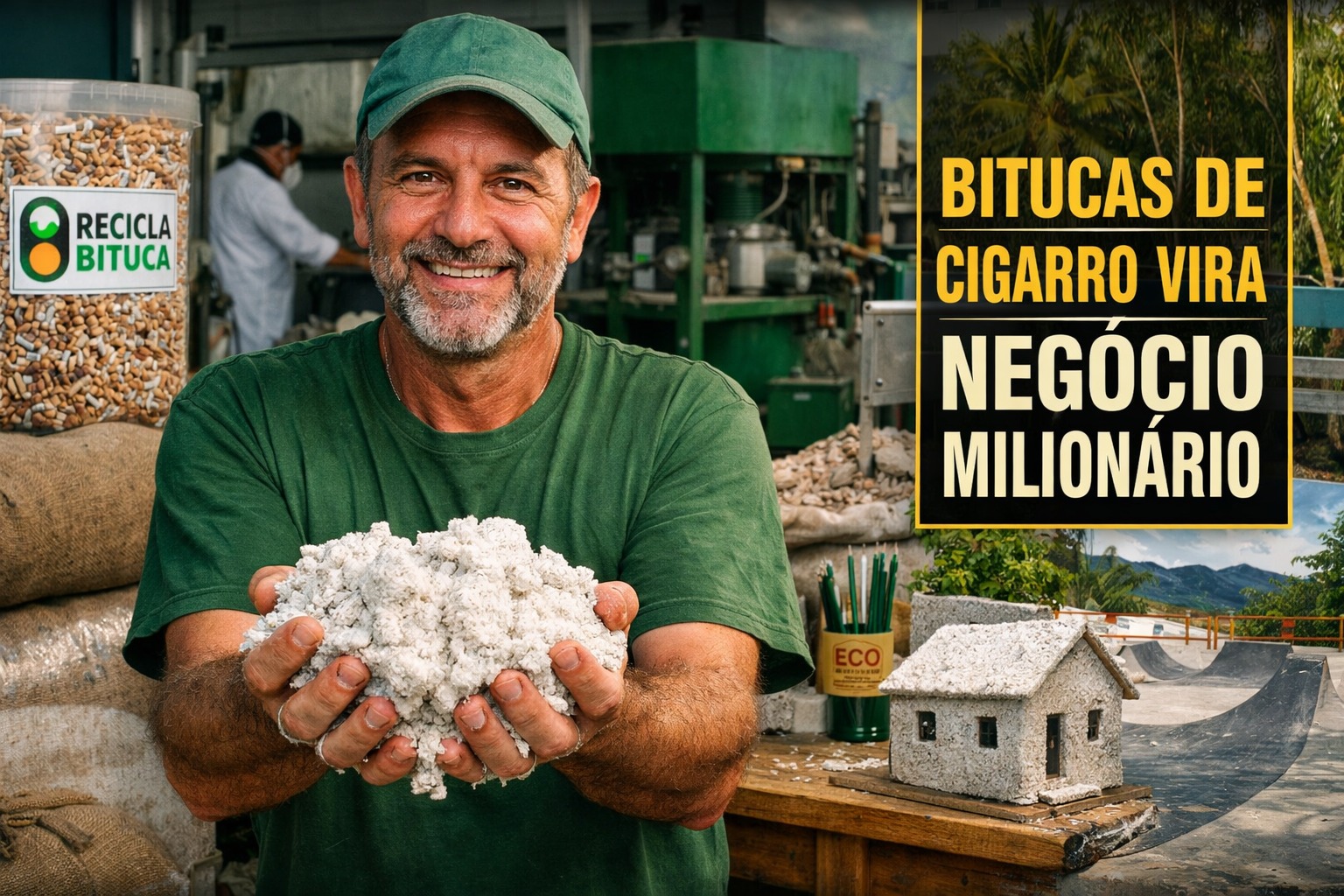
In Ubatuba, Marcos Poiato runs a company specialized in recycling cigarette butts. The project began about 16 years ago, after an intense period of research and investment, and today combines sustainability, environmental education, and income generation.
-
Warm water hidden deep in the ocean has been moving towards Antarctica for 20 years, potentially accelerating glacier melting from below.

-
U.S. Offers Nearly $200,000 to Combat Invasive Mussels Threatening Waterways and Hydroelectric Plants
-
Cigarette Butts Pollute Brazilian Beaches, Sparking Debate on Coastal Environmental Protection Measures
-
App Drivers Unite in Major Solidarity Effort to Aid Venezuela Earthquake Victims, Mobilizing the Brazilian Amazon with Donation Campaign


“I describe my company as an innovative concept company. We work with a waste that is complex and that, by habit, people improperly discard on the ground,” explains Marcos.

Cigarette Butts: From Collection to Technological Challenge
Cigarette butts can take up to 15 years to decompose and, during that time, release toxic substances that contaminate the soil, water, and affect marine life.
With previous experience in the pharmaceutical industry, Marcos realized he could apply technical knowledge to tackle this environmental problem.
The first obstacle was structuring the collection. The entrepreneur began by installing about 150 collectors in the city where the project started.
Over time, the initiative gained scale. Today, there are about 9,000 collection points spread across different Brazilian states, many of them on beaches, public spaces, and high-traffic areas.
But collecting was only part of the process. The big question was how to treat the material safely and viably.
The answer came after Marcos learned about research developed by the University of Brasília (UNB), which resulted in technology capable of eliminating toxins present in cigarette butts and repurposing the waste.
“That’s when we closed the loop,” summarizes Thérèse Hofmann, a researcher at the University of Brasília (UNB), explaining the technology licensing partnership.
Investment, Results, and New Applications
Between developing the process and making the business viable, Marcos invested around R$ 1 million over six years. The effort paid off. In 2025, the company generated approximately R$ 3 million in revenue.
After treatment, the cigarette butts transform into cellulose pulp, a versatile, odorless material free of toxins.
“This is the result of recycling. The cigarette butt stops being a polluting plastic and becomes cellulose, ready to be repurposed,” explains the entrepreneur.
This pulp is intended for artisans, artists, and social projects, which use the material to create products and generate income.
The repurposing also reached the civil construction sector. In Ubatuba, a sustainable skate park was built with recycled cellulose mixed into concrete.
“The final cost of the skate park decreased by between 30% and 40%, and we also reduced the environmental impact,” says researcher and skateboarder George Rotatori, who monitors the material’s performance. “It’s incredible to skate knowing that this could have been polluting beaches, streets, and sewers.”
In addition to recycling, the company invests in environmental education, promoting lectures, art workshops, and educational actions in partnership with municipalities, NGOs, and neighborhood associations.
For biologist and educator Paula Borges, the project shows that sustainability and economy can go hand in hand.
“When we transform such a polluting waste into raw material, reduce costs, generate work, and create products, we are talking about real sustainability,” she asserts.
For Marcos, the journey is marked by persistence. “Some businesses take one or two years to succeed. Ours took longer. But we had resilience, patience, and the certainty that the result would come,” he says.
He believes the effects of the initiative should continue to expand, strengthening a chain that unites innovation, environmental awareness, and waste repurposing.
With information from G1.




Maravilhosa idéia! Merece um prêmio pela coragem e consciência ambiental.
Gostaria muito que viesse pra Europa também essa reciclagem, porque as pessoas fumam muito aqui e ainda tem o mau hábito de jogar no chão as bitucas.
Iniciativa incrível parabéns pela resiliência , imagino quantas bitucas só você já retirou do meio ambiente..