






 Portuguese
  Spanish


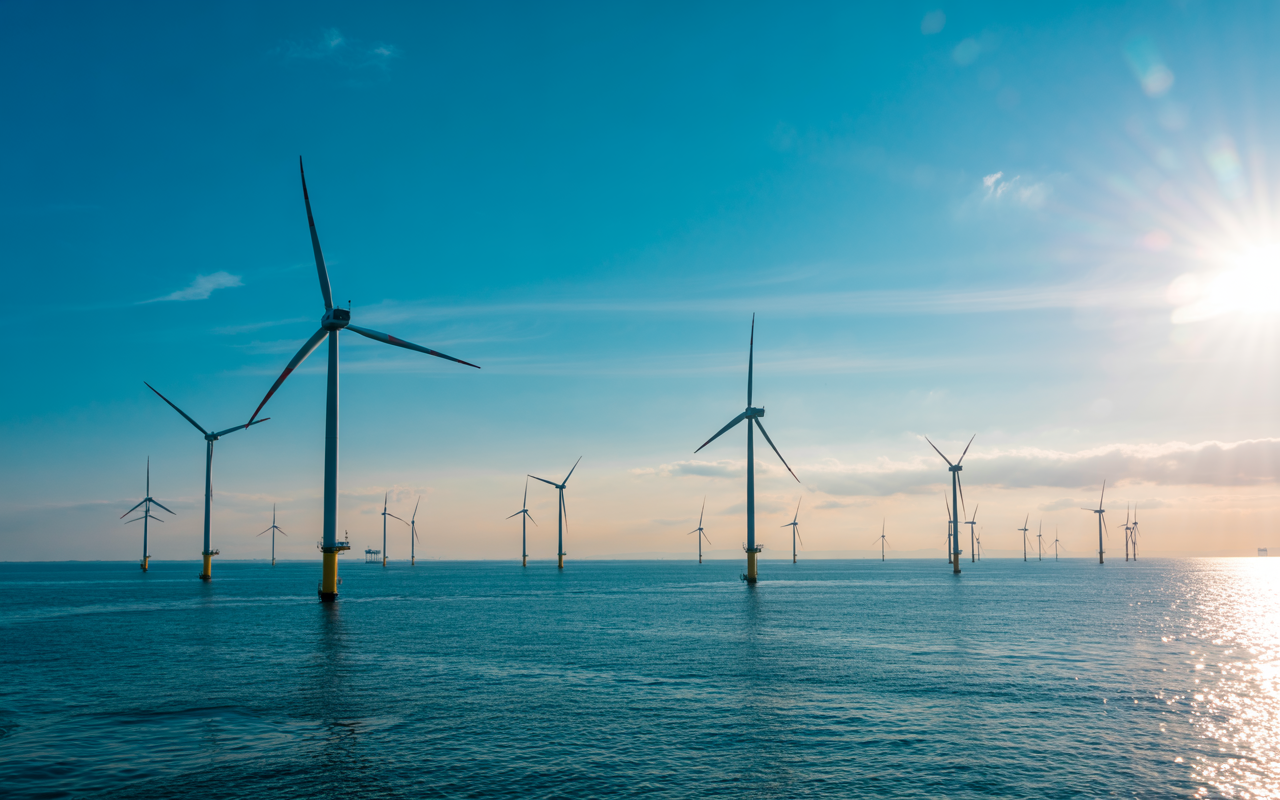

Brazil Expands Financial Support for Offshore Wind Energy and Power-to-X Projects with New Competitive Rates and R$41 Billion Contracted by BNB Since March 2025.
During the 3rd Brazil Offshore Power to X Workshop, held this Tuesday (27) in Natal, representatives from BNDES and Banco do Nordeste (BNB) highlighted new initiatives to foster the financing of offshore wind energy projects and sustainable technologies related to the energy transition in Brazil. The event, organized by the CREATION Group of the Federal University of Rio Grande do Norte (UFRN), brought together authorities, research institutions, and representatives from the energy sector.
The panel on financing offshore wind and Power-to-X projects was one of the highlights of the program and demonstrated the commitment of financial institutions to accelerate strategic investments in the country.
BNDES Expands Financing Lines Focusing on Innovation and Energy Transition
According to Renato Santos, a renewable energy specialist at the National Bank for Economic and Social Development (BNDES), Brazil has one of the cleanest energy matrices in the world, with approximately 88% participation from renewable sources. He stated that future expansion will be supported by sources such as offshore wind and solar energy, with robust financial backing.
-
Giant Batteries Take Center Stage in Chile Auction as Company Offers 960 GWh of Solar Energy for Nighttime Use, Aiming to Stabilize Solar Power Supply

-
After a Year of Success in Switzerland, Solar Railway Attracts Italy’s Interest for Clean Energy Transformation
-
Robots Clean Solar Panels in Desert Power Plants Without Water, Preventing Energy Losses
-
Brazil’s Offshore Wind Energy Potential Worth $1 Trillion Stalled by Long-Delayed Agreement



BNDES announced the expansion of its financing lines, with a highlight on an innovation line with a rate of TR + 2% per year, currently considered one of the most competitive in the national financial system. New instruments were also presented, such as dividend purchases and bond issuances in multiple currencies.
In the field of climate financing, the bank offers a fixed rate of 6.5% per year for sources such as wind, biomass, and small hydropower plants. The exception is solar energy, which has already reached a high level of competitiveness and is now seeking other forms of support.
Santos also highlighted the recent R$10 million investment via green sovereign bonds in the international market, strengthening BNDES’s role as a central agent in the Brazilian energy transition.
New Industry Brazil: R$300 Million for Decarbonization and Power-to-X
Renato Santos also mentioned that the bank’s actions are aligned with the New Industry Brazil Plan, recently enacted with an initial budget of R$300 million. The plan aims to invest in the decarbonization of industry, digitalization, and the promotion of Power-to-X technologies, which convert renewable energy into fuels and inputs for industrial applications.
The specialist also presented the Brazil Investment Platform, a digital tool created to bring renewable energy projects closer to potential investors, both national and foreign.
Banco do Nordeste Allocated R$41 Billion for Renewables Since March
In the same panel, Banco do Nordeste (BNB) reaffirmed its leadership role in financing renewable energy infrastructure in the country. According to Irenaldo Rubens, the bank’s Superintendent of Sustainable Development Policies, the institution has contracted R$41.62 billion in financing for the sector since March 2025. The funds were distributed as follows:
- R$21.47 billion for photovoltaic energy (51.6%)
- R$18.2 billion for wind energy (43.7%)
- R$1.94 billion for distributed generation (4.7%)
Rubens emphasized that the bank is present “where there is a need for financing for projects that drive sustainable development” and reinforced that the transition to a low-carbon economy is among the pillars of BNB’s Social, Environmental, and Climate Responsibility Policy (PRSAC).
Regulatory Bottlenecks and Need for Planning
Although the data and investments indicate growth, the panelists warned of the need for regulatory complementarity, especially in the offshore sector. The still-developing regulation will be critical to define criteria for bidding on areas that will allow for the installation of offshore wind farms in Brazil.
According to Matheus Eurico, Head of Offshore Wind Energy at ABEEólica, it is necessary to ensure competitiveness and local industrialization in future bids, including sectors such as port industry, cable logistics, and large equipment.
Daniel Dias Loureiro from the Energy Research Company (EPE) reinforced that Brazil is already a global leader in the participation of renewables but needs to plan next steps to integrate sources like offshore wind, waves, tides, and currents. EPE is developing studies on potential synergies between these sources, especially for offshore projects.
Technical Training Aligned with the New Energy Matrix
The panel also addressed the need to prepare engineers, agronomists, and geoscience professionals to work on new energy transition projects. According to Gilbrando Trajano Júnior, a representative of Mútua, the organization is available to support training programs and complementary education focused on renewable energies.
“We want to train professionals who are directly connected with the new demands of the sector,” he stated.
Brazil’s Potential as a Global Leader in Offshore Wind
The event reaffirmed Brazil’s strategic role in the global energy transition and solidified the coastline of Rio Grande do Norte as one of the main hubs for debate and policy formulation for the future of renewable energy and the green industry.
Offshore wind energy was highlighted as a new strategic frontier for the national energy matrix, with projects underway in various regions, especially in the Northeast and South of the country.
Participants pointed out that Brazil is well positioned to attract international capital, as long as it continues to align public policies, regulatory frameworks, and financing instruments that enable the projects.







