Portuguese
  Spanish


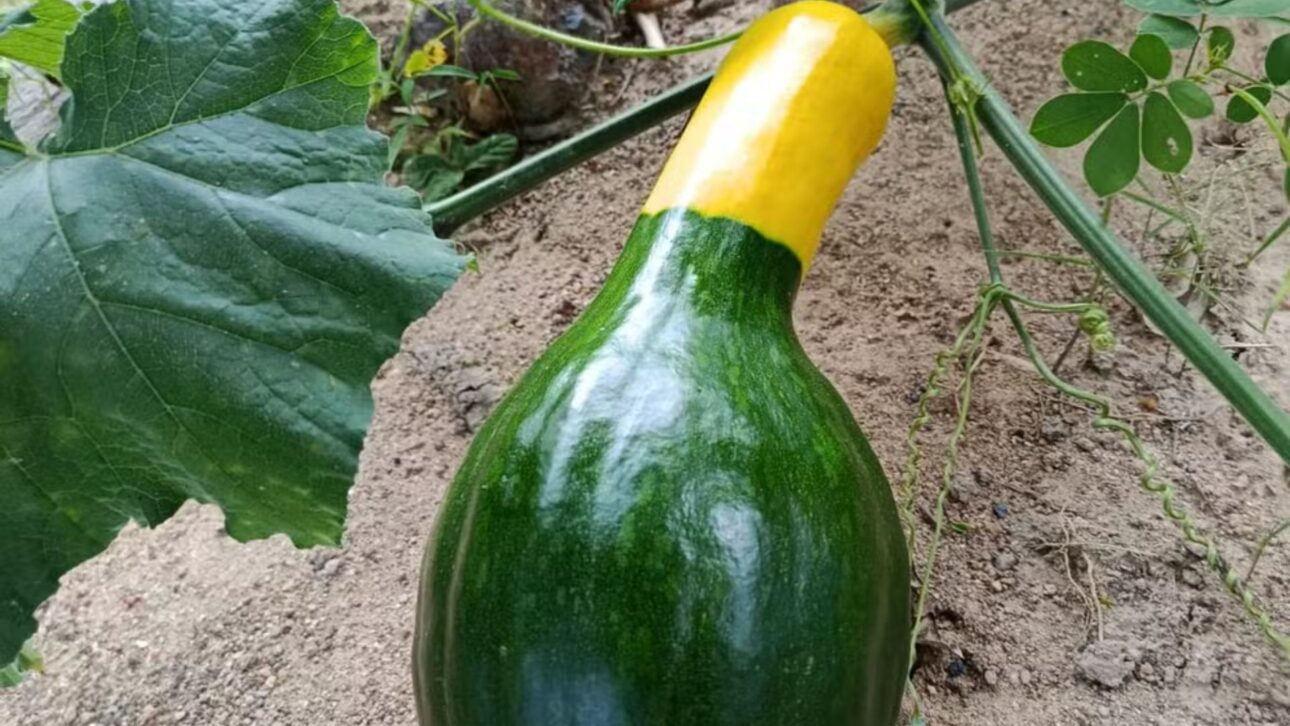
A green and yellow pumpkin appeared in the backyard of a family in Martins, Rio Grande do Norte, and earned the nickname “World Cup pumpkin” for resembling the Brazilian flag. But, according to Embrapa, it has a name, it is the “brasileirinha” pumpkin, created in 2006.
In the backyard of a family in Martins, in the interior of Rio Grande do Norte, a pumpkin caught the attention of the entire neighborhood. Green and yellow, resembling the Brazilian flag, the fruit soon earned a World Cup-themed nickname, the “World Cup pumpkin.” All this before anyone knew what had really grown there.
The story, told by g1 RN with Inter TV Cabugi in early June 2026, has a less mysterious ending than it seems. According to Embrapa, that pumpkin is the “brasileirinha” pumpkin, a variety developed in 2006 precisely to produce fruits with green and yellow skin. In other words, the resemblance to the flag was not a work of chance.
The seed that no one knew where it came from
The storyteller is Narla Aquino. The plant grew from seeds that her mother, Nildete Queiroz, tossed onto the land without much thought.
-
Yara acquires Texas ammonia plant for $1.3 billion, boosting global fertilizer competition with 1.3 million tons annual capacity

-
At 35, Lawyer Leaves Corporate Career to Turn 1-Hectare Farm into Organic Supplier for Schools in Southern Brazil

-
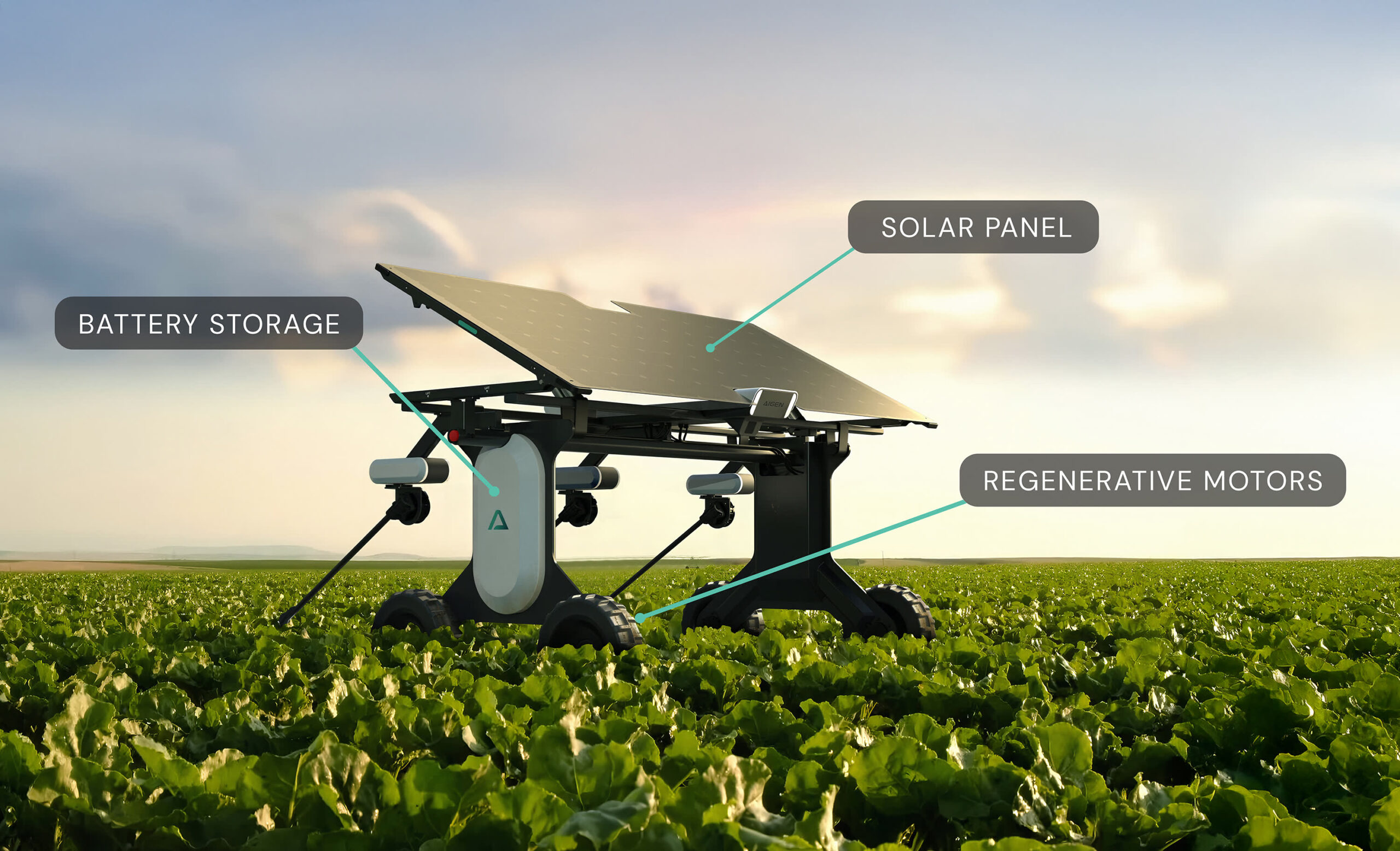
Solar-powered agricultural robots operate 24/7, remove weeds with 8mm precision, and aim to cut herbicide use without fuel consumption in the fields.

-
Brazilian Farmer Invents Low-Cost Tractor Using Motorcycle Parts, Efficiently Working 2 Acres on 1 Liter of Diesel



She doesn’t even remember who gave them to her, she just planted them, having no idea about the future “World Cup pumpkin.”
And she didn’t suspect anything different would come from it.
The one who noticed the novelty was Narla’s daughter, Raabe, who found the pumpkin already grown in the middle of the backyard.
Out of nowhere, a forgotten seed became the star of the site.
When the neighborhood became an audience
The different appearance did not go unnoticed.
The green and yellow fruit aroused the curiosity of the region, and the house became a visiting point, with neighbors coming to take pictures.
As Narla summarized, “only later did we find out it was a special seed”.
Since everything happened during the World Cup, the nickname came easily.
The green and yellow immediately reminded us of the Brazilian flag, and the fruit was renamed the World Cup pumpkin.
The name caught on even before the family knew it was a variety with history.
What is the Brasileirinha pumpkin
Behind the joke, there is real science.
According to Embrapa, the fruit is the Brasileirinha pumpkin, developed by Embrapa Vegetables and launched in 2006.
The idea was to offer a different product, both for eating and decorating.
The characteristics match what the neighborhood saw.
The fruits have an elongated shape, smooth and shiny skin, and that bicolor green and yellow coloration, which was precisely what caught the attention in Martins. It is a pumpkin created to impress the eyes.
Beautiful to see and good to eat
But it’s not just about beauty. Besides the visual appeal, the Brasileirinha pumpkin stands out for its flavor and nutritional composition, with the presence of beta-carotene and lutein.
In other words, it can go from decoration straight to the pot.
And it is versatile in preparation.
According to Embrapa, the fruit can be consumed at different stages of development or used just to decorate the house.
The World Cup pumpkin, in the end, combines the useful with the pleasant, becoming both a dish and a decoration.
In the end, the World Cup pumpkin is one of those finds that mix chance and science.
A seed of unknown origin, thrown into a backyard in Martins, resulted in a fruit that seems to wear the Brazilian jersey. And what started as a neighborhood curiosity ended up revealing a variety thought of back in 2006.
And you, have you ever seen such a green and yellow pumpkin? Would you plant one of these in your backyard, to eat or just to decorate? Tell us in the comments, respecting different opinions, and share this article with that friend who loves countryside curiosities and backyard stories.