Portuguese
  Spanish


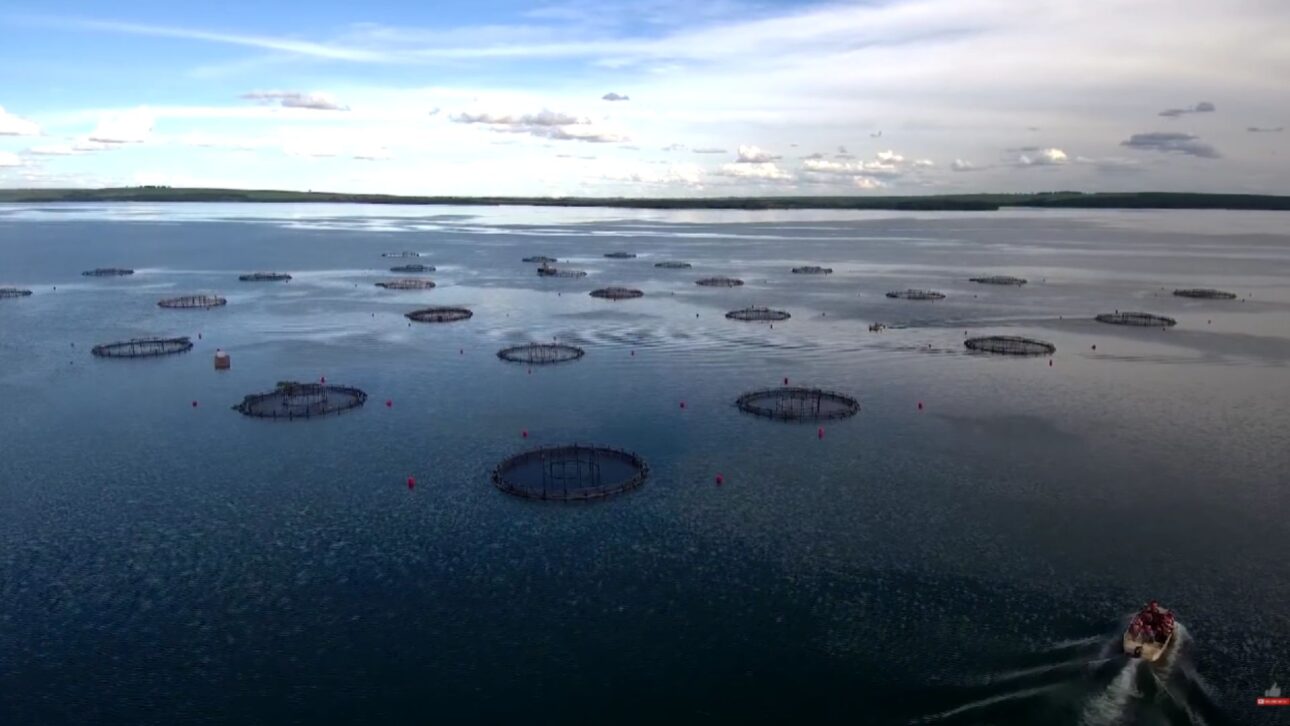
In the lake of the Jupiá plant, in Selvíria, Mato Grosso do Sul, a company raises tilapia in the waters of the Paraná River. Today there are 26 tanks, but the plan is to reach 500, with more than R$ 200 million planned. If successful, the state could move from 11th place to the top of the country.
A single tank in the lake of a hydroelectric plant yields about 90 tons of tilapia every six months. Now imagine this multiplied by hundreds. This is the bet of a company that raises fish in the waters of the Paraná River, in Mato Grosso do Sul, and wants to transform the state into a national leader.
According to the Vale Agrícola program, the project is located in Selvíria, in the lake of the Jupiá plant, and the company obtained a concession in 2017 to explore more than 500 hectares of the river for 20 years. The forecast is to invest more than R$ 200 million over seven years and expand the structure from the current 26 tanks to 500. The ambitious goal, is to produce about 30 percent of all the tilapia in the country.
Why the Paraná River was chosen
The company has been working with fish since 2001, and tilapia has always been on the radar.
-
Yara acquires Texas ammonia plant for $1.3 billion, boosting global fertilizer competition with 1.3 million tons annual capacity

-
At 35, Lawyer Leaves Corporate Career to Turn 1-Hectare Farm into Organic Supplier for Schools in Southern Brazil

-
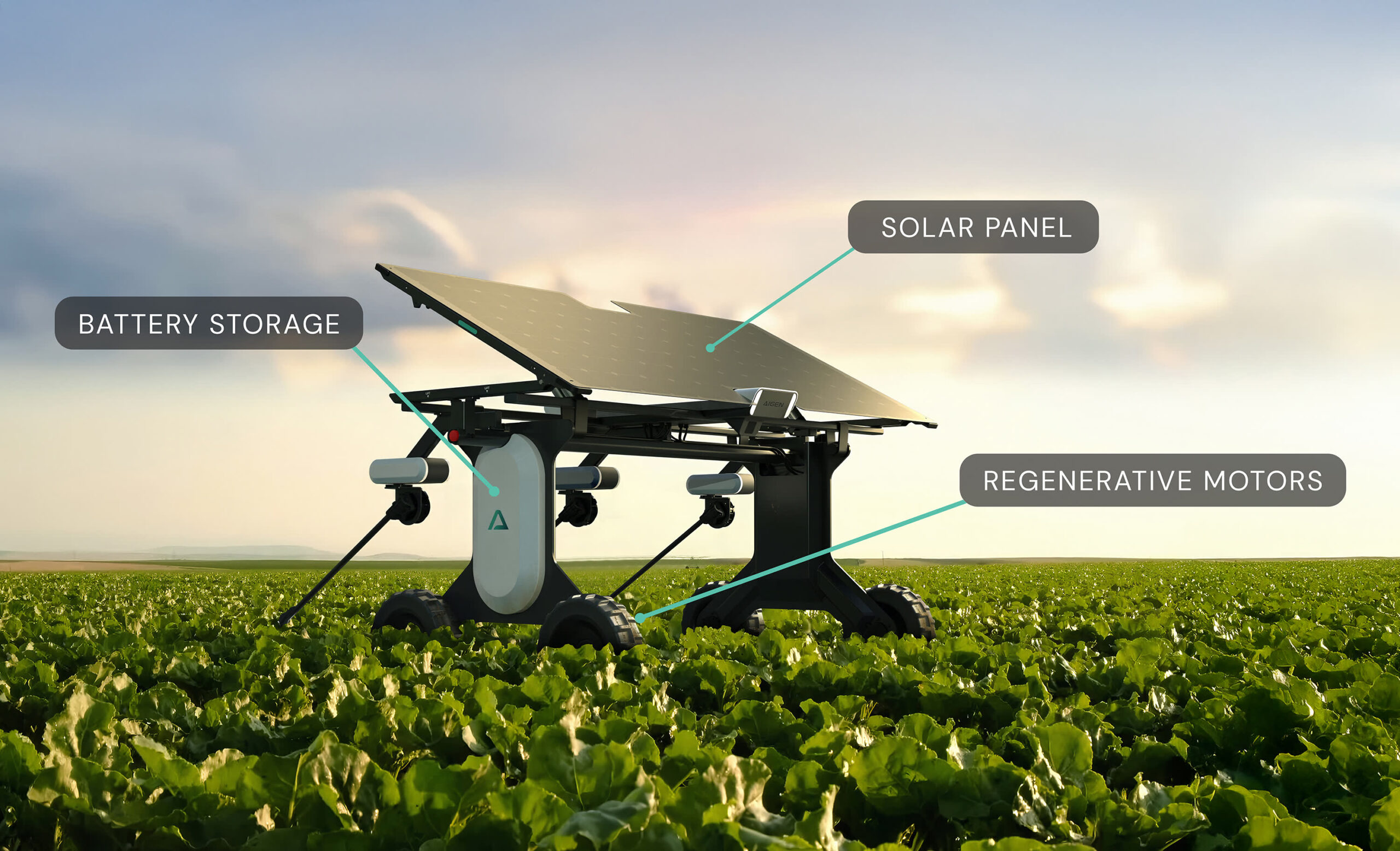
Solar-powered agricultural robots operate 24/7, remove weeds with 8mm precision, and aim to cut herbicide use without fuel consumption in the fields.

-
Brazilian Farmer Invents Low-Cost Tractor Using Motorcycle Parts, Efficiently Working 2 Acres on 1 Liter of Diesel



Before establishing production, it went through cities like Buritama, in the interior of São Paulo, and traveled around Brazil in search of the ideal spot. In the end, it returned to the Paraná River.
Here, the conditions were considered perfect. In addition to the water quality, the climate helps, with favorable temperature, rainfall, and hours of sunlight.
The logic behind the bet is simple, according to the company: if Brazil is one of the largest producers of cattle and chicken in the world, there would be no reason not to lead in fish farming as well.
How tank farming works
Today, the operation is already large, even without the expansion.
There are 26 tanks installed in the Paraná River, each with a diameter of 20 meters.
Each tank holds about 90,000 fry, the young fish, which in six months yield, on average, 90 tons of tilapia. This amounts to around 50 kilograms per cubic meter.
And the routine of the fish is demanding.
They are fed up to six times a day, in a movement that becomes almost a spectacle in the dark waters of the reservoir.
This is the mechanism that the company wants to multiply in the coming years.
The Billion-Dollar Numbers of the Plan

This is where the impressive figures come in, all still in the realm of projection.
The intention is to expand from the current 26 tanks to 500 and invest in the entire chain, from incubation and classification of fry to fattening, processing, and distribution.
The plan extends over the next seven years.
If everything goes as planned, the numbers become enormous.
With the processing plant in full operation, tilapia production could reach 100,000 tons per year and generate an annual revenue of R$ 1 billion, according to the company.
The expectation is to create 2,700 direct jobs, in addition to bringing together small producers in the region into cooperatives to supply the factory.
The Bet on Tilapia and the Bottlenecks
The advantage of tilapia, according to the company’s president, lies in its feed conversion.
It requires less feed to produce each kilogram of meat than chicken or cattle, and even less than salmon, which reduces the impact on the use of raw materials.
Add to this the fact that the fish caters to all budgets, and the equation balances.
Ceará, for example, is one of the champions of consumption per inhabitant, with about 3.5 kilograms per year, according to Peixe BR, the Brazilian aquaculture association.
But the path has obstacles. The president of Peixe BR points out two main bottlenecks, the environmental regulatory framework, which depends on each state, and the concession of Union waters, where the hydroelectric plants are located.
He notes that national production was 722,000 tons last year, while there are requests filed for 3 million tons, and summarizes that the government is still the biggest obstacle.
Even so, with the expansion, Mato Grosso do Sul could jump from 11th to first place among producing states.
The project well summarizes the scale of ambition of Brazilian fish farming.
For now, what stands are the 26 tanks in the Paraná River, but the goal to reach 500 and produce a significant part of the country’s tilapia shows where the sector wants to go.
The billion-dollar figures, it is worth remembering, are still plans.
And you, do you usually eat tilapia or prefer other proteins? Do you think Brazil really has everything to become a powerhouse in fish farming? Tell us in the comments, respecting different opinions and experiences, and share this article with that friend who follows agribusiness and fish farming.