Portuguese
  Spanish


The accident that frightened the aviation world forced the American giant to undo one of the sector’s most famous decisions, bringing back in-house the factory that produced the bodies of its planes and that it had sold to save money
It took a piece of an airplane coming loose in the air for Boeing to admit that outsourcing the manufacturing of its jet fuselages was a mistake. After a door-shaped panel detached from a 737 MAX mid-flight, the American manufacturer announced the repurchase of Spirit AeroSystems, the supplier that builds the bodies of its planes, in a deal valued at 8.3 billion dollars.
Why does a company repurchase something it insisted on selling? Because the decision to outsource, made to cut costs, ended up exacting a high price in safety and reputation. By bringing the factory back in-house, Boeing is trying to regain full control over the quality of the most critical part of an airplane, the shell that holds passengers thousands of meters above the ground.
The door that came loose thousands of meters up
The trigger for everything was a scare that spread worldwide. According to CNN Brazil, in January 2024 a panel covering a door-shaped exit came loose from an Alaska Airlines 737 MAX during flight, in an incident that exposed serious flaws in the fuselage manufacturing.
-
Nike’s Old Shoes Recycled into Courts, Tracks, Playgrounds, Gym Floors, and New Footwear in Program Transforming 67,000 Tons of Sports Waste into a Global Industry

-
Canadian Woman Who Donated Savings to Haiti Earthquake Victims at Age 5 Wins $48 Million in Lottery 13 Years Later
-
118-Year-Old Brazilian Man, Living in a Care Home for 55 Years, May Become World’s Oldest Man Pending Guinness Validation
-
Ferrari, BMW, Tesla, and Chinese Automakers Shift from Copper to Aluminum Wiring to Reduce Weight and Costs in Electric Vehicles


The episode shed light on who was actually building the airplane’s body. According to CNN Brazil, the involved fuselage had been produced by Spirit AeroSystems, and the case raised serious doubts about the solidity of Boeing’s supply chain. When a part of the airplane comes loose in the air, the problem stops being just a supplier’s issue and becomes a crisis of confidence in the entire brand, and that was what pushed the decision.
The Spirit AeroSystems that Boeing had outsourced
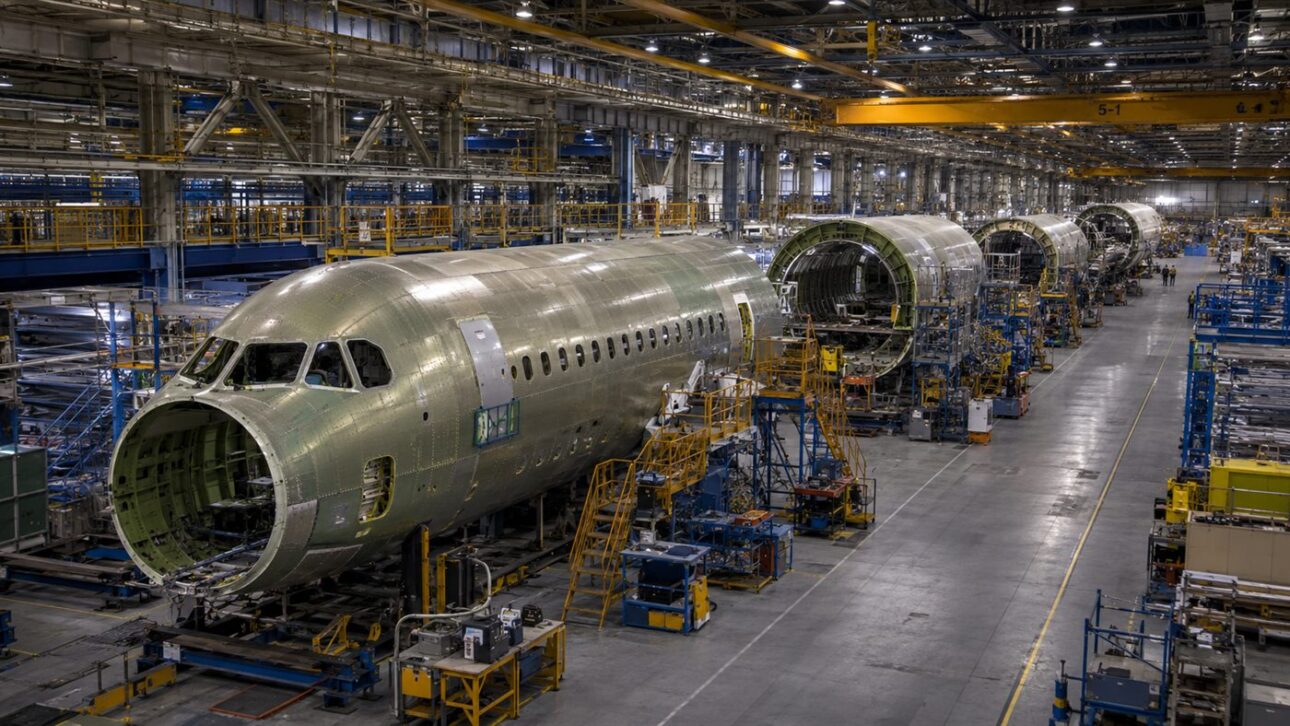
The irony of history lies in the origin of the supplier. According to InvestNews, it was Boeing itself that, in 2005, divested this operation in Wichita as part of a cost-cutting and outsourcing strategy, creating the company that would later supply the fuselages back to it.
At the time, it seemed like a good deal. Shifting manufacturing to an external supplier reduced costs and lightened the balance sheet, a financial move applauded in the corporate world. Outsourcing what is not essential is a golden rule of efficiency, but the body of the plane should never have been part of that equation, and the lesson came at a very high cost almost two decades later.
The 8.3 Billion Dollar Buyback
Undoing the mistake cost a fortune. According to InvestNews, Boeing agreed to repurchase Spirit AeroSystems for 4.7 billion dollars in shares, at 37.25 dollars per share, in a deal that, when combined with the supplier’s debt, amounts to a total value of about 8.3 billion dollars.
The price included a hefty premium to convince shareholders. According to InvestNews, the value per share represented a premium of about 30% compared to the closing price at the end of February, quite a push to close the deal. Paying dearly to recover what was sold cheaply is the portrait of a strategic decision that aged poorly.
Why Bring the Factory Back Home
The stated reason is straightforward: safety and control. According to CNN Brasil, Boeing’s management described the buyback as an effort to resolve its safety issues and strengthen the production line, bringing engineering and manufacturing back under the same roof.
The idea is for the owner and factory to speak the same language. According to CNN Brasil, the supplier’s leadership stated that bringing the two companies together will allow for better integration of manufacturing and engineering capabilities, including safety and quality systems. Controlling end-to-end who builds the body of the plane is the kind of assurance that no cost savings justify giving up.
Airbus Took Its Share of the Pie
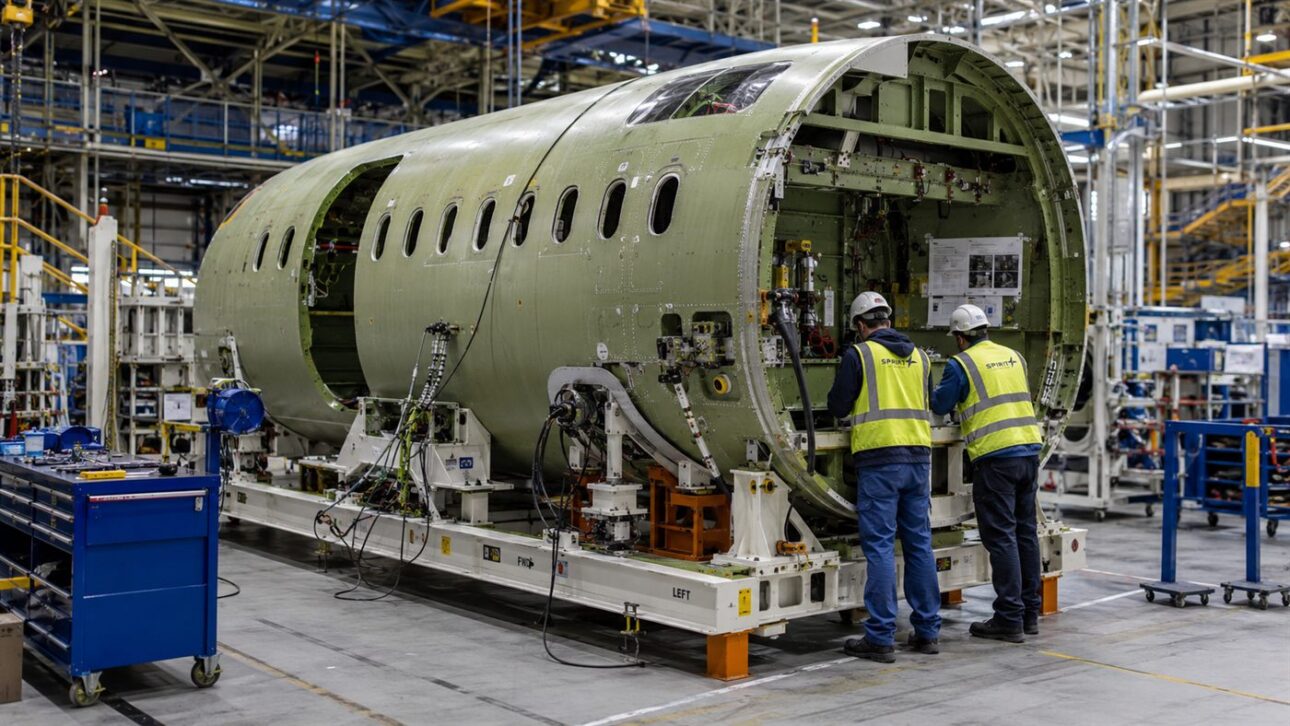
The curious detail is that the European rival also entered the deal. According to InvestNews, as Spirit AeroSystems also manufactured parts for Airbus, the European company agreed to take over operations related to its aircraft, such as the A350 fuselage sections in Kinston, United States, and in Saint-Nazaire, France.
And Airbus still ended up with money in its pocket. According to InvestNews, besides keeping factories related to the A220 in Northern Ireland and Morocco, the European company will receive compensation of about 559 million dollars, paying only a symbolic amount for the assets. Boeing couldn’t swallow a factory that also supplied its competitor, so the agreement had to split Spirit between the two giants.
The market approved the deal
The stock market’s reaction showed approval. According to CNN Brazil, the shares of the three companies involved rose after the announcement, with Spirit AeroSystems advancing about 3.6%, Boeing rising close to 2%, and Airbus gaining approximately 3.3%.
For investors, the deal tidies up both sides of the Atlantic. Boeing regains control of its critical production, and Airbus ensures the supply of parts for its jets without relying on a company in crisis. When a deal makes the stocks of rivals rise simultaneously, it’s a sign that it solved a problem that was bothering the entire sector.
What Boeing recovered and what changed
In the end, the giant retained the heart of the operation. According to CNN Brazil, Boeing reassumed the main factories in Wichita and Oklahoma, precisely the units it had outsourced in 2005, ending an era of nearly 20 years of outsourced manufacturing.
The change is more than a logo swap on the wall. Bringing production back means Boeing once again directly oversees each fuselage that comes off the line, without an intermediary company between the design and the finished piece. Reintegrating the factory means taking back the responsibility that outsourcing had pushed to the neighbor, with all the weight that carries.
The lesson from outsourcing that went wrong
The case became a mandatory study on the limits of outsourcing. Cutting costs by passing tasks to external suppliers works well for many things, but when the outsourced item defines the product’s safety, the savings can turn into a ticking time bomb.
Boeing learned the hard way that not everything fits the logic of streamlining the balance sheet. The distance between those who design and those who manufacture opened quality gaps that only appeared at the worst possible moment, in the air. Therefore, more than a billion-dollar purchase, the repurchase is the public acknowledgment that some things need to be done in-house, under the watchful eye of those who put their name on the plane.
What this repurchase represents
The return of Spirit to Boeing’s arms marks the end of one cycle and the beginning of another in aviation. It shows that the obsession with cutting costs, when applied to the most critical parts of a product, can end up being much more expensive than the savings it promised. For the passenger, there is the expectation that manufacturing under direct control will bring safer airplanes. For the business world, there is a warning that outsourcing the essential is a gamble that may one day demand its price.
And you, would you board more confidently knowing that Boeing has returned to manufacturing its own fuselages, or will it take time for trust in the brand to recover? Share your thoughts here in the comments.