Portuguese
  Spanish


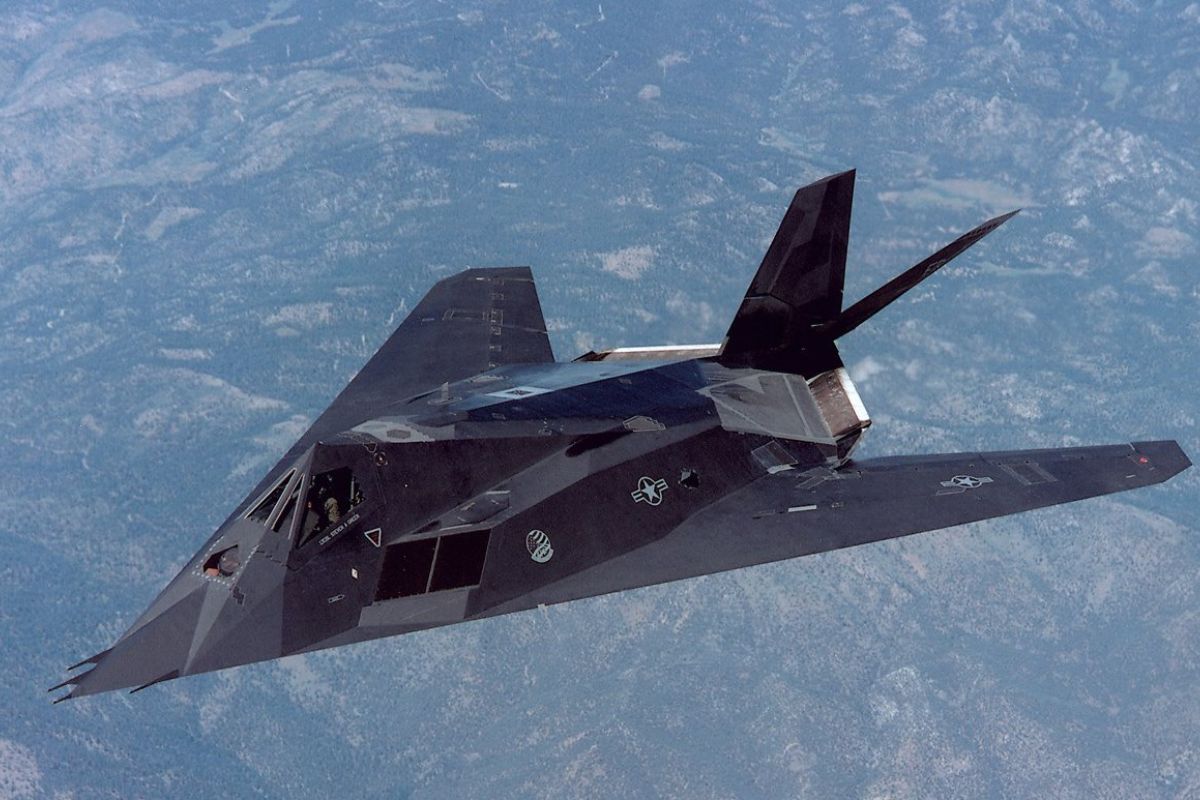


Iconic Gulf War Aircraft is Used to Simulate Invisible Threats from Russia and China to This Day
The F-117 Nighthawk stealth bomber, officially retired in 2008, is still being secretly operated by the United States Air Force at Area 51. The revelation came after years of speculation and now confirms that the aircraft still plays a strategic role, despite its age and technical limitations.
Designed at the height of the Cold War to evade enemy radar, the F-117 became a symbol of stealth technology. Now, in 2025, it resurfaces as a centerpiece in tests against modern threats helping the U.S. develop defenses against Russian and Chinese stealth aircraft, such as the Su-57 and the J-20.
How Did the F-117 Come to Be?
In the 1970s, the U.S. was losing fighters to Soviet missiles in Vietnam and the Middle East. DARPA then launched a challenge: to create an aircraft invisible to radar.
-
$12 Billion Invested in AI Data Centers in Semi-Desert Mexican State, But 17 of 18 Municipalities Now Face Water Shortages, Residents Receive Water Only 3 Days a Week

-
How Much Does Starlink Satellite Internet Cost for Cars, Trucks, and RVs? Prices for Antenna, Accessories, and Plans

-
Scientists Convert Food Waste into Aviation Fuel, Successfully Test 50% Blend with Conventional Kerosene to Cut Emissions and Promote Sustainable Flights
-
OnePlus N6 Smartphone to Launch in India with 8,000mAh Battery and 45W SuperVOOC Charging, Lasting Up to Three Days




The mission fell to Skunk Works, the secret division of Lockheed, which applied radar diffracting principles studied by Soviet scientists.
The first flight of the prototype took place in 1977. The project, dubbed Senior Trend, was kept in absolute secrecy. The aircraft only flew at night to evade spy satellites, and its existence was only officially recognized more than a decade later, in 1990.
Why Was the Nighthawk So Feared?
With angular shapes that scatter radar waves, absorbent coating, and engines without afterburners to reduce heat, the F-117 was practically undetectable. Its RCS (radar cross-section) was only 0.001 m², equivalent to a pigeon.
Regardless, it was unstable, difficult to fly, and extremely fragile. Nevertheless, it shone in wars like the Gulf War, conducting over 1,300 missions with zero losses.
Its first and only loss occurred in 1999, in Yugoslavia, when it flew predictable routes without electronic warfare support.
Technical Specifications of the F-117 Stealth Bomber
- Type: Stealth Tactical Attack Bomber
- Crew: 1 pilot
- Engines: 2 General Electric F404 turbofans
- Max Speed: About 1,000 km/h (subsonic)
- Range: 1,700 km
- Payload: About 2,300 kg of guided bombs
- Size: 20 m in length and 13.2 m in wingspan
- Estimated RCS: 0.001 m²
Why Did the F-117 Return to Service?
According to sources from the channel Today in Military World, the Nighthawk is still used in simulation missions and radar tests, especially at Area 51. Its extremely stealthy profile is ideal for testing systems that will detect and neutralize modern stealth aircraft.
Even without comparable combat capability to current fighters, the F-117 remains valuable as an experimental tool. The U.S. plans to keep operational units at least until 2034, acting as a simulated enemy in training and technological developments.
Is It Better than the B-2?
The comparison is inevitable. The B-2 Spirit is larger, has a range of 11,000 km, and carries over 20 tons of armament. However, the F-117 is still stealthier, with a lower RCS.
Its role is tactical and precise, while the B-2 is strategic and massive. Each serves a different purpose in American doctrine.
Do you think the United States should keep the F-117 in service? Do you believe stealth aircraft are still crucial in modern wars? Comment below, we want to hear your opinion on the return of this ghost from the skies.